Garage Door Maintenance for Thorndale's 1976-Era Housing Stock
Thorndale's housing stock dates to a 1976 median build year, which means original extension-spring hardware is now pushing 50 years old. Here's what a tune-up actually finds.
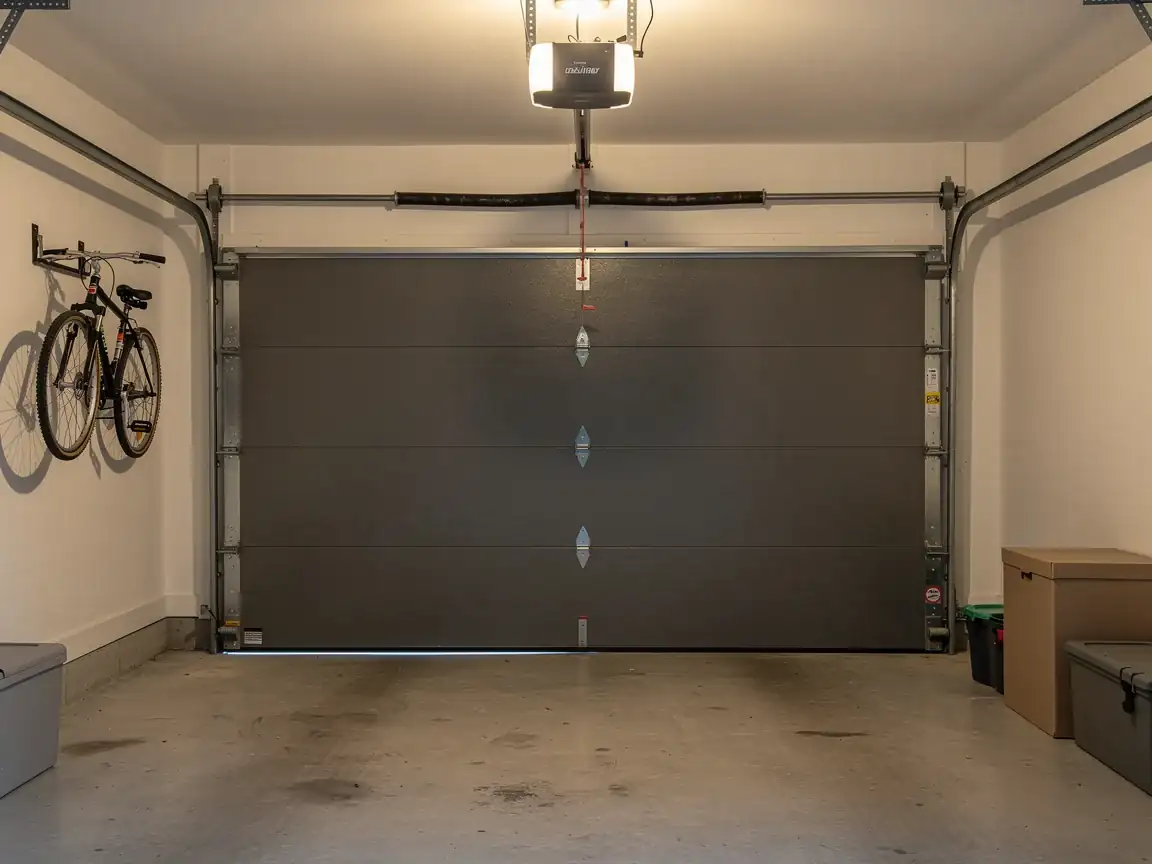
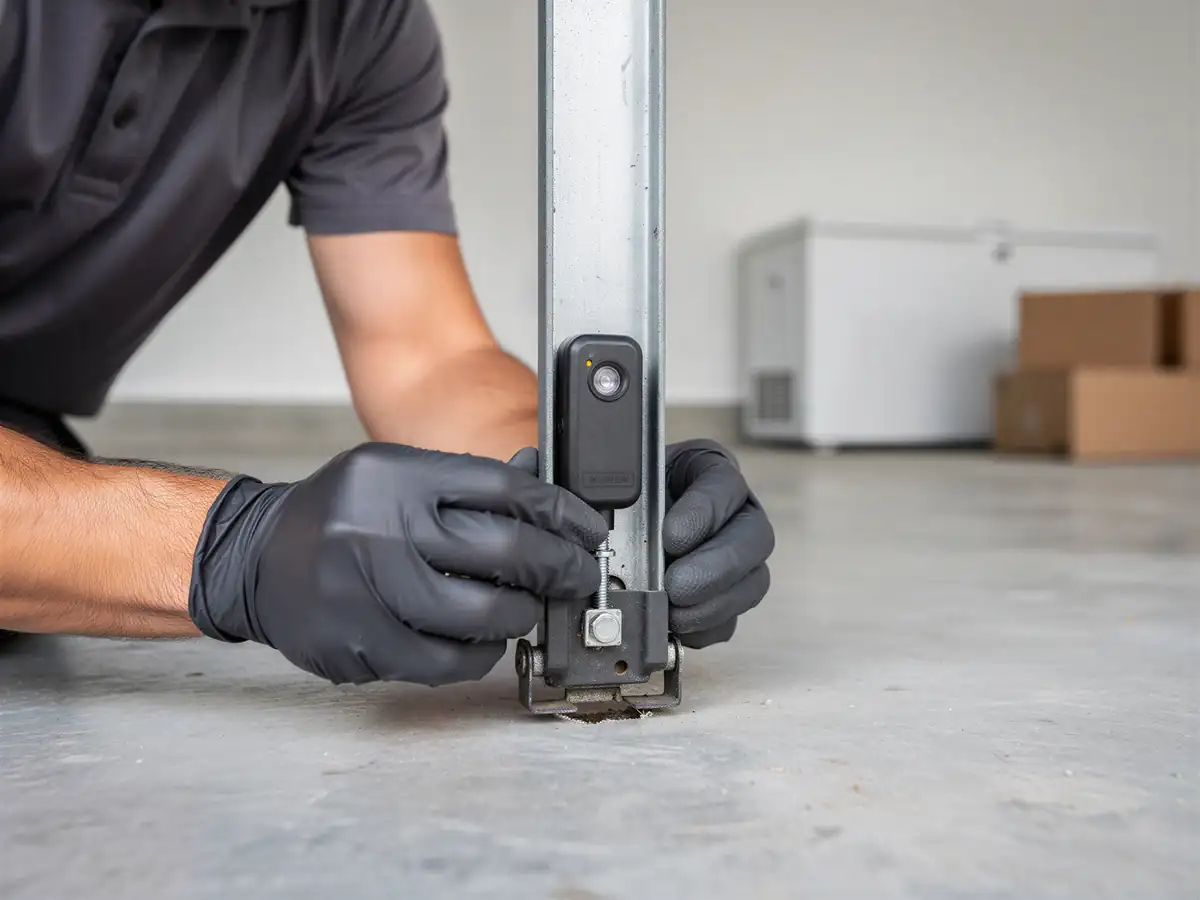
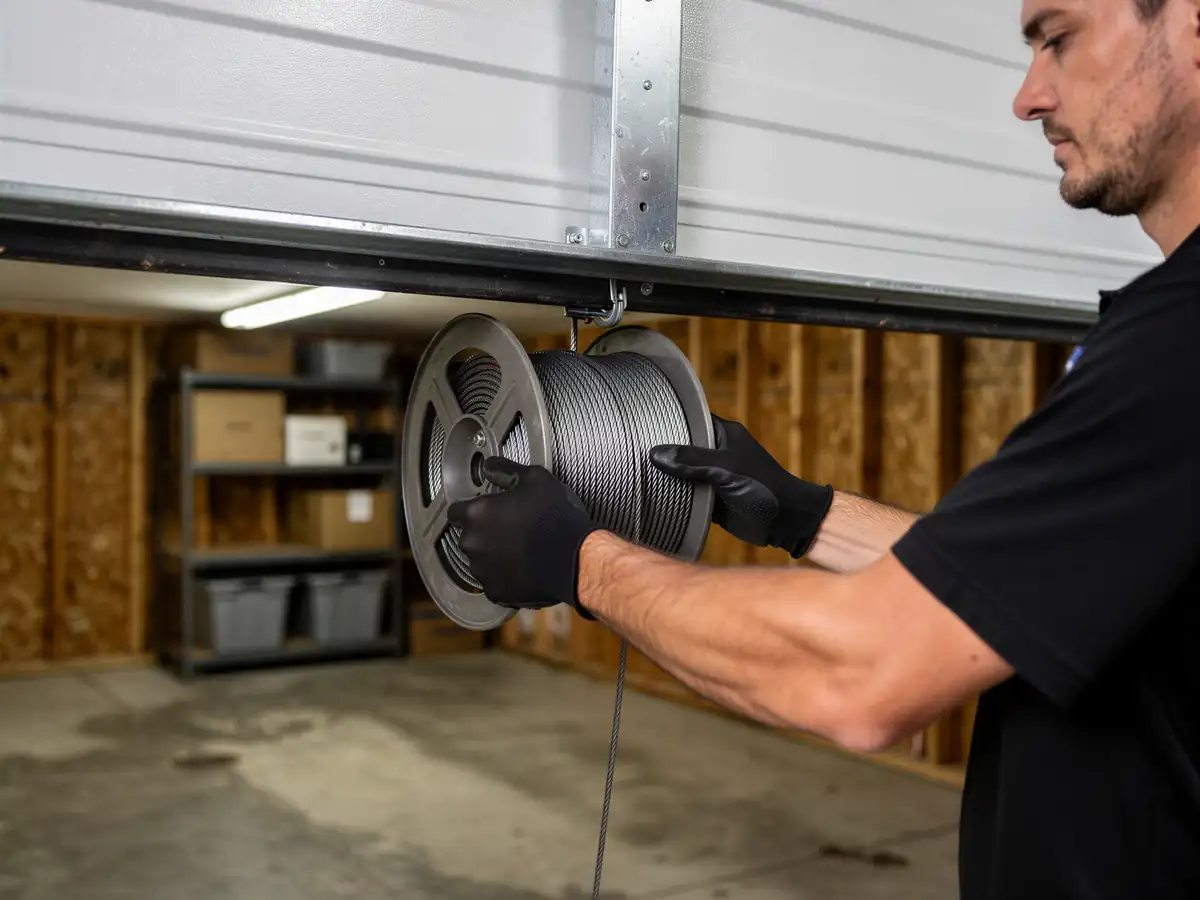
You can do real maintenance yourself without a truck showing up. Wipe the tracks clean, check that the door reverses when it hits an object, and put a few drops of garage-door lubricant (not WD-40, which washes grease out rather than adding it) on the rollers and hinges twice a year. Look at the lift cables for fraying near the bottom bracket - on a house built around 1976, those cables and the extension springs they run through are original-era equipment in a lot of cases, and visual wear is the first sign they're done.
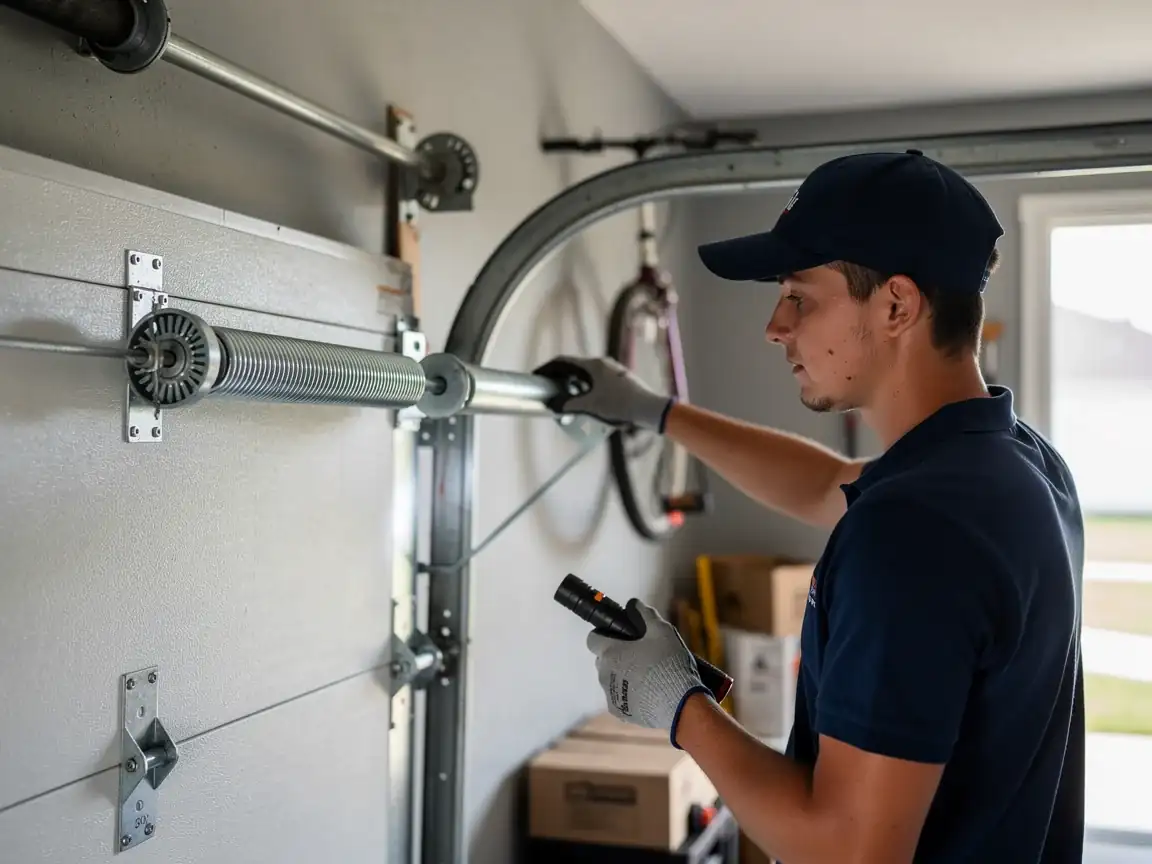
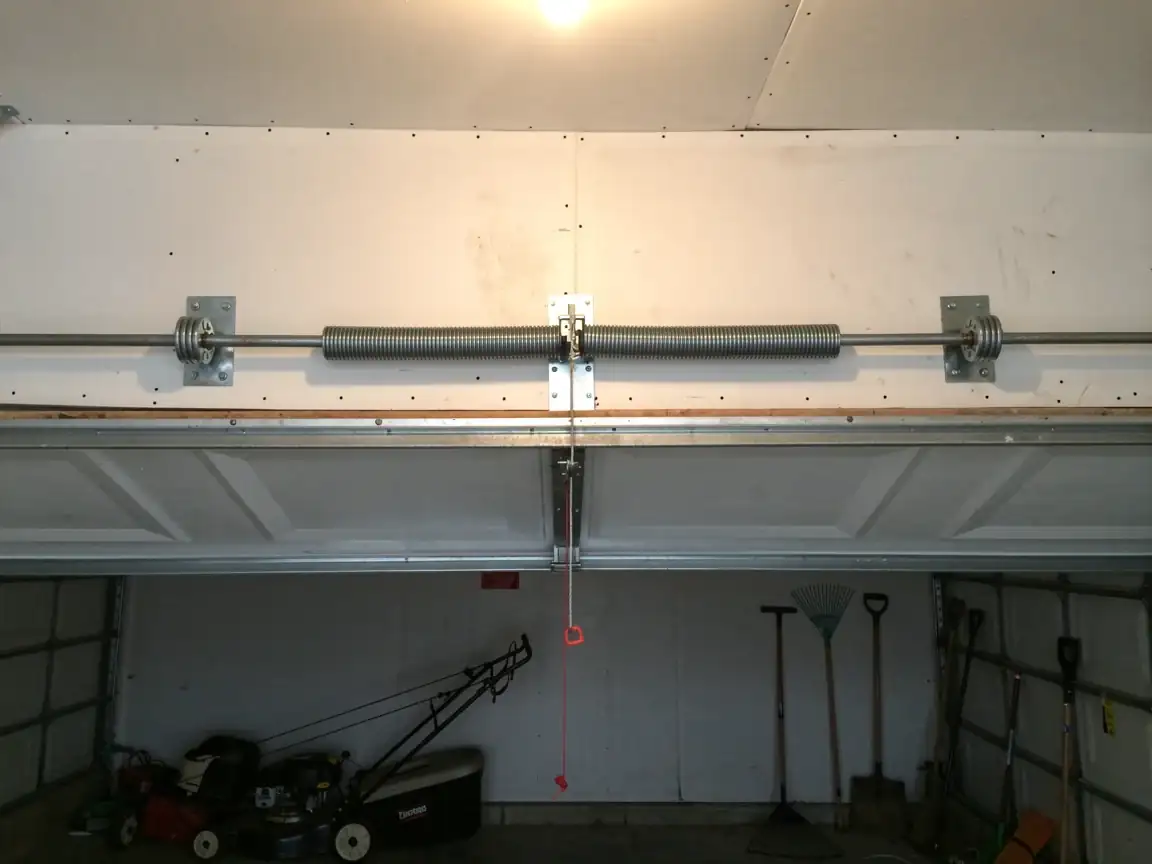
What you shouldn't touch: the springs themselves, whether torsion or extension. They're under enough tension to break a bone or worse, and on homes from this build era there's often no safety containment cable on the extension spring at all - that became standard practice later. If you see bare springs stretching when the door opens, that's a call-out, not a DIY fix.
The honest limit here: a visual check tells you a door is probably fine, not that it definitely is. Balance and spring tension need to be tested under load, and that's not a one-person, no-tools job.
What the Repair Takes
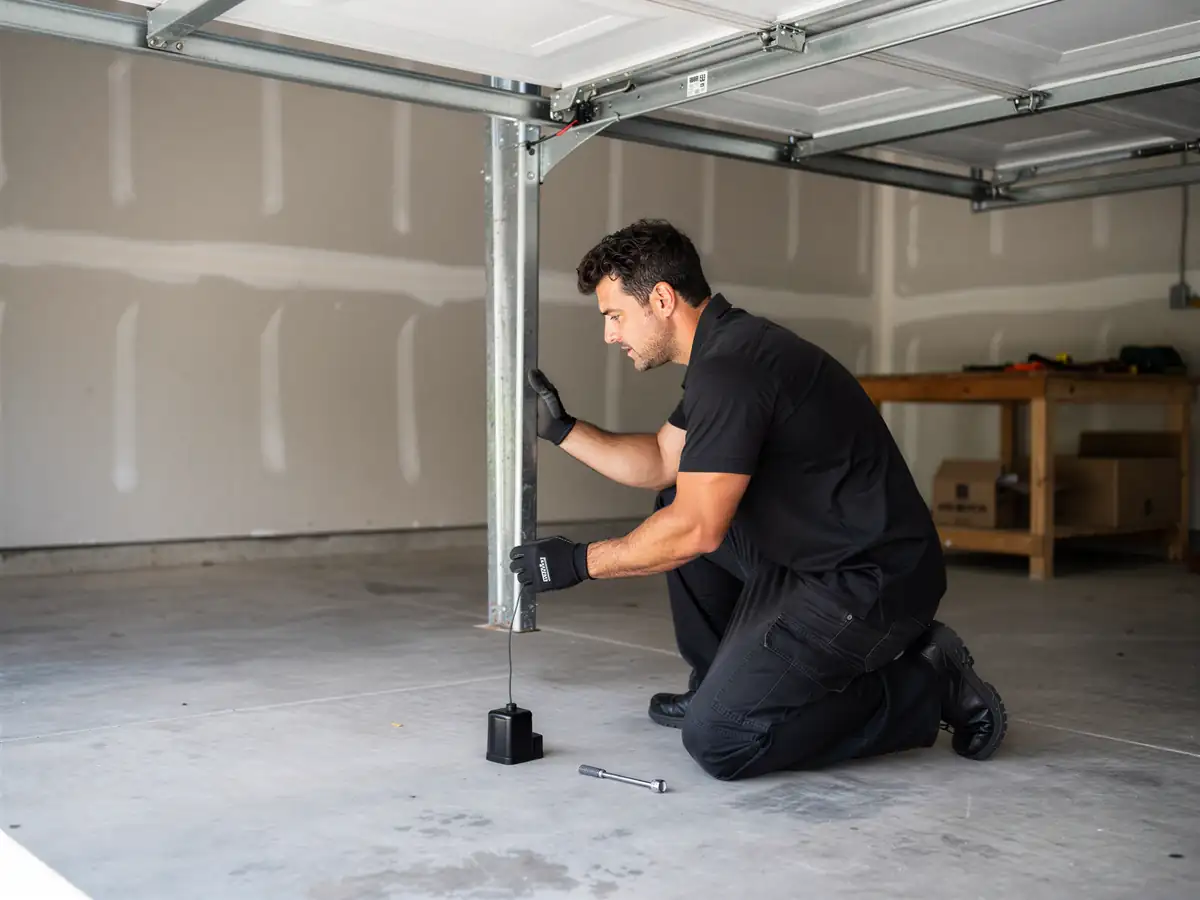
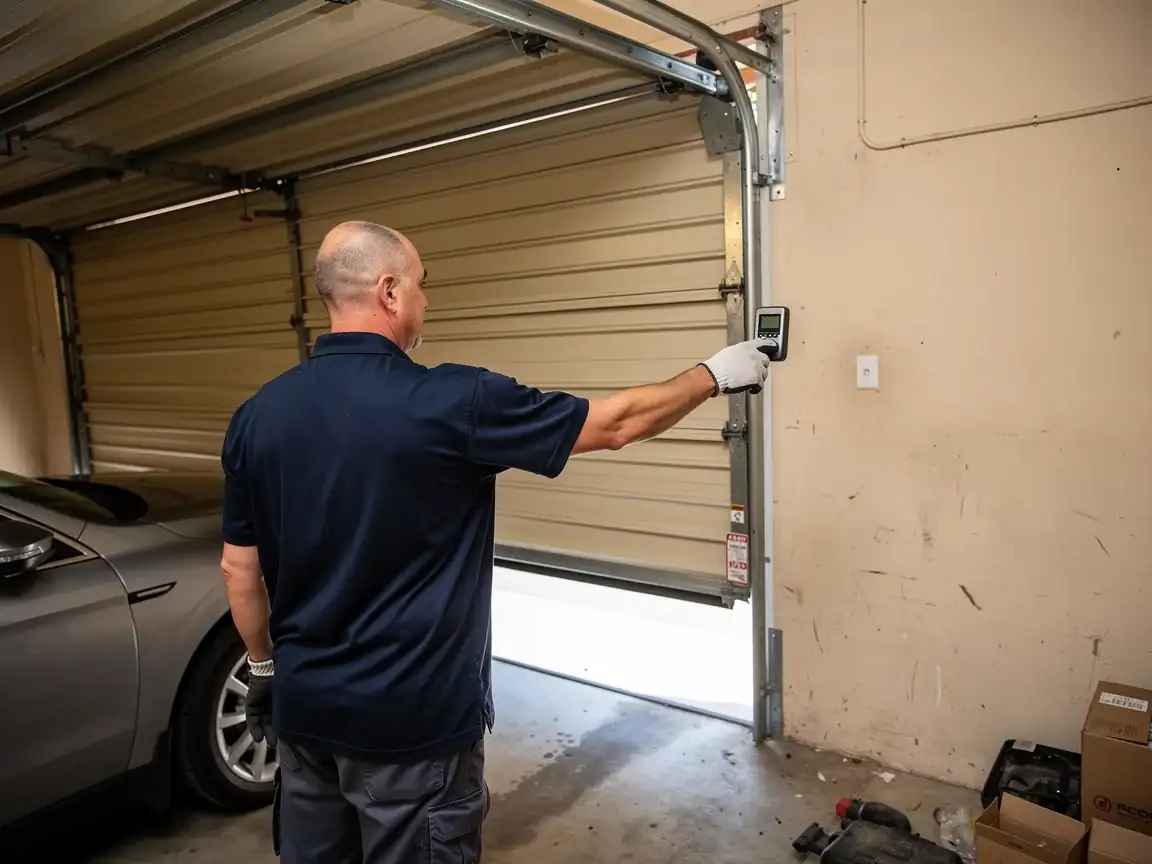
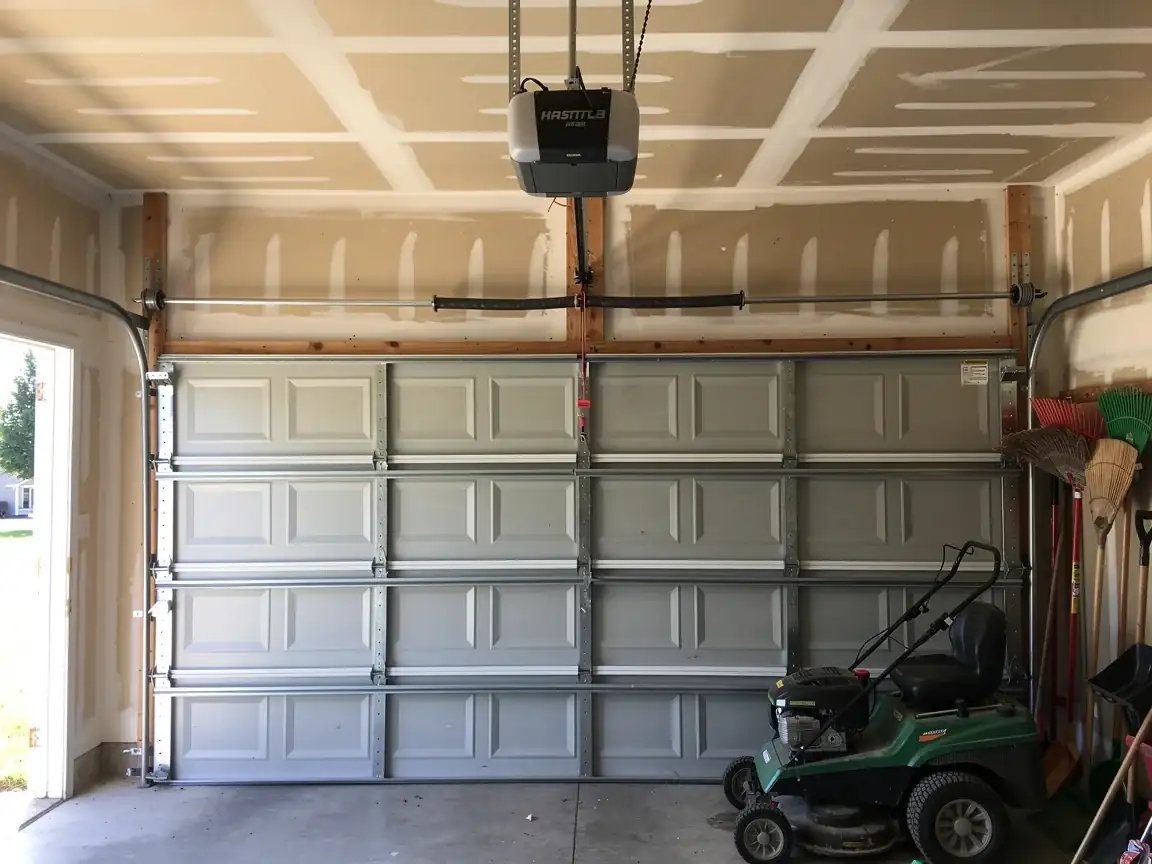
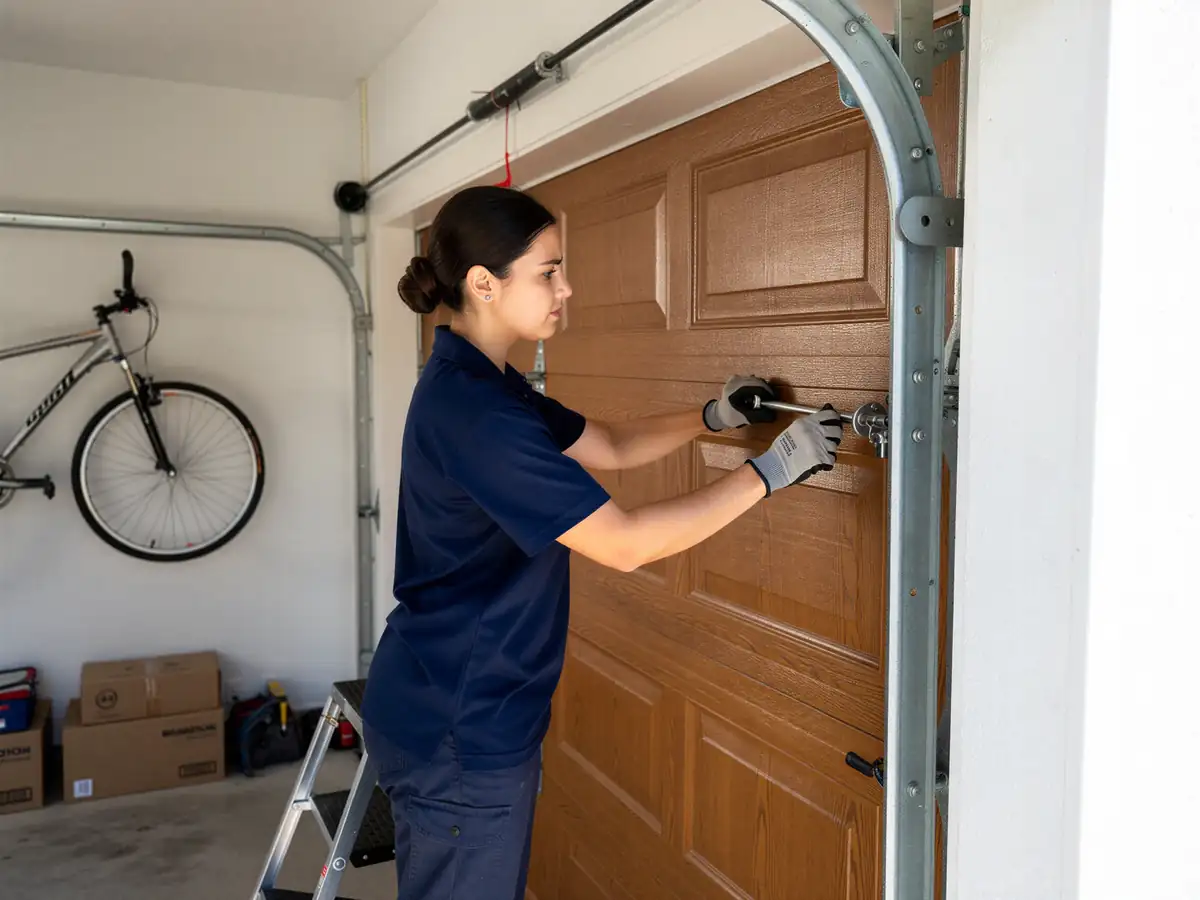
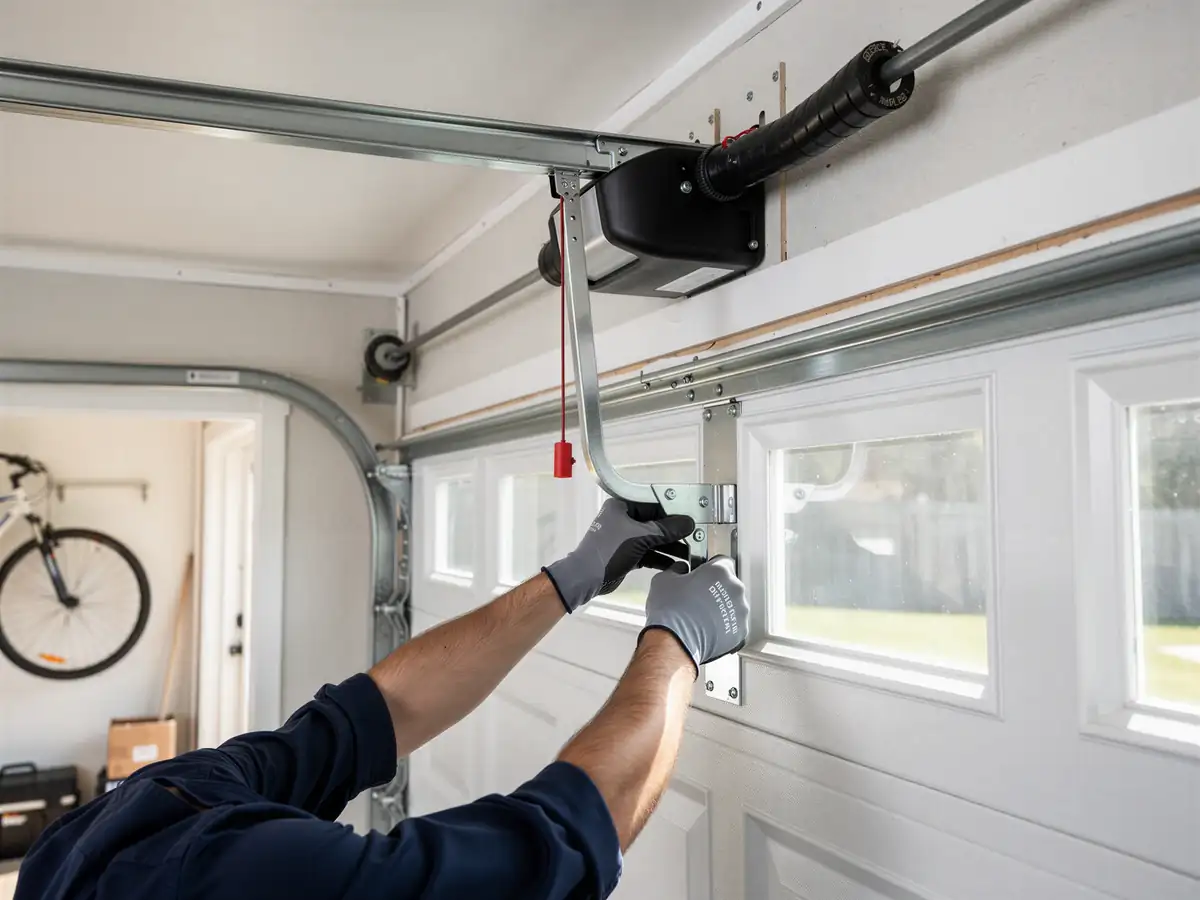
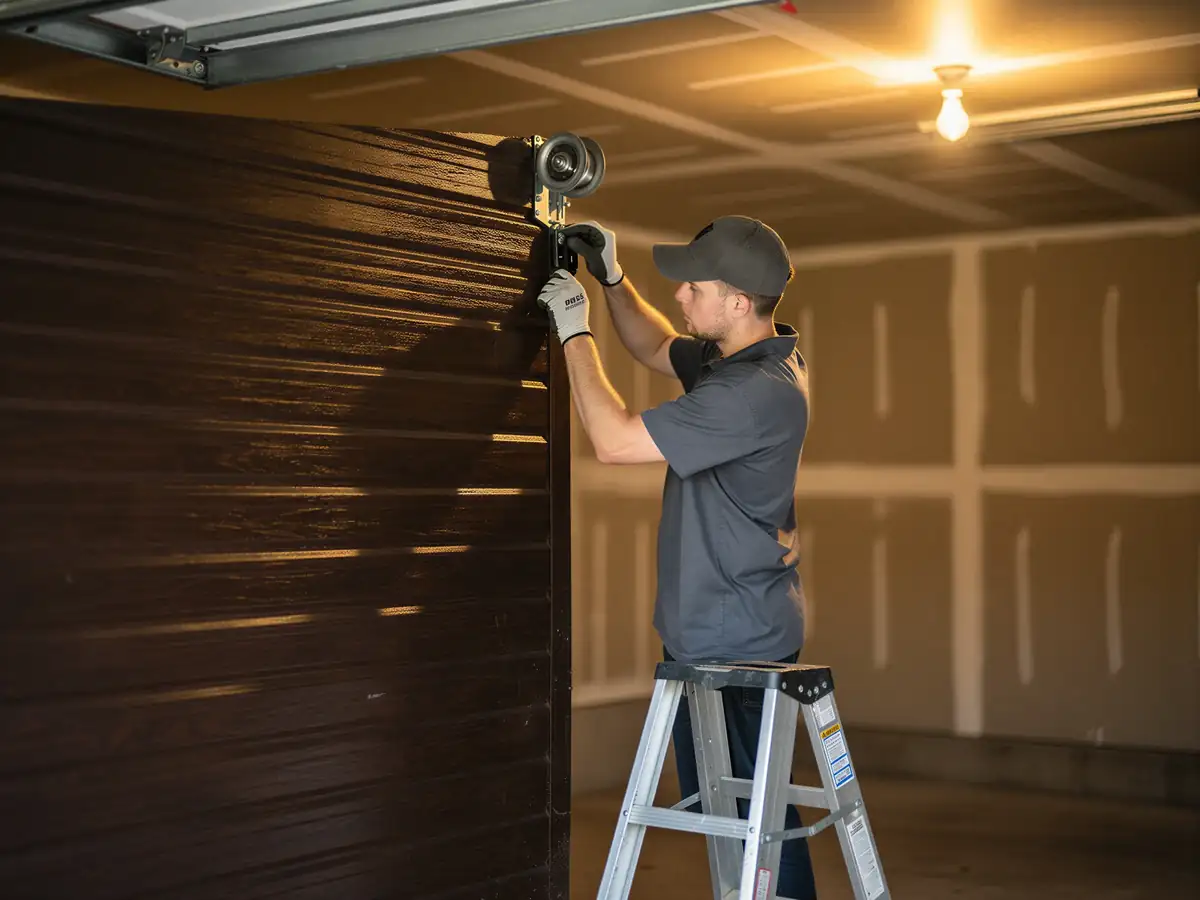
A proper maintenance visit on a Thorndale door starts with pulling the opener's manual release and checking balance by hand - the door should hold position at waist height. From there it's lubrication of rollers, hinges, and the torsion shaft if there is one, a check of track alignment against the frame, and a look at weatherstripping at the bottom panel and side jambs.
On houses from this build era we're also checking lift cable fray, drum set screws for backing out, and whether the extension springs (if that's what's installed) have safety cables run through them. None of that is a parts-heavy job in most cases - it's inspection and adjustment. It turns into a parts job only when something's already worn past the point of tightening or lubricating, which is common enough on hardware this age that we check for it every visit rather than assuming the last person caught it.
What Causes It Around Here
01
Thorndale's housing stock centers on a 1976 median build year
Which puts a lot of original garage door hardware at roughly half a century old. Extension springs were common on doors from that period, often installed without the safety containment cables that became standard practice afterward - so when one of those springs finally lets go, it has nowhere to go but loose.
02
The other factor is the climate band this area sits in
Which runs cold and severe through winter. Repeated freeze-thaw cycles stiffen old rubber weatherstripping and dry out factory lubricant on rollers and hinges faster than in a milder climate, which is part of why a lubrication-only visit on an older door in this area shows more resistance than the same job somewhere warmer.
03
Put those two together
Original hardware pushing fifty years and a winter that's hard on seals and lubricant - and you get the maintenance pattern we see on this side of the service area: worn rollers, stiff hinges, and springs that are original to the house.
What It Costs
We don't have a set price to quote on this page, because cost on a maintenance visit depends on what we find once the door's open - a lubrication-and-adjustment visit is a different job from one where a cable's fraying or a spring needs replacing. Thorndale is about eight miles from our West Chester base, and the drive doesn't change what the work costs; what changes it is the condition of the hardware once we're looking at it. The best way to get a real number is to have someone look at the specific door rather than guess from a build year.
How Long It Takes
The length of a maintenance visit depends mostly on what the door needs once it's open, not on anything specific to Thorndale. A door with original rollers and hinges that just need lubrication and a balance check goes faster than one where we're also tracing a cable fray or tightening a loose drum set screw. Homes from this build era more often fall into the second category simply because the hardware has had longer to wear, so budget a bit more time than you would for a newer door, and expect us to flag anything that needs a follow-up repair rather than try to force a fix on the spot.
The Symptom
01
The complaint we hear most from this stretch of houses isn't a door that won't open
It's one that's gotten loud, or that shudders partway through its travel instead of moving smooth. That's usually rollers that have outlived their lubrication, or a track that's drifted slightly out of alignment over decades of the house settling. On a door with original 1976-era hardware, it can also be a lift cable starting to fray at the drum, which sounds like a faint scraping right before the door reaches the top.
02
A door that's stiff to lift by hand, even with the opener disconnected
Points at spring tension that's weakened or a track binding somewhere along its run. None of these are emergencies by themselves, but on hardware this old, a noise you've been ignoring for a year is usually the warning before the part that was going to fail does.
How it works
From “it’s stuck” to “it’s fixed”
01
Tell us what’s wrong
Describe the symptom - won’t open, loud bang, opener runs but the door won’t move.
02
On-site diagnosis
A technician tests the door under power and by hand and finds what actually failed.
03
Clear, up-front plan
You get the fix that’s needed and what drives the cost - before any work starts.
04
Repaired & tested
The repair is done, the door is set true and tested, and the work area left clean.
Not sure which repair your door needs in West Chester, PA? Describe what it’s doing - every job starts with a diagnosis.
Straight answers about garage door repair in West Chester. Still unsure? Ask us directly.
Is my garage door's hardware actually original to the house if it was built in the mid-1970s?
Not always - openers and rollers get replaced over the years more often than the door panel or track frame. But extension springs without safety cables, which were standard for that build period, do turn up on doors that otherwise look updated. A visual check during maintenance tells you which parts are original.
Why does my door get stiffer every winter?
This area sits in a cold, severe climate band, and repeated freeze-thaw cycles dry out lubricant on rollers and hinges faster than a mild climate would. It also stiffens rubber weatherstripping. A twice-yearly lubrication schedule, with one visit before winter, keeps ahead of it better than waiting until the door is audibly struggling.
Do you have a shop in Thorndale?
No - we cover Thorndale from our West Chester base, about eight miles out. That doesn't change how the work is done or what we check during a maintenance visit, just where the truck starts from.
Should I replace my extension springs even if they haven't broken yet?
If they're original to a house built around 1976 and have no safety containment cable, that's worth flagging during a maintenance visit even without a failure yet. We'll tell you what we see rather than push a replacement you don't need - sometimes adding a cable is enough, sometimes the spring itself is too worn to trust.