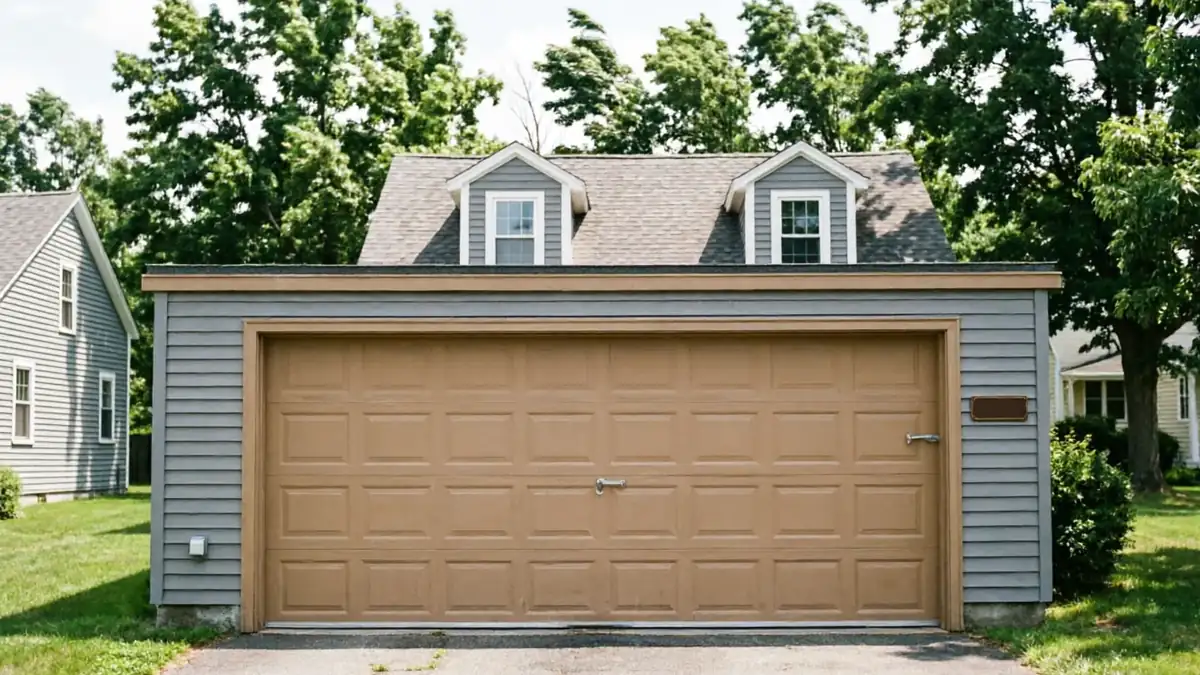
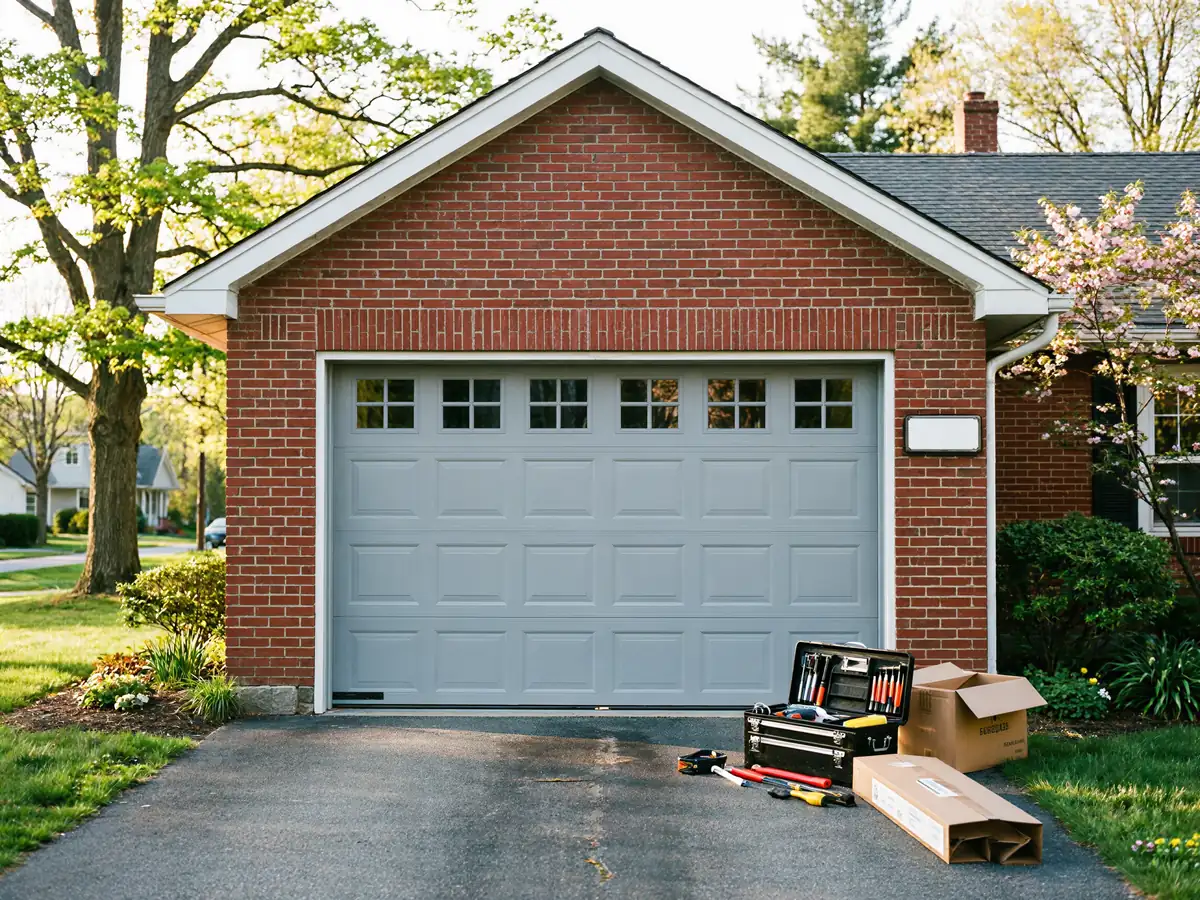
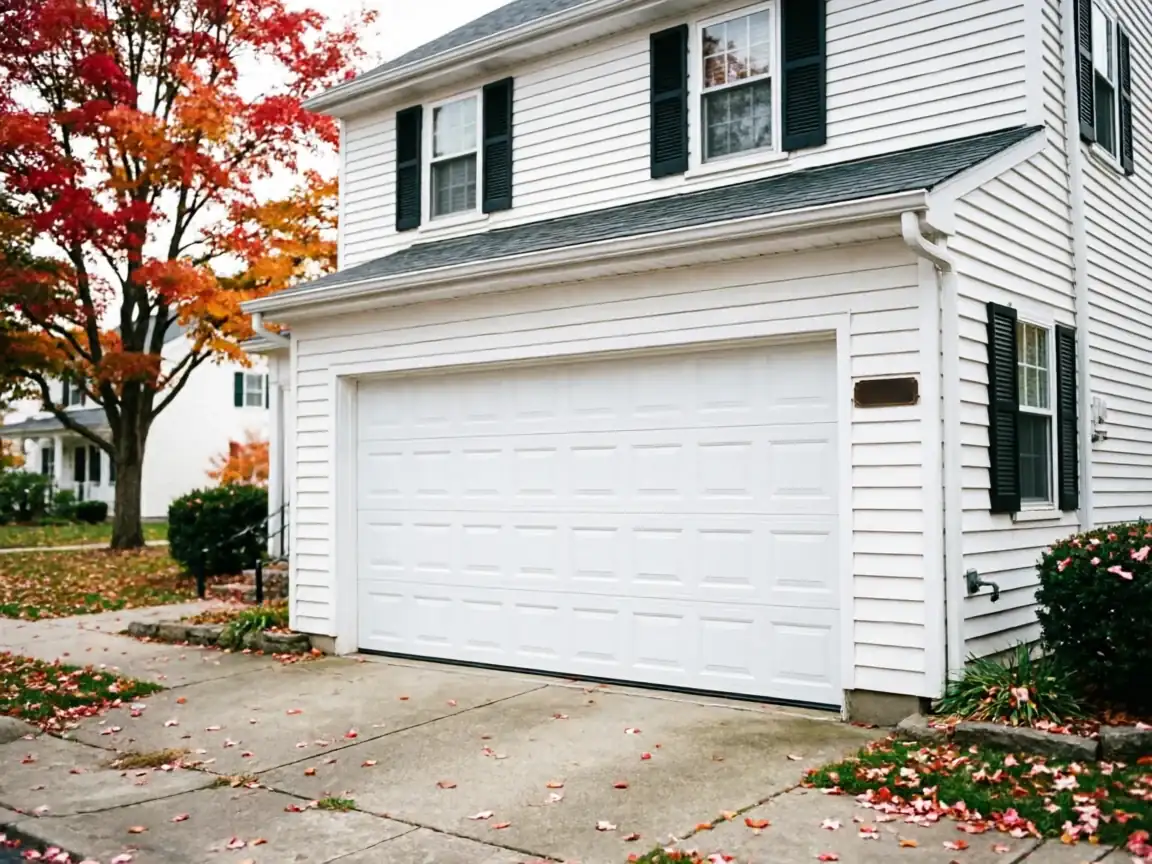
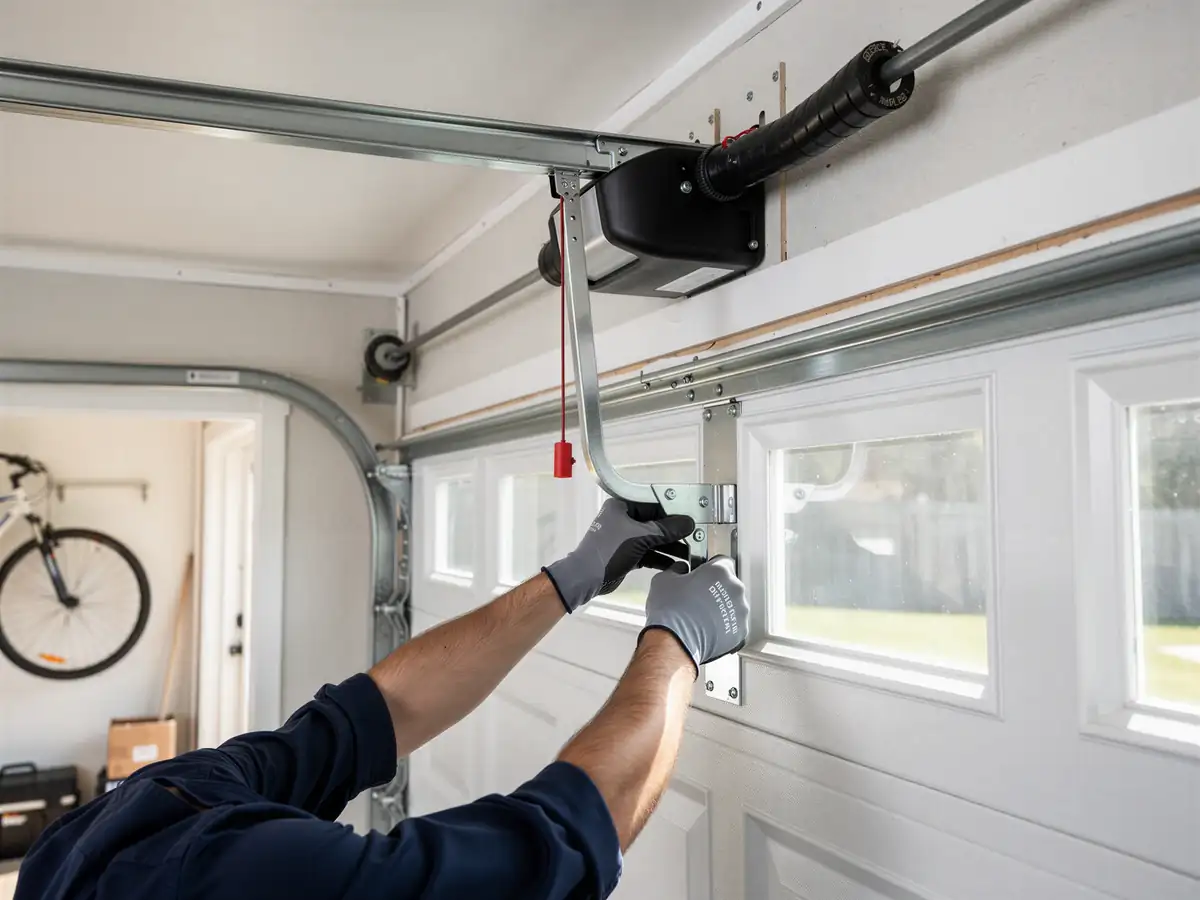
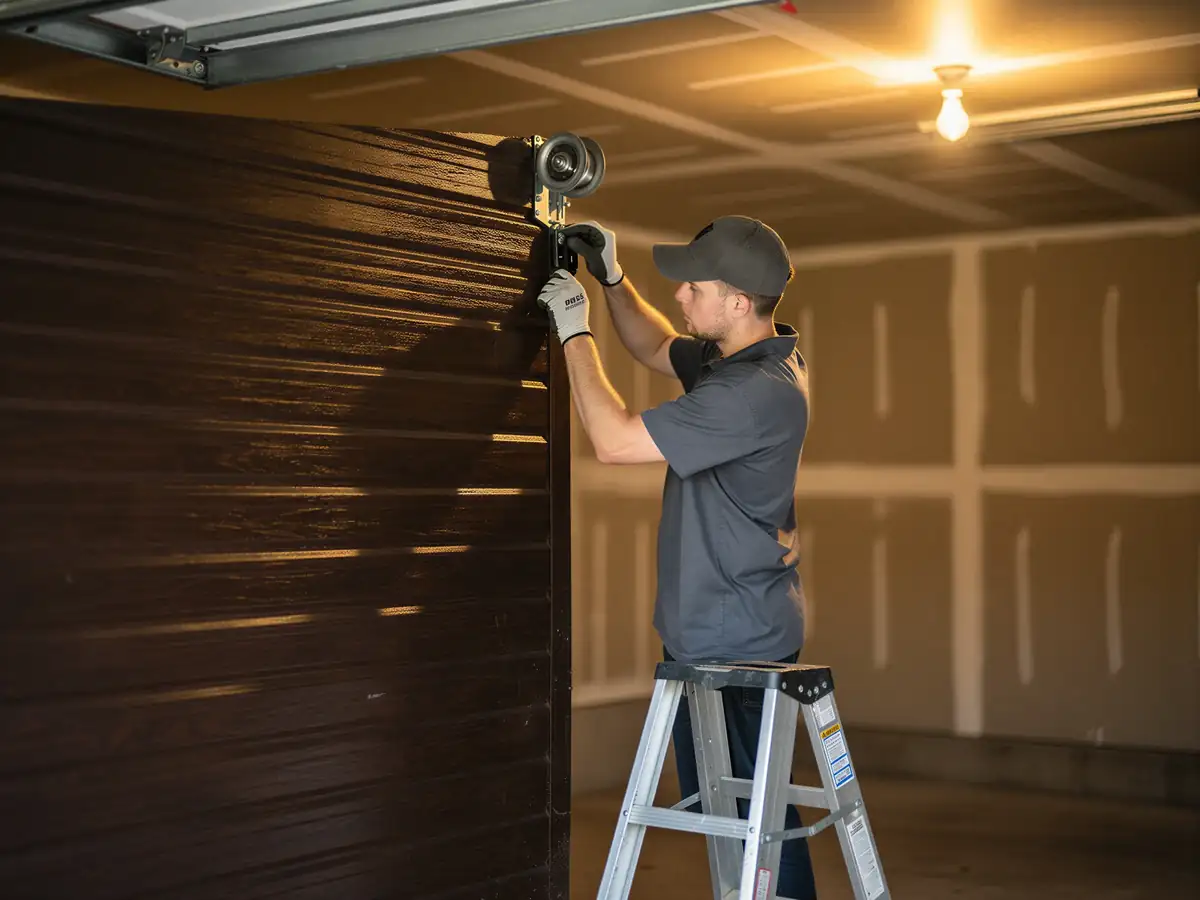
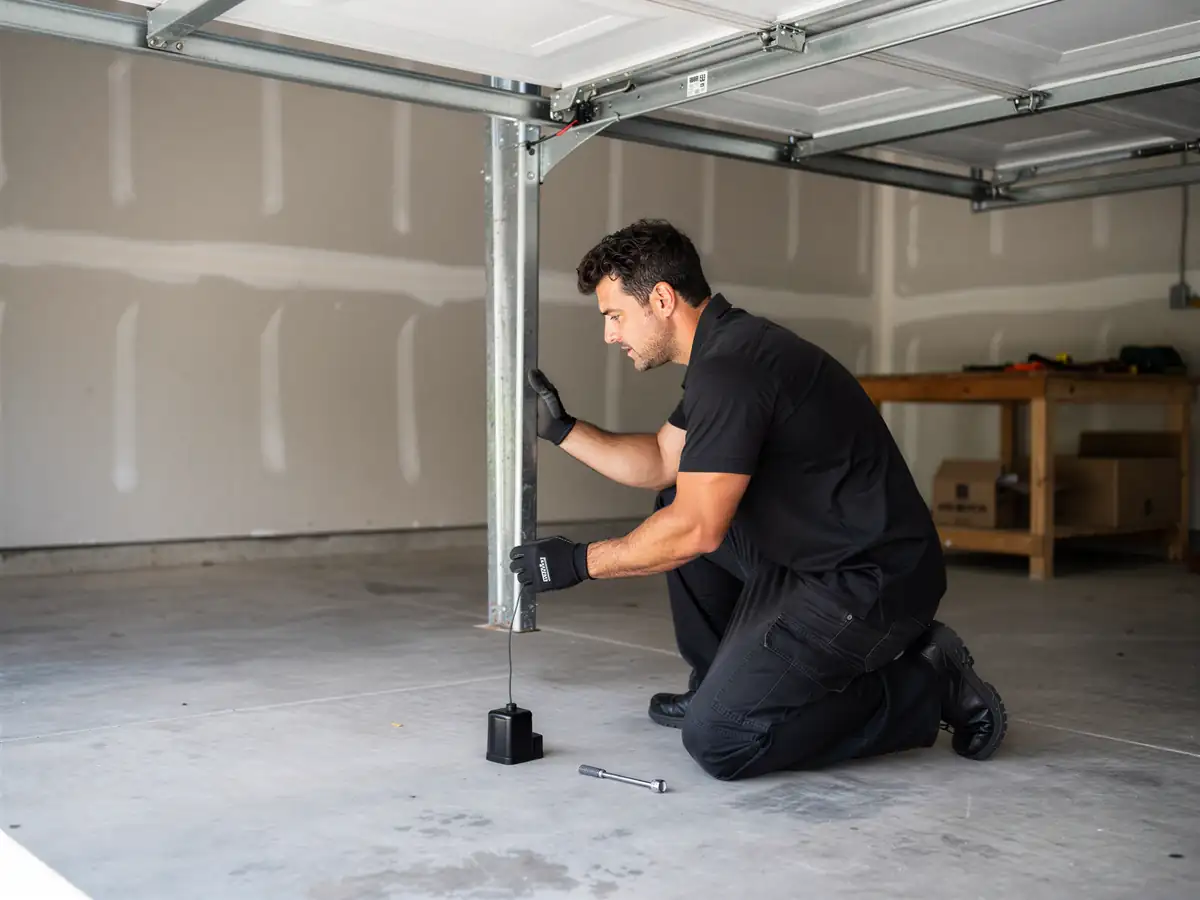
This area sits in a cold-severe climate band, and that matters more for a wide garage door than almost anything else about the house. A double-wide door has more surface area for wind to push against than a single, and more surface area means more force transferred through the track into the brackets bolted to your framing. Most houses in the West Chesterservice area went up between 1938 and 1996, with the typical home dating to 1960 - decades before wide doors carried the strut counts and reinforced track you see on new builds. Across the 74 named communities that make up this area, the dominant stock is still 1960s and 70s construction, which means a lot of original jamb brackets and lighter-gauge track are still doing the job they were sized for fifty-plus years ago, not the job a modern wide door actually asks of them. Add freeze-thaw cycling from a cold-severe winter and the lag screws holding those brackets to aging framing loosen a little more each year. None of this shows up as a dramatic failure overnight. It shows up as a door that racks a little more in a gust than it used to.
What to Check
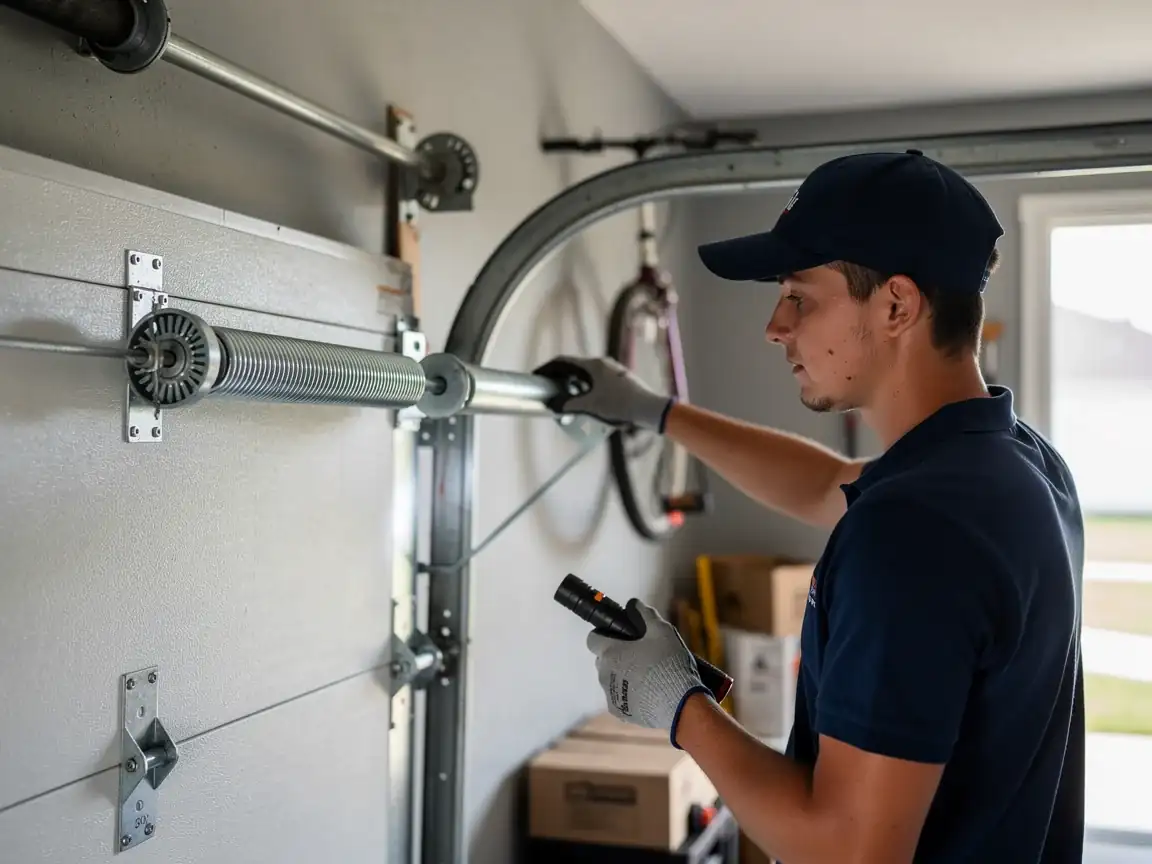
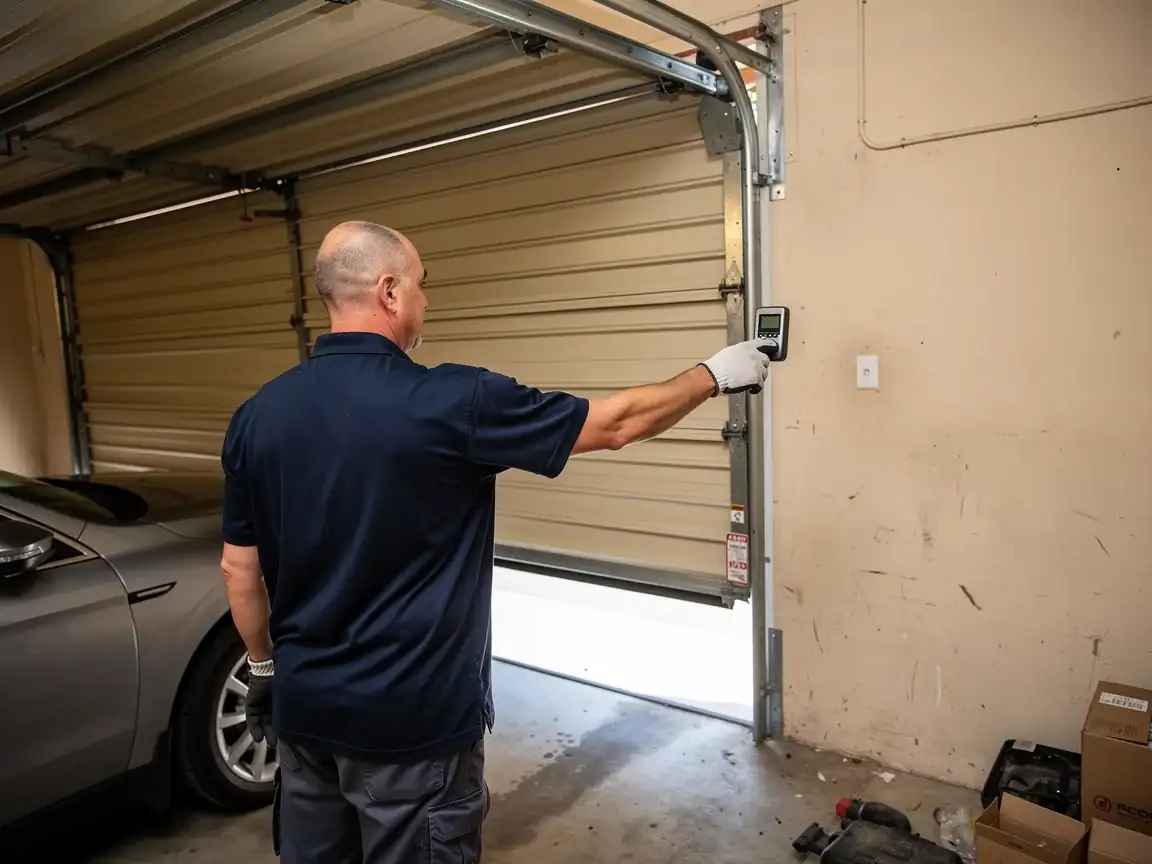
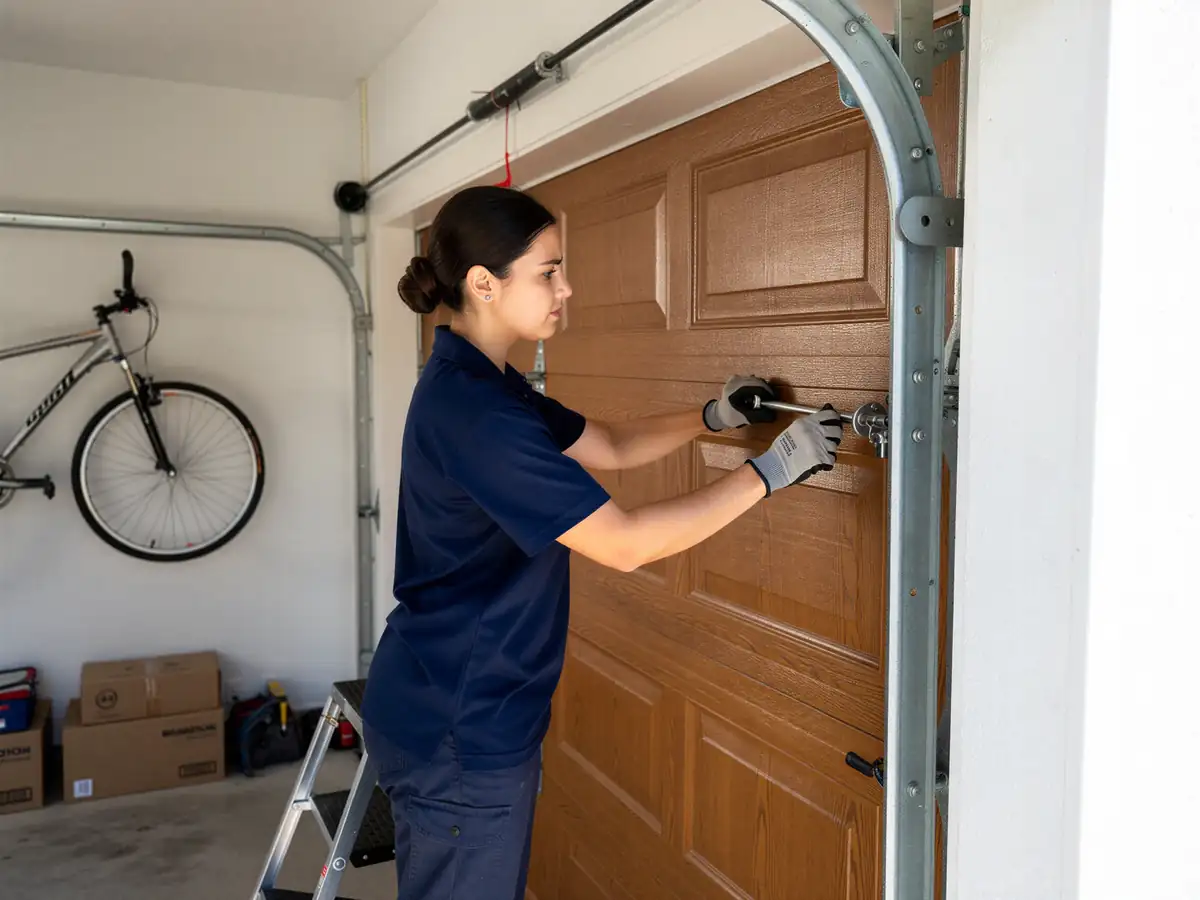
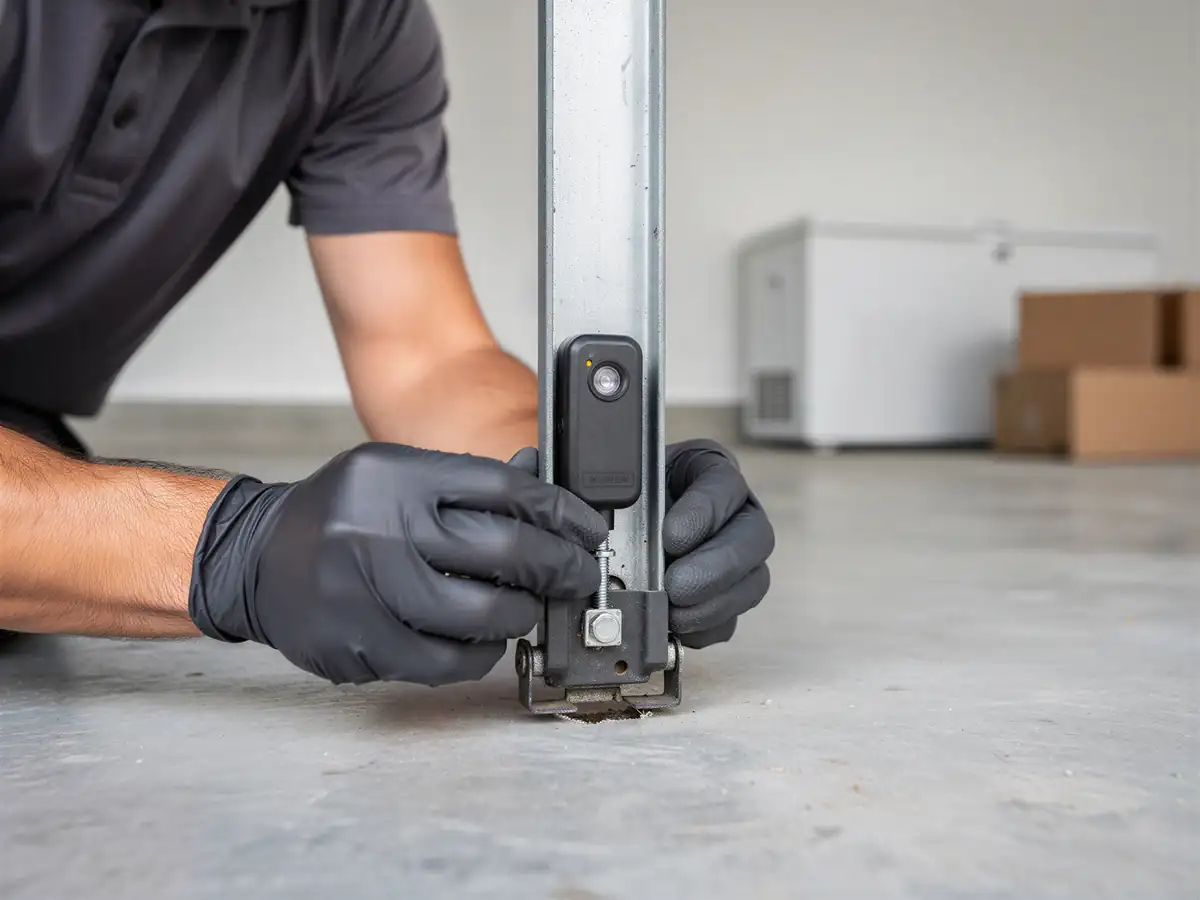
Start at the top corners of the door, where the track bends toward the wall. On a wide door with age on it, this is where flex concentrates first - look for a gap opening between the roller and the track, or daylight between the bracket and the jamb. Run a hand along the horizontal struts on the back of the panels (if the door has them); on a lot of the 1960s and 70s stock in this area, you'll find two or three struts where a modern wide door of the same size would carry more. Check the lag screws at each jamb bracket for play - on a door that's original or close to it, these loosen with the cold-severe freeze-thaw cycle this area gets every winter, even if nothing looks visibly wrong. Last, watch the panels themselves in a gust if you're home for one: visible bowing in the middle of a wide panel, even slight, means the reinforcement isn't keeping up with the load anymore. None of this requires taking the door apart. It's a five-minute walk-around, and it tells you whether what you're looking at is cosmetic or structural.
When Waiting Is Fine
Not every sign of age on a wide door is urgent. A little surface rust on the track, a hinge that squeaks, faded paint on a panel that's been facing west for sixty years - none of that is a wind problem, and none of it needs a same-week call. If the door opens and closes square, sits flush against the weatherstrip, and you don't see the bracket gap or panel bow described above, you're fine to keep an eye on it through a season rather than act right away. We'll say plainly: we don't push replacement on a door that's just cosmetically tired. A door from the 1960s-70s building era that's been maintained - track cleaned, hardware tightened, rollers replaced as they wear - can keep doing its job for years yet, even in this climate. The point isn't that every older door is a liability. It's that a wide door specifically, because of the extra leverage wind gets on it, is the one where small neglect compounds faster than it would on a single door. Watch it, don't panic over it.
What Is Going On
A garage door doesn't fail under wind the way a tree branch snaps - it fails through repeated flex. Wind hitting a wide door pushes the whole panel assembly inward, and every gust that isn't fully absorbed by the struts gets passed instead into the track, the rollers, and the brackets anchoring the track to the jamb. On a door built to a 1960s-era spec - lighter struts, narrower track, fewer anchor points - that force has fewer places to go, so it concentrates at the weakest joint, usually the top bracket. Run that cycle a few hundred times over a cold-severe winter, with the metal already contracting and expanding through freeze-thaw, and small amounts of play become permanent ones. This is a mechanical problem, not a weather event - the wind on any given day isn't unusual, it's the accumulated cycles acting on hardware that was never upgraded. For a lot of houses in this service area, the fix is one of two things: retrofit struts and brackets rated for the wider span, or in cases where the door and track are both near the end of their life, replace the unit rather than keep reinforcing an assembly that's fighting its own age.
Straight answers about garage door repair in West Chester. Still unsure? Ask us directly.
Why does my garage door flex more than my neighbor's in a storm?
Usually it's width and age together. A double-wide door has more surface for wind to load, and if your house is part of the area's common 1960s-70s stock, the door may still be running original struts and track sized for a lighter load than current wide doors carry. Reinforcement, not replacement, is often the fix.
Is a little gap at the top track bracket serious?
It's worth watching closely. On older hardware in this climate, freeze-thaw cycling loosens lag screws gradually, and a gap at the bracket is usually the first visible sign. It doesn't mean immediate failure, but it's the spot to check again after the next few windy days rather than ignore.
Do I need to replace my whole door if it's original to the house?
Not necessarily. A lot of doors from this area's 1960-median building era are mechanically sound and just need updated struts, hardware, or track reinforcement for a wide span. Replacement makes more sense when the track or panels themselves show structural wear, not just age.