Broken or frayed garage door cables are common in West Chester's 1938-1996 housing stock. Same-system diagnosis, parts on the truck, straight talk on repair vs. replace.
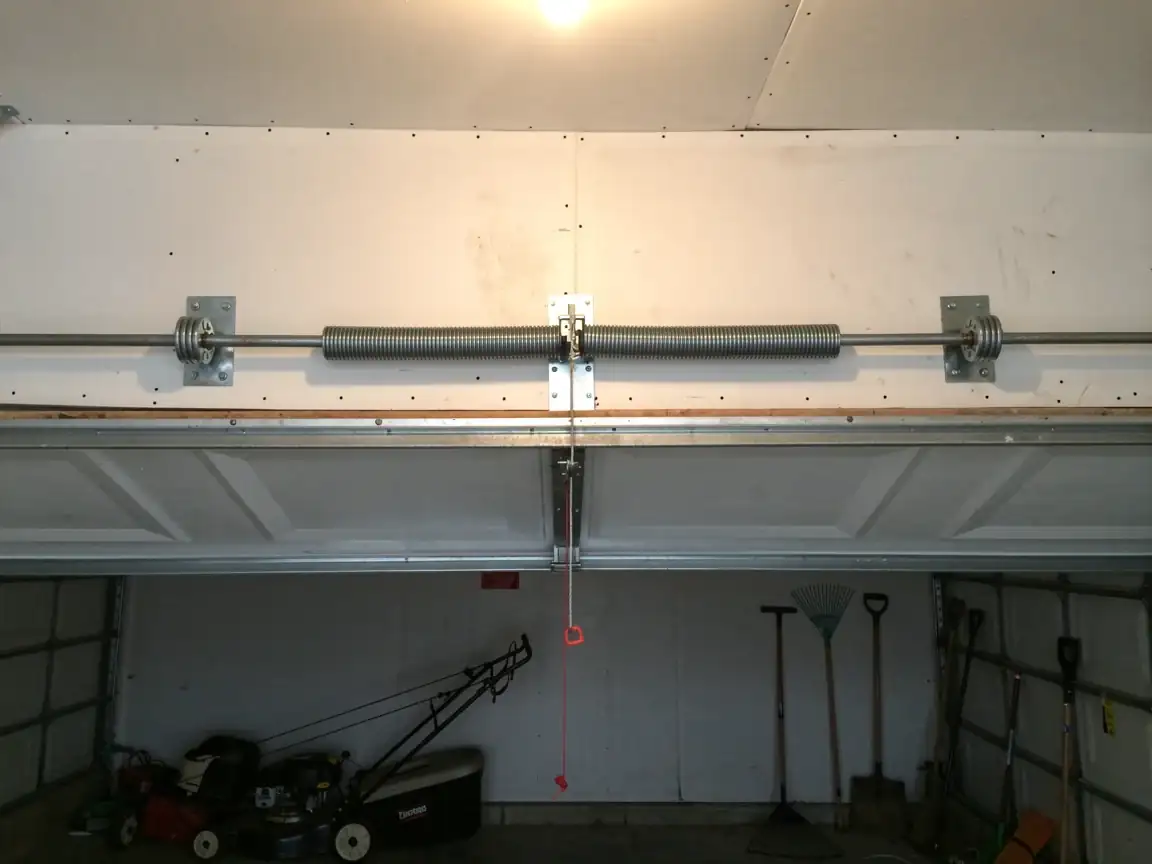
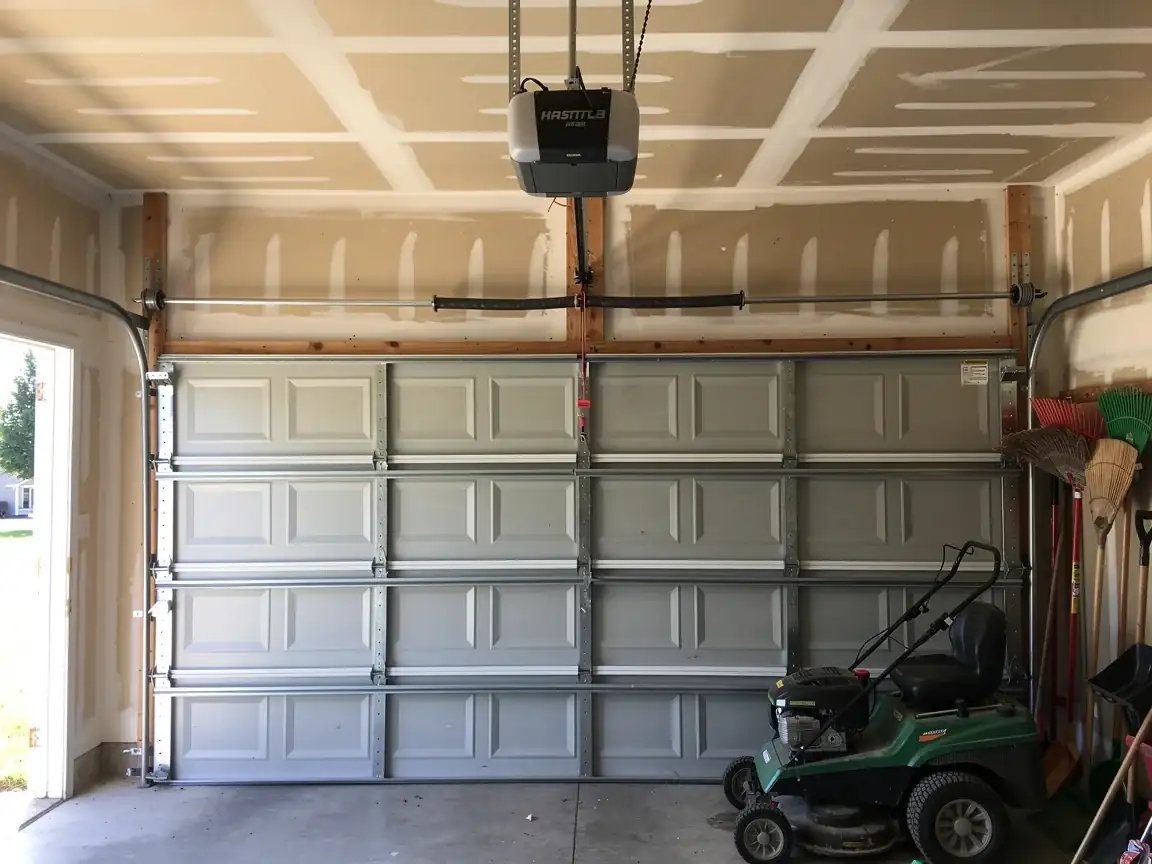
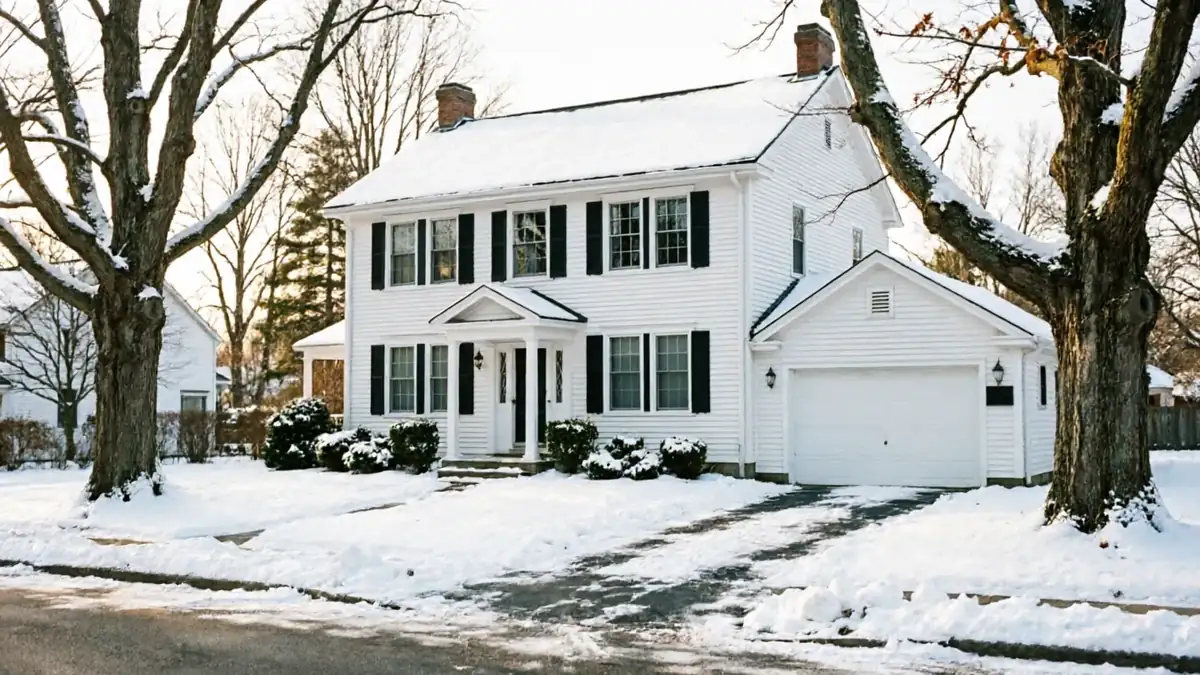
Most of the houses across this service area went up between 1938 and 1996, with the bulk of that stock dating to the 1960s and 70s. That matters for cables because the extension-spring and cable setups common to that era were built for a thirty-year lifespan, not fifty or sixty. A lot of these doors are still running original or first-replacement hardware, and the cables are the weak link - they're thin steel, they live under constant tension, and they take the brunt of every up-and-down cycle.
Add the climate band here, which runs cold and severe, and you get a second problem: the galvanized coating on older cables breaks down faster with repeated freeze-thaw cycling and road salt tracked in on tires. Once that coating goes, the strands underneath rust and fray, usually at the bottom roller bracket or up at the drum where the cable wraps. We see this pattern across the 74 named areas we work in, not just one neighborhood - older stock plus cold winters is a combination that wears cables out ahead of schedule, regardless of which side of town you're on.
A cable that's frayed but not yet snapped is still dangerous to touch. The tension stored in that system doesn't go away because the cable looks intact.
How Long It Takes
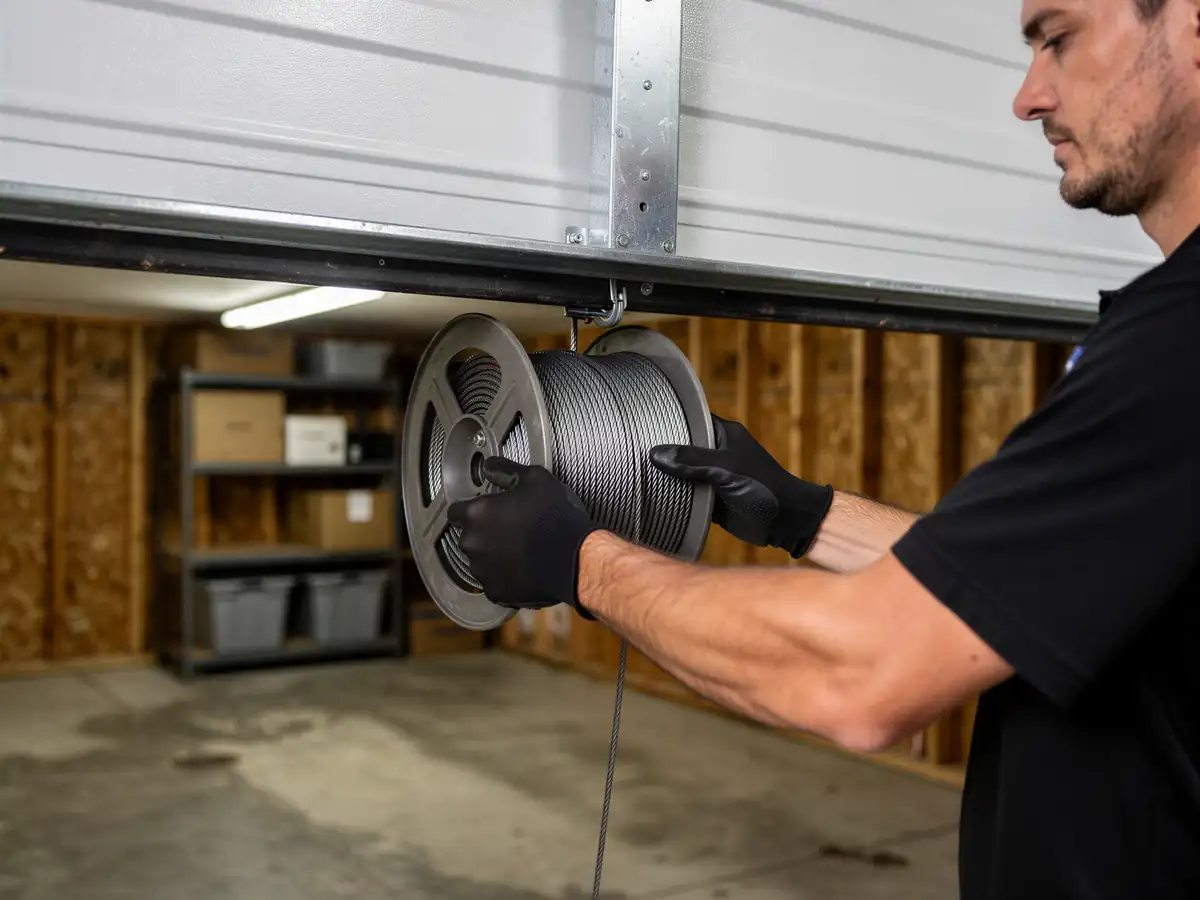
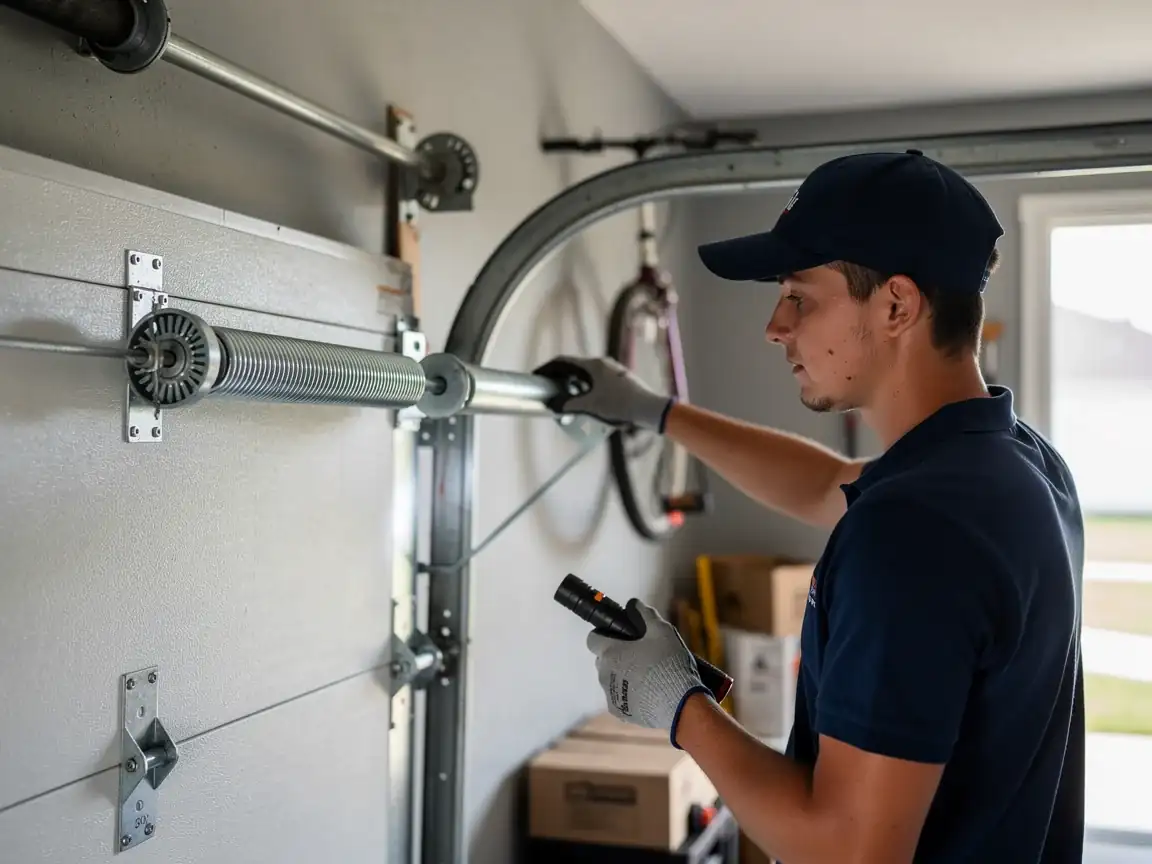
A straightforward cable replacement on a single door, both cables done as a pair, is usually a same-visit job once we're on site with the right drum and cable length for your track setup. The diagnosis part is quick - we can usually tell from the drum, the bottom bracket, and the wear pattern whether it's a clean cable swap or whether something else let go first, like a bearing or the spring itself.
Where it takes longer is when the door is older than the common 1960s-70s stock out here and uses a drum or track size nobody carries as a standard shelf item anymore. That's not frequent, but on some of the oldest houses in this service area - the ones from the late 1930s through the 1950s end of our housing range - we've run into non-standard spool sizes that need to be special-ordered. We'll tell you up front if that's what we're looking at instead of guessing.
What the Repair Takes
01
Cable work means releasing the spring tension safely first
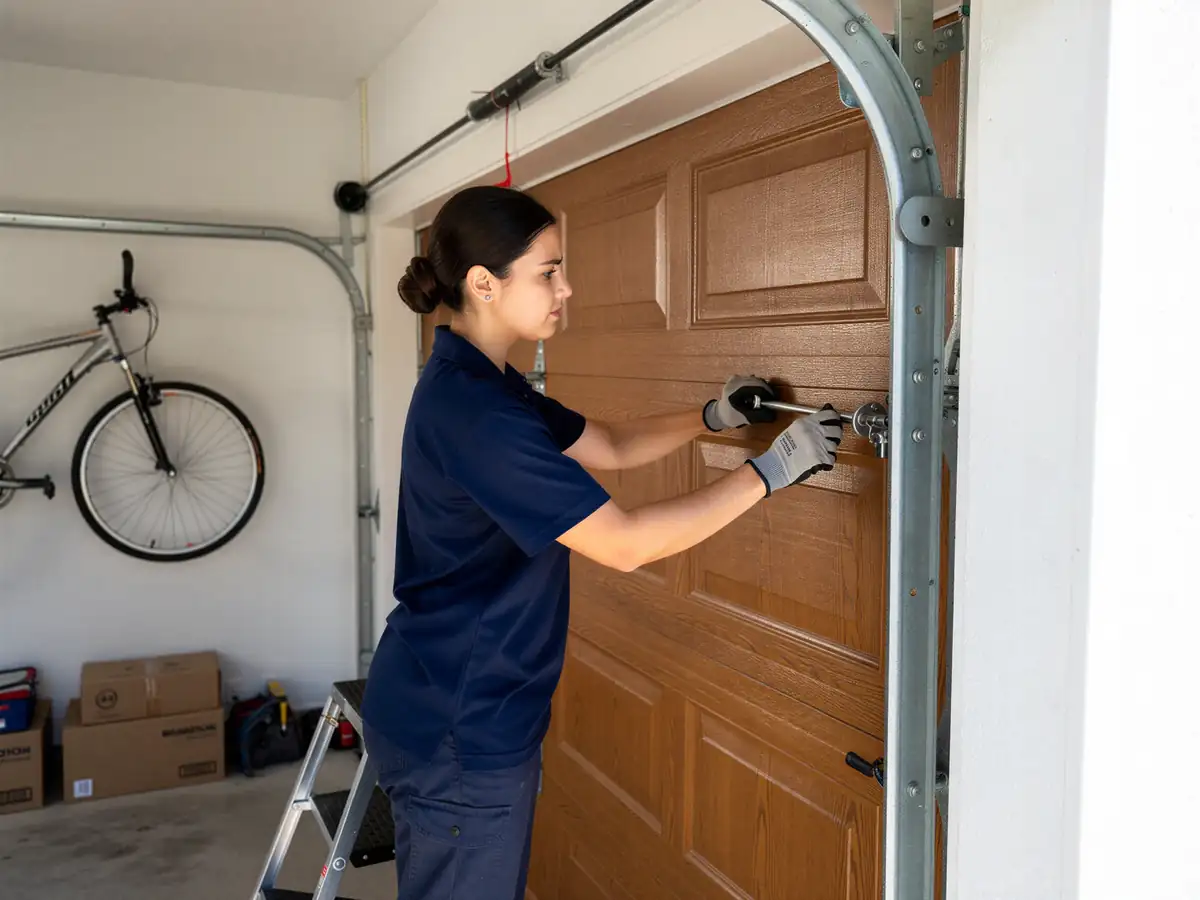
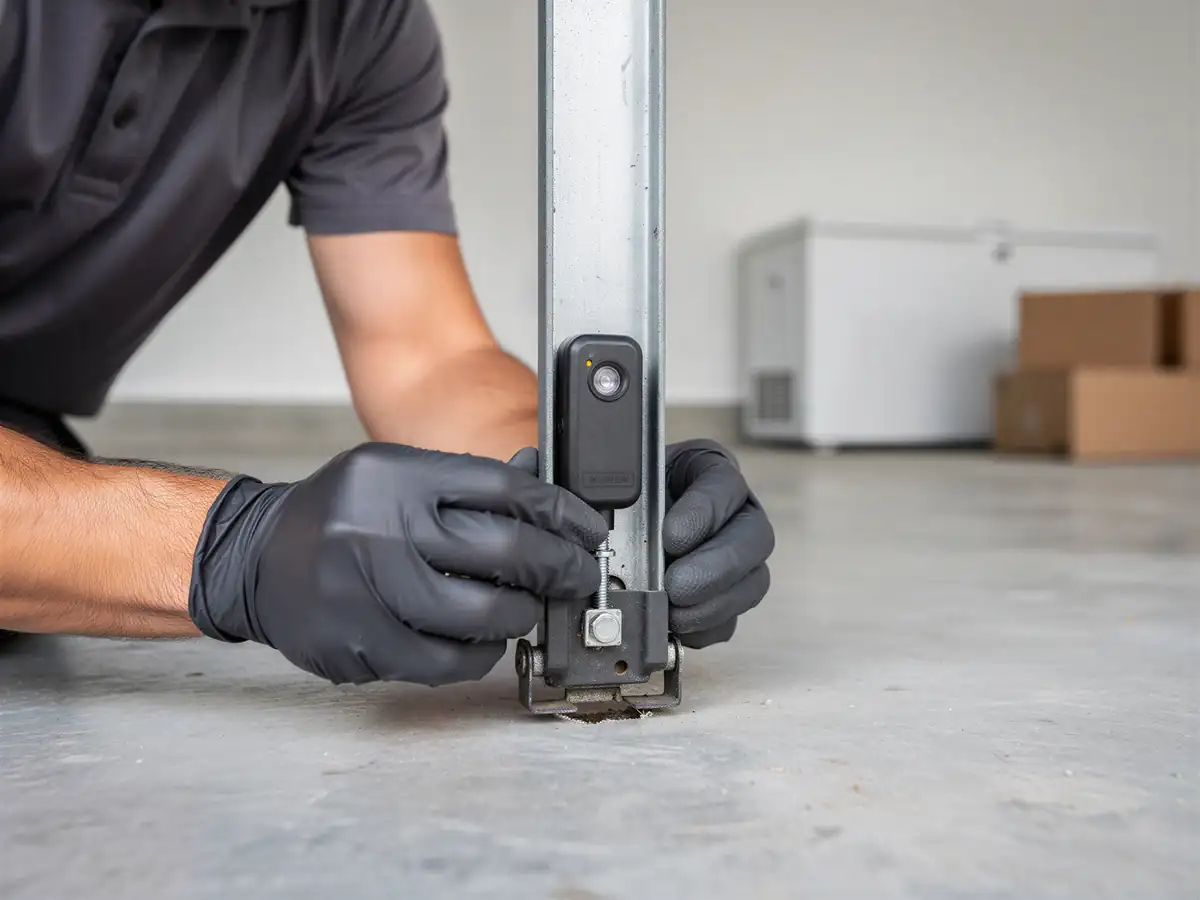
That's the part that hurts people when it's done wrong, and it's not a DIY step regardless of what a video makes it look like. From there it's pulling the old cable off the drum and bottom bracket, checking the drum grooves for wear (a scored drum will chew through a new cable fast), and checking the bottom bracket for the same rust pattern our cold winters tend to cause.
02
We replace both cables as a pair even if only one has failed
They're the same age, under the same tension, and wearing at the same rate, so replacing one and leaving the other is just scheduling the next call. After the new cables are on, we re-tension the springs, balance the door, and run it through a full cycle check before we leave.
03
One limitation worth saying plainly
If the drums or bottom brackets are too far gone, or if the spring that shares the system is also failing, cable replacement alone won't fix the door. We'll flag that rather than sell a partial repair that doesn't hold.
The Symptom
The giveaway is usually one side of the door hanging lower than the other, or the door going crooked partway through its travel and binding in the track. Sometimes it's a visible frizz of broken strands near the bottom roller, or a sudden loud bang when a cable lets go under tension - that one usually drops the door hard on one side and locks it there.
A slower version shows up as a door that's gotten noticeably harder to open by hand, or an opener that strains and reverses partway up. That's often a cable stretching or slipping off the drum before it fully snaps, which is common on the older extension-spring setups still in service across this area's 1960s and 70s-built homes. If you catch it at this stage, it's a planned repair instead of an emergency one - which matters, since a door stuck half-open or jammed crooked isn't something to keep using.
How it works
From “it’s stuck” to “it’s fixed”
01
Tell us what’s wrong
Describe the symptom - won’t open, loud bang, opener runs but the door won’t move.
02
On-site diagnosis
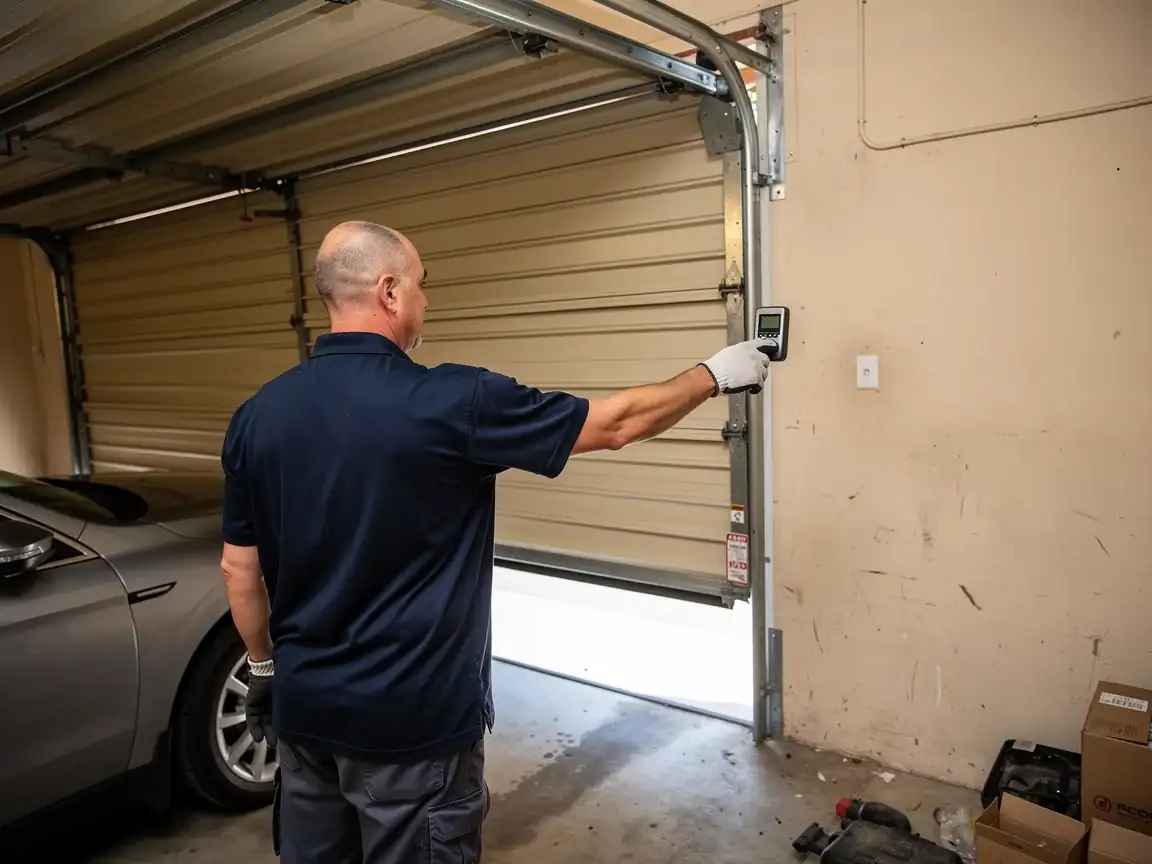
A technician tests the door under power and by hand and finds what actually failed.
03
Clear, up-front plan
You get the fix that’s needed and what drives the cost - before any work starts.
04
Repaired & tested
The repair is done, the door is set true and tested, and the work area left clean.
Not sure which repair your door needs in West Chester, PA? Describe what it’s doing - every job starts with a diagnosis.
Straight answers about garage door repair in West Chester. Still unsure? Ask us directly.
Why do garage door cables fail more in West Chester than somewhere warmer?
The combination matters: a lot of houses here date to the 1960s and 70s, old enough that original cable hardware is near or past its service life, and the cold, severe climate band accelerates coating breakdown and rust on steel cable strands. Warmer, newer housing stock doesn't see the same compounding wear.
Can I replace just the one cable that broke?
We don't recommend it. Both cables on a door are the same age and carry the same tension, so if one has failed from wear, the other is close behind. Replacing both in one visit costs less than two separate service calls down the line.
Is a broken cable an emergency?
If the door is stuck open, hanging crooked, or came down hard on one side, yes - stop using it and don't try to force it closed or open. A door under uneven spring tension can move unpredictably and the cable or spring can cause injury.
Do older West Chester homes need special parts for cable repair?
Most houses from the common 1960s-70s stock use standard drum and cable sizes we carry on the truck. Some of the oldest homes in the area, from the late 1930s through the 1950s, occasionally use non-standard spool sizes that need ordering - we'll tell you at diagnosis if that's the case.