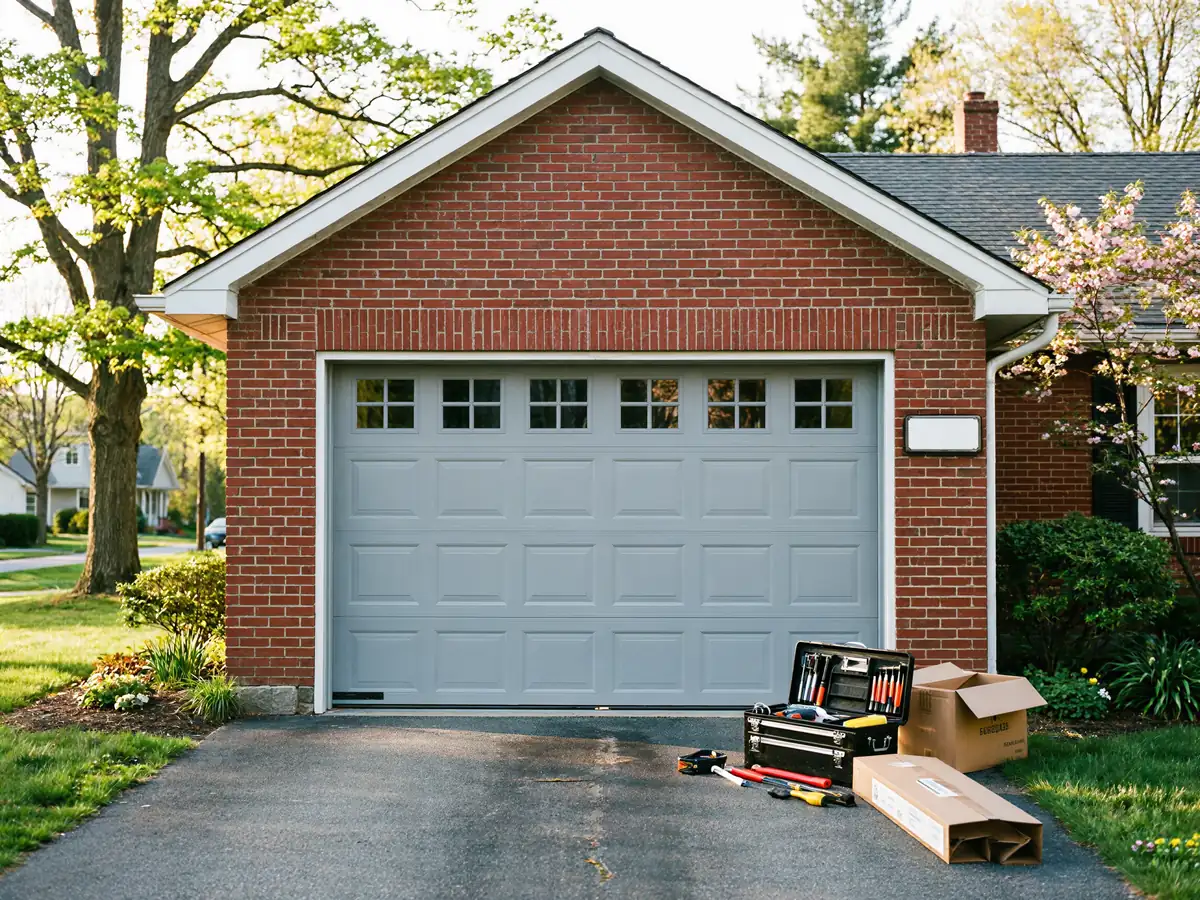
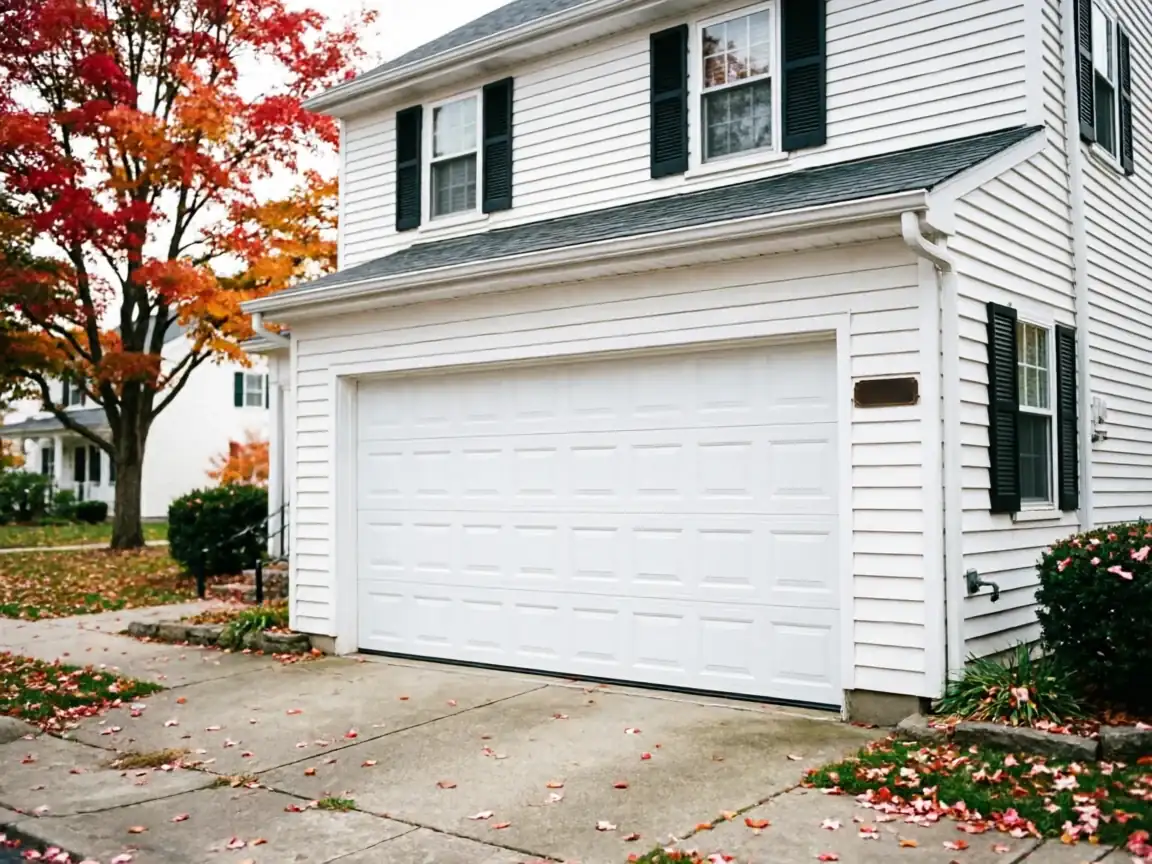
A look at why garage doors across West Chester's 1938-1996 housing stock lose their weather seals fast in this area's cold winters, and what's worth fixing now versus later.
West Chester sits in a climate zone rated cold and severe, which means real freeze-thaw cycling every winter, not just a few cold snaps. That cycling is hard on rubber and vinyl weather seals no matter how well they were installed. The housing stock here runs from 1938 up through 1996, with the median build year sitting around 1960, and that matters because a lot of garage framing from that era was never built to the tighter tolerances you'd see on new construction. Jambs have shifted, slabs have settled a little, and the result is a door that may still open and close fine but no longer seats tight against its seals. Add 60+ years of seasonal expansion and contraction in a severe cold band and you get gaps at the bottom seal, the side stops, or both. This isn't a defect in any one door brand. It's what happens when original-era framing meets decades of hard winters. Across the 74 named areas this region covers, the pattern repeats: older homes near the borough core see it most, because that's where the oldest stock concentrates.
What to Check
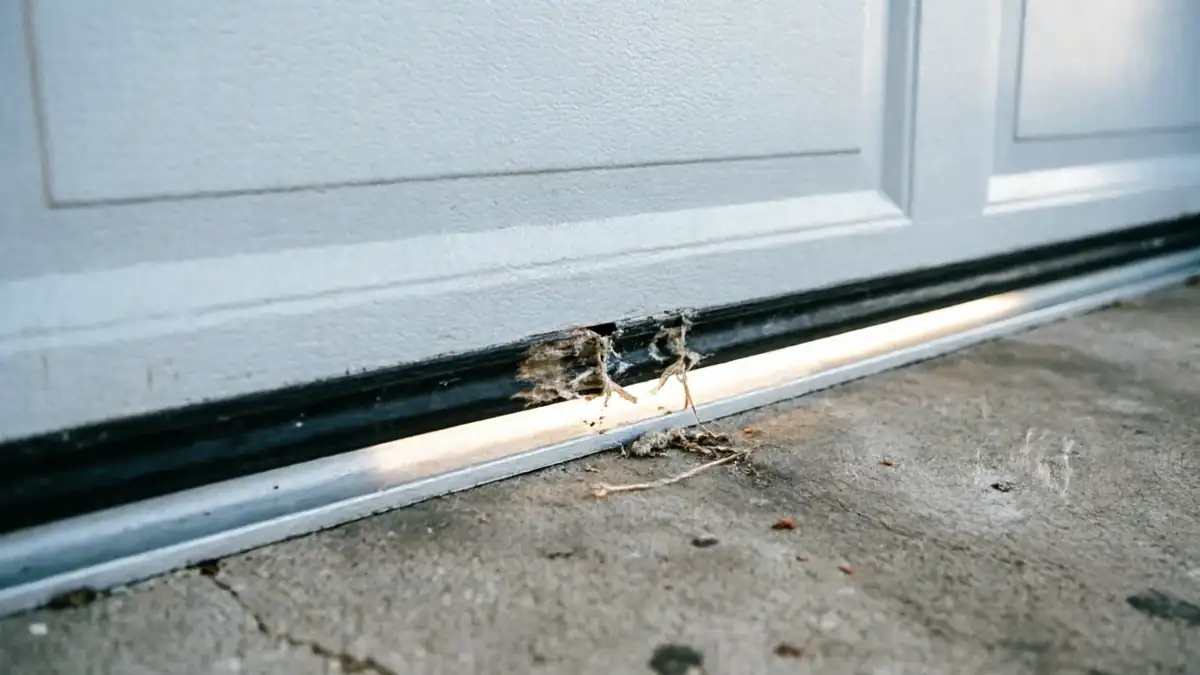
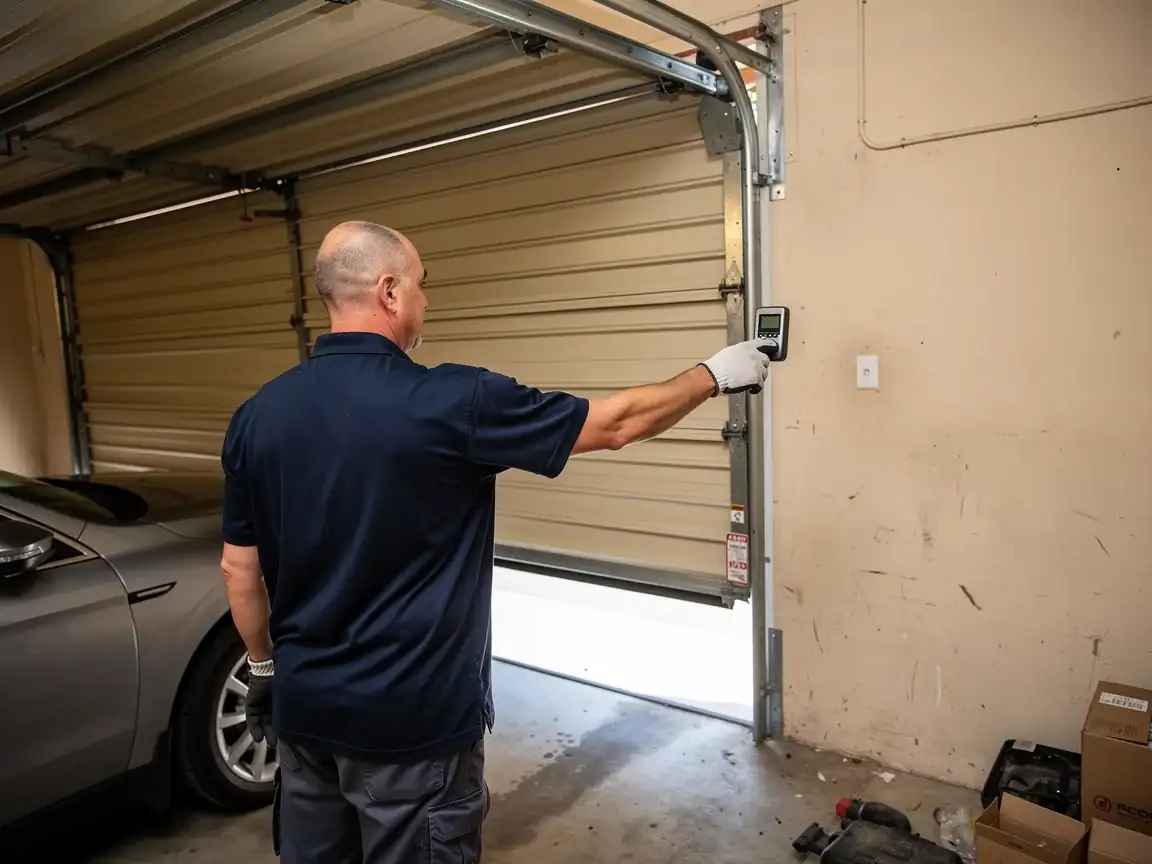
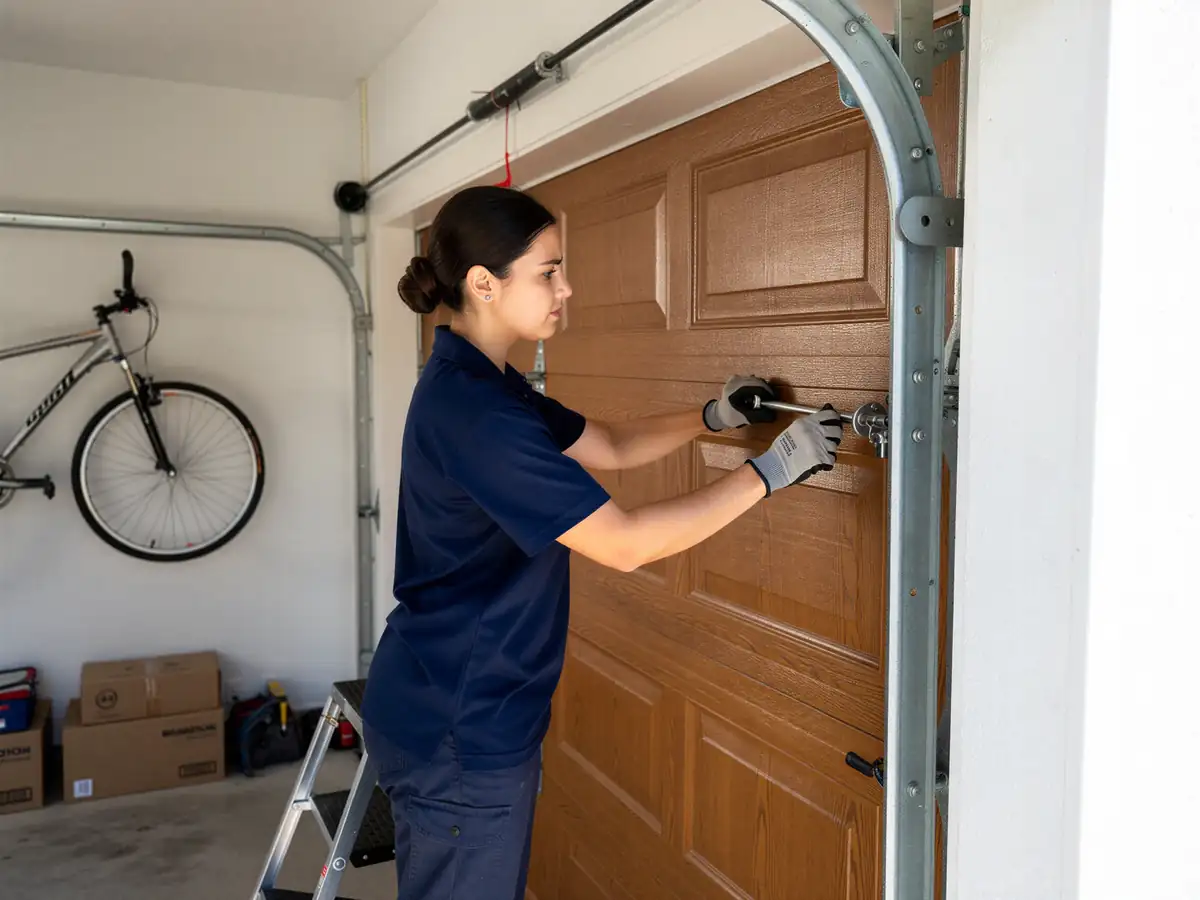
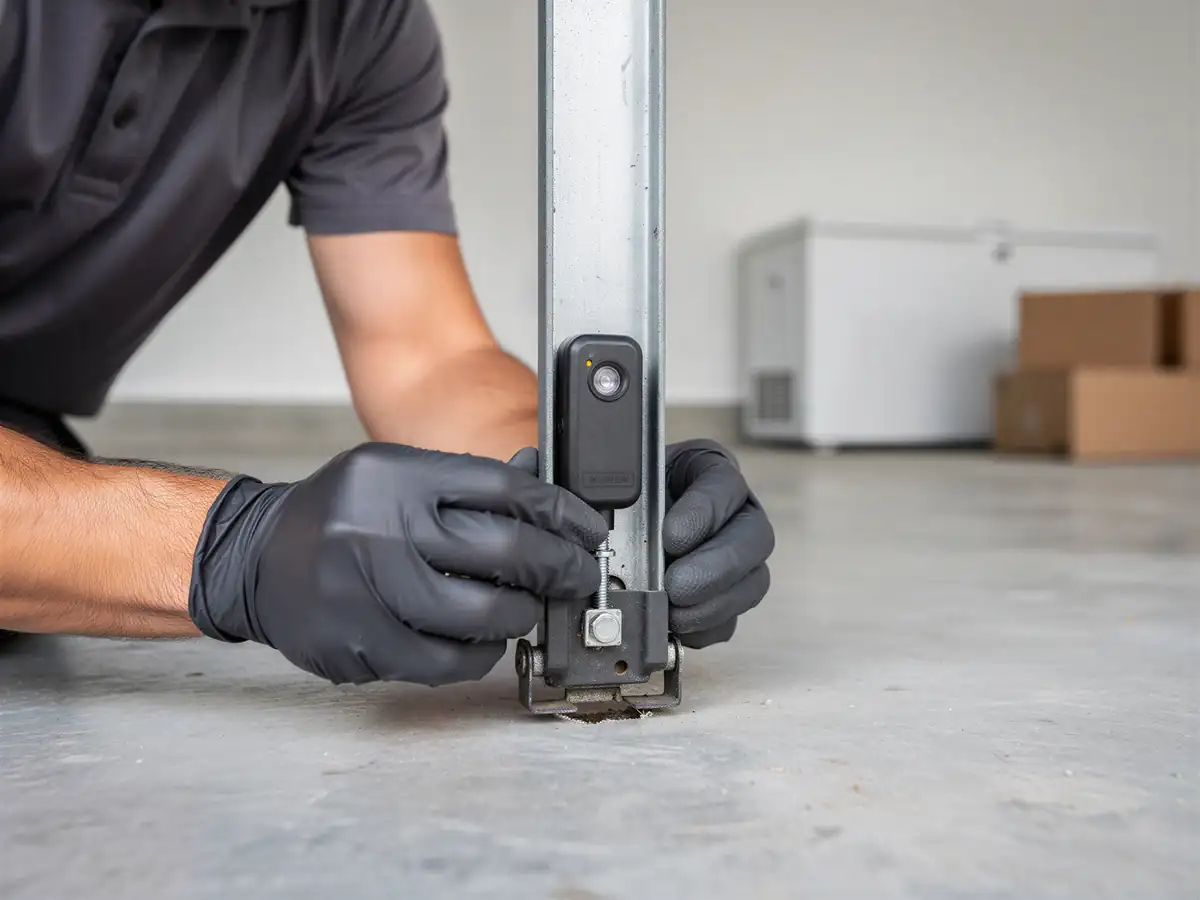
Start at the bottom seal - the rubber gasket running along the floor of the door. On houses built before the 1970s, that track is often an older style that doesn't flex well once it's cracked or flattened, and cold makes rubber stiffer and less forgiving. Run a hand along it on a cold morning; if you feel cold air moving rather than just cold material, it's not sealing. Next check the side and top stop molding where the door meets the jamb - on original 1960s-era jambs that have shifted even slightly out of square, you'll see daylight at one top corner before the other. Last, check the spot where two panels meet if you have an older steel door; astragal seals between panels wear unevenly when a door's been opened and closed thousands of times over 50-plus years. None of this requires taking the door apart. It's a five-minute visual and a hand pass in low light, ideally on a morning when it's actually cold enough to feel the difference.
When Waiting Is Fine
Not every gap needs a service call right away. A little draught along the very bottom of the seal on an otherwise straight, square door is often just seal wear from age and UV, and it's a low-cost fix you can schedule on your own timeline rather than an emergency. If the door still opens and closes smoothly, latches evenly, and the gap is small and consistent rather than growing, there's no mechanical urgency - you're looking at a comfort and energy issue, not a safety one. Where it's worth moving faster is if the gap is uneven side to side, which can point to a jamb or track alignment problem rather than just a tired seal, or if cold air is coming through a spot where the panel itself shows cracking. One honest note: we don't do carpentry or reframe jambs - if the underlying wood has shifted enough that the door can't seat square no matter what seal you put on it, that's a call for a contractor who does structural framing work, and we'll tell you if that's what we're seeing.
What Is Going On
The mechanism is simple once you see it. Rubber and vinyl seals are flexible at warm temperatures and stiffen as the mercury drops, and in a cold-severe climate band like this one, that swing happens repeatedly through a single winter, not once. Each cycle shrinks the seal material a little more and lets it pull away from whatever surface it's pressed against. On a newer door with modern jamb tolerances, that shrinkage still leaves enough contact to seal reasonably well. On a door set into framing from the 1938-1996 era - especially anything near that 1960 median build year - the baseline gap was already tighter to begin with, so there's less margin before a shrunk seal stops making contact at all. That's why the same seal problem shows up as a minor nuisance in a newer build and a real draught in an older one. It's not that older doors are worse. It's that they have less room for a tired seal to fail into before you feel it.
Straight answers about garage door repair in West Chester. Still unsure? Ask us directly.
Why does my garage door only draught in winter?
Rubber and vinyl seals stiffen and shrink as temperatures drop, and this area's cold-severe winters put seals through repeated freeze-thaw cycling. A seal that looked fine in October can pull away from the jamb by January. It's seasonal material behavior, not a sign the door itself has failed.
My house was built in the 1960s - does that matter for seals?
It can. A lot of the housing stock here dates from 1938 to 1996 with a median build year around 1960, and framing from that era often has tighter original tolerances than new construction. That leaves less margin before a worn seal stops making full contact with the jamb.
Do I need a new door or just a new seal?
Most draught complaints come down to a worn bottom seal or side stop molding, not the door itself. If the door still opens, closes, and latches evenly and the gap is small and consistent, a seal replacement usually solves it without touching the door or opener.