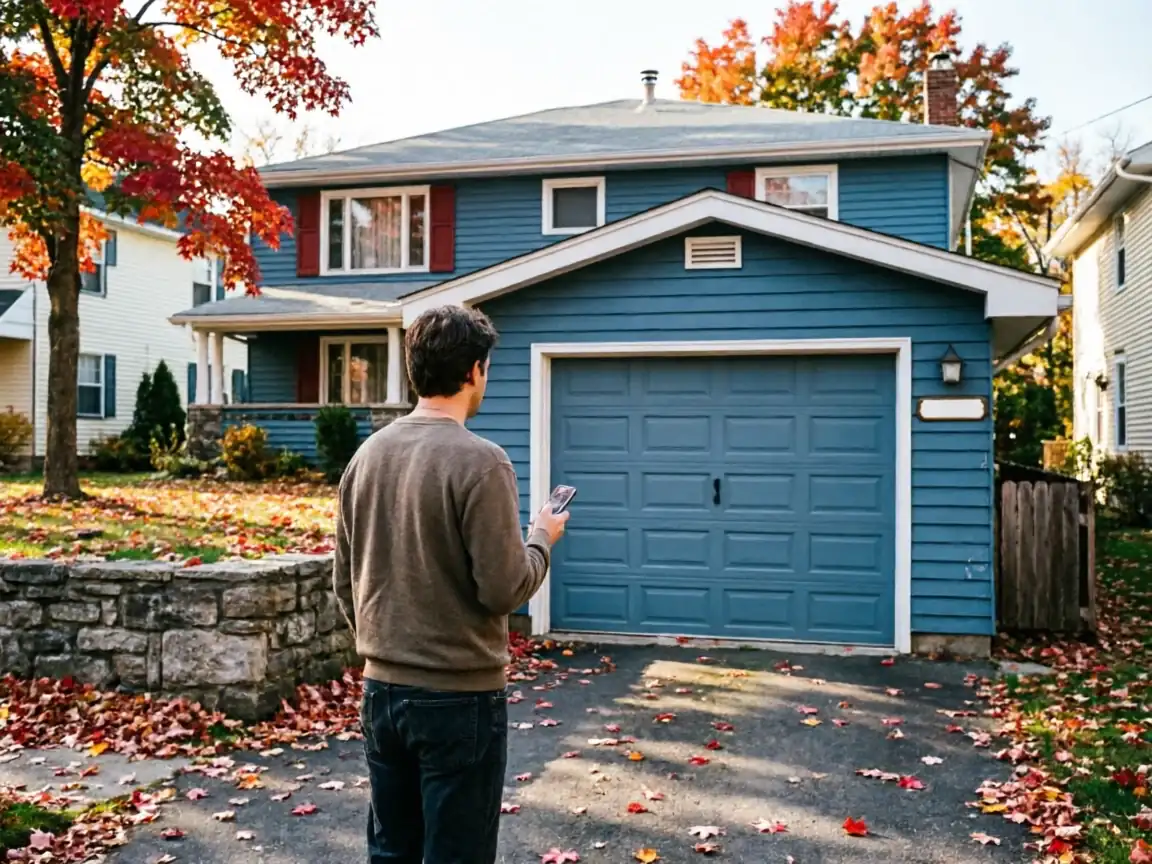
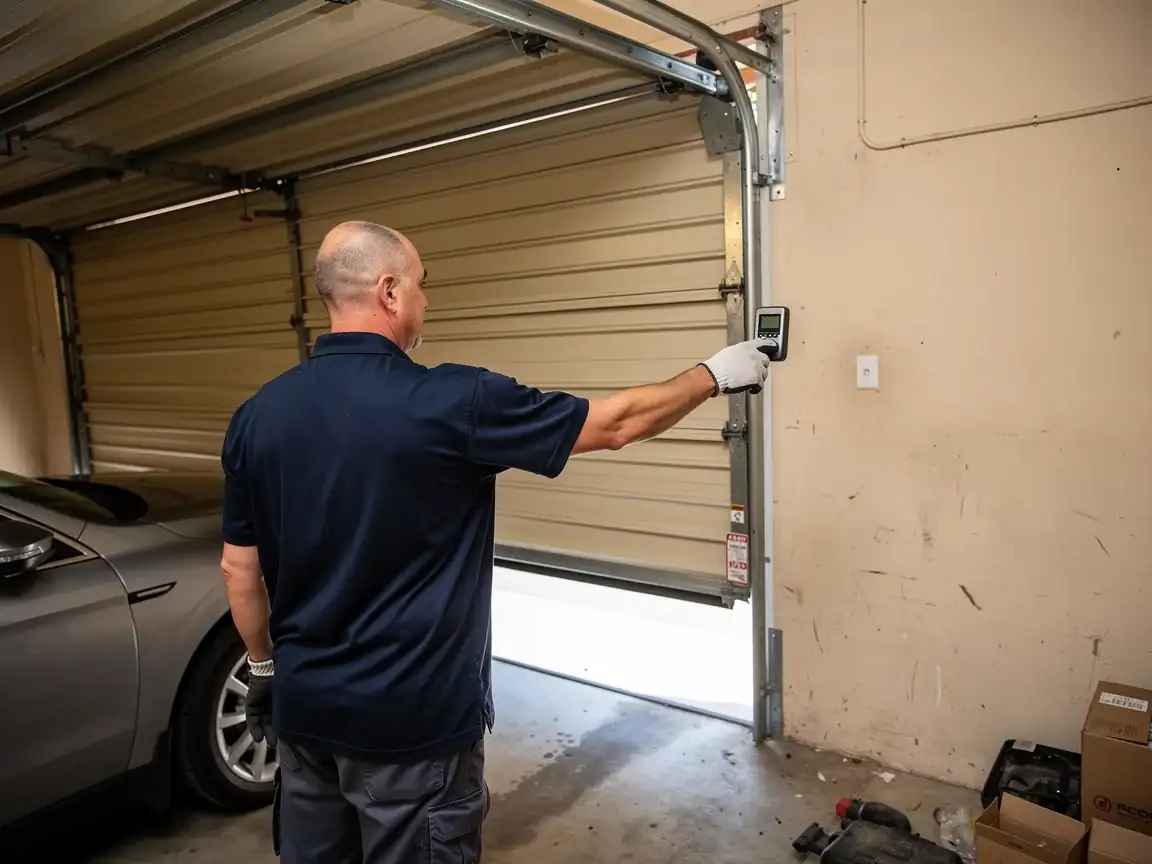
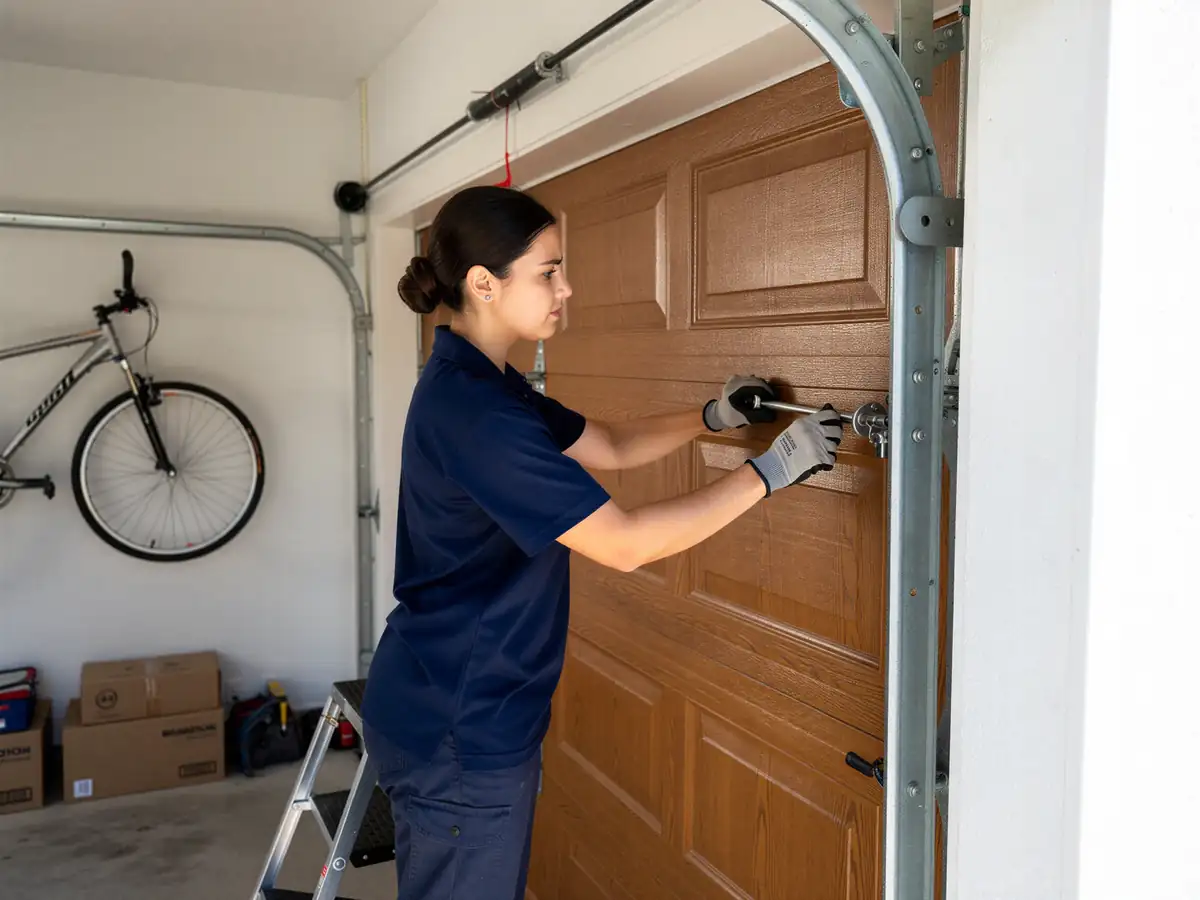
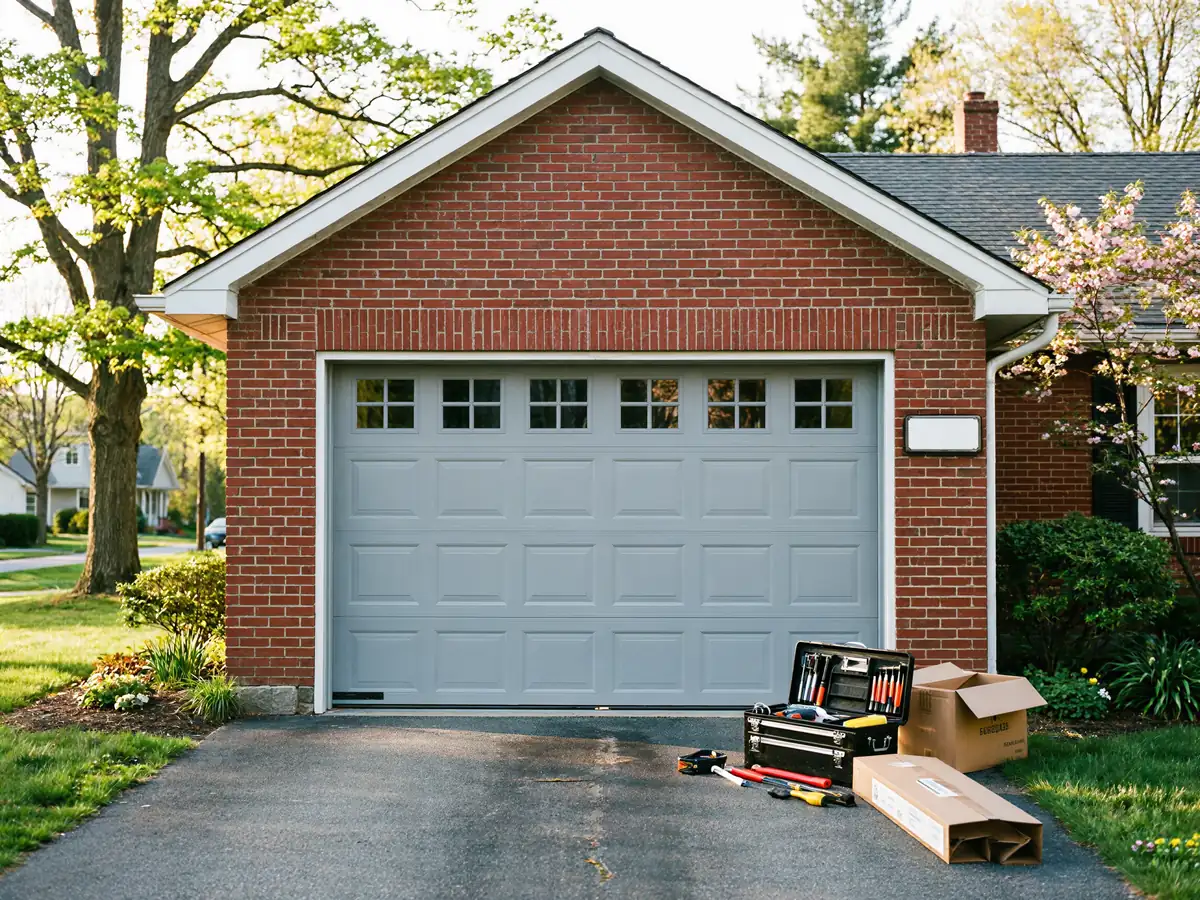
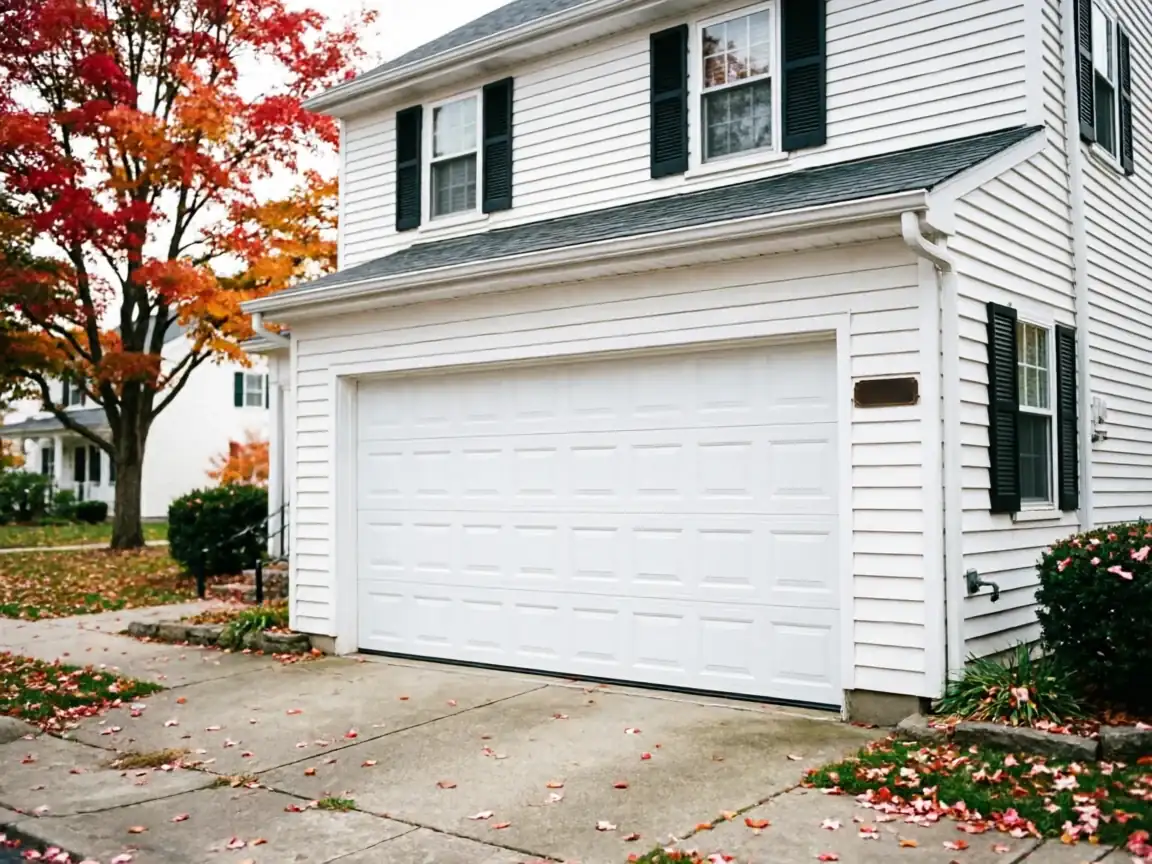
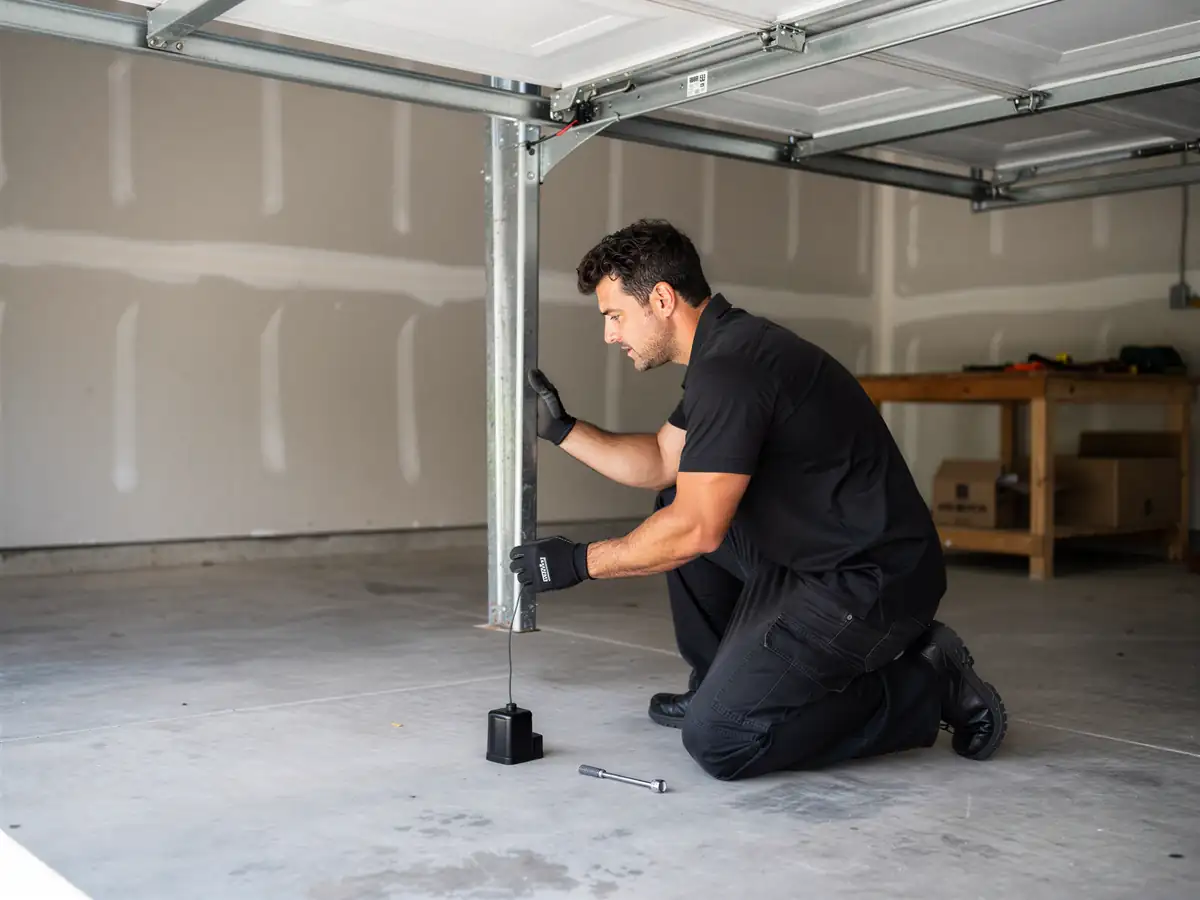
Most houses across this service area went up between 1938 and 1996, with the median landing around 1960. That matters more than people think. A door and opener installed on a house built in the 1960s has been through six decades of hardware changes, and it's rarely the original unit by now - but the framing, the header clearance, and sometimes the track mounting are still original to the build. On top of that, this area sits in a cold-severe climate band, which means steel doors see real thermal cycling every winter: cold snaps that stiffen lubricant, shrink metal fractionally, and put extra load on springs that are already carrying years of fatigue. A technician walking into a garage here isn't just looking at the door - they're reading the age of the house and the season against each other before they touch a single bolt.
What to Check
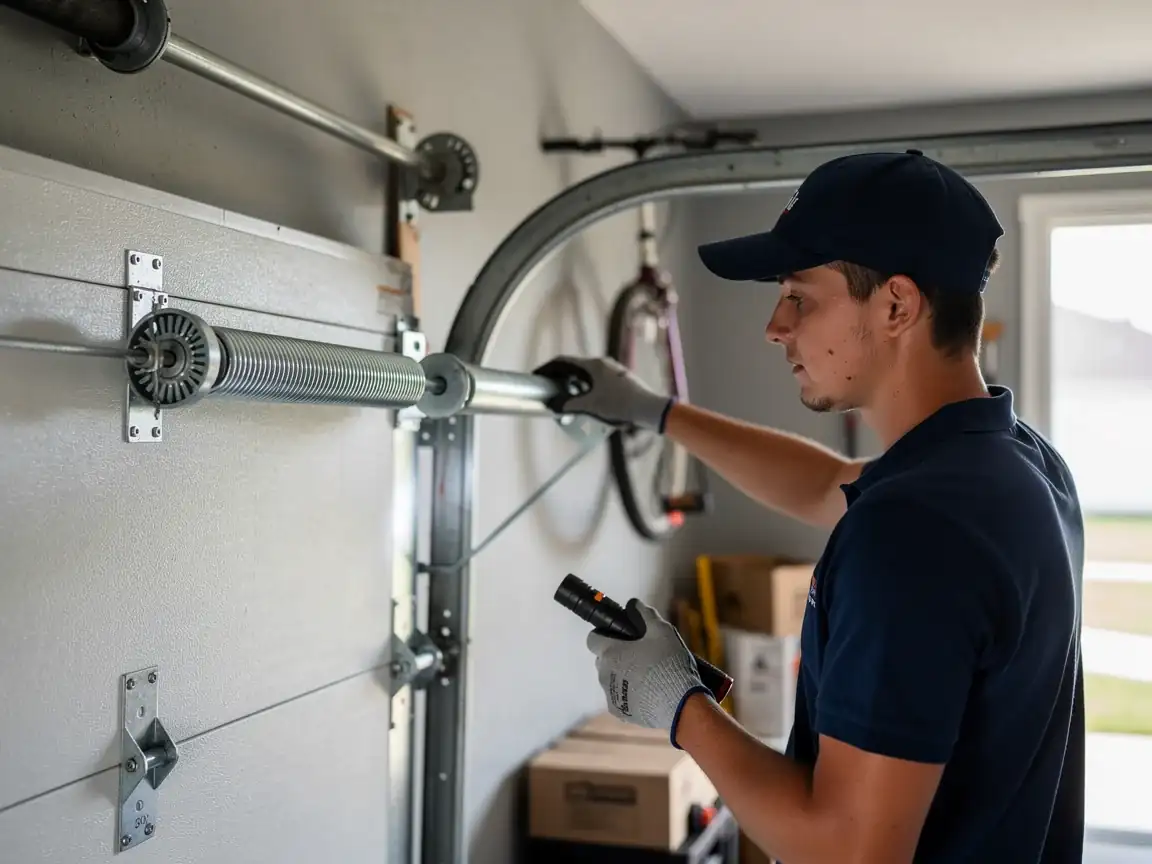
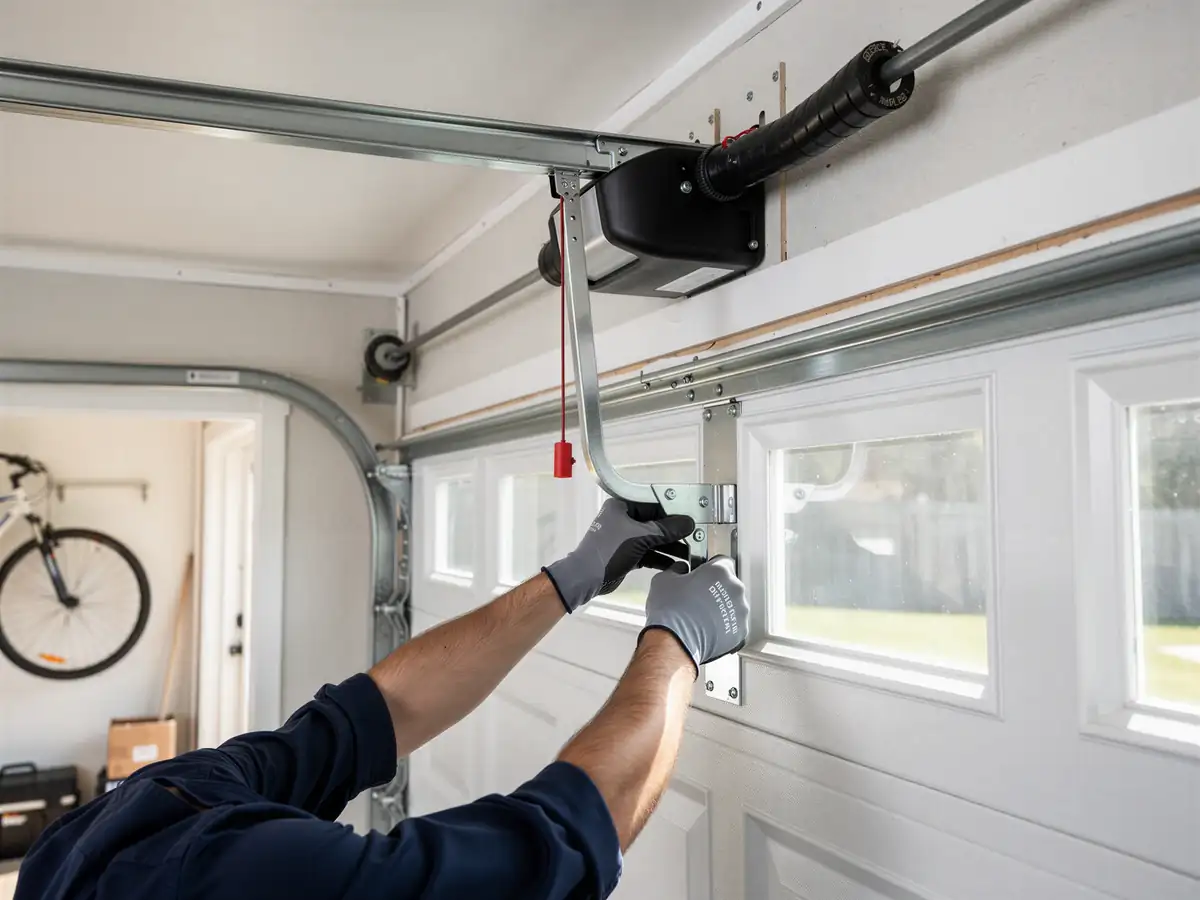
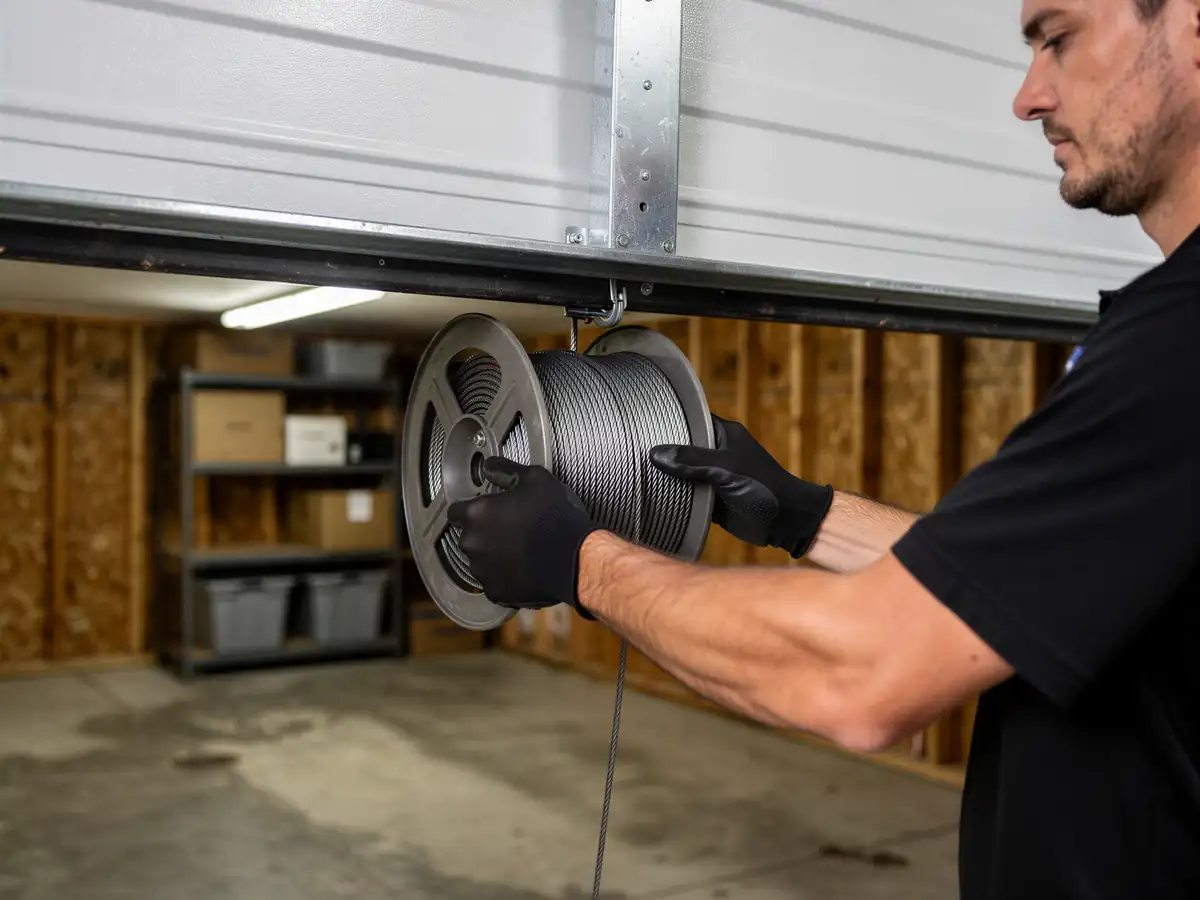
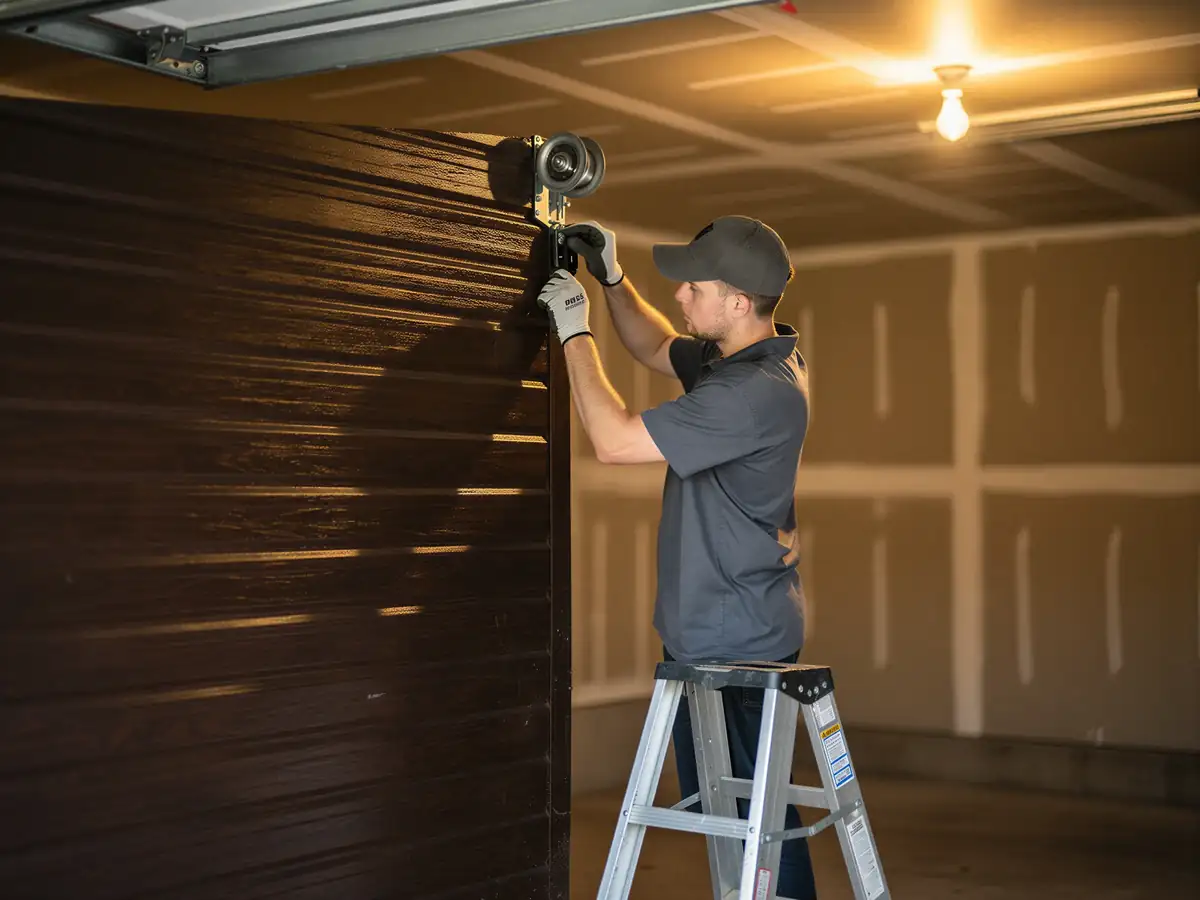
First is the spring. In a cold-severe climate, torsion springs lose a little tension capacity as metal contracts, so a spring that was marginal in September can fail outright in January - that's the first thing checked on any older torsion setup. Second is the track and roller alignment, because houses built mid-century through the 1970s across this area often have garages with slightly settled slabs, and a track bolted to a shifting header will bind exactly when cold makes the steel less forgiving. Third is the opener's force setting - cold-stiffened rollers make the opener work harder, and if the force is set too high to compensate, it masks a mechanical problem instead of fixing it. Fourth, on anything original or near-original to a 1960s build, is the cable condition, since galvanized cable from that era corrodes differently than modern coated cable and doesn't always show it on the surface. None of this is exotic - it's just where the failure actually starts on hardware this old in a climate this cold.
When Waiting Is Fine
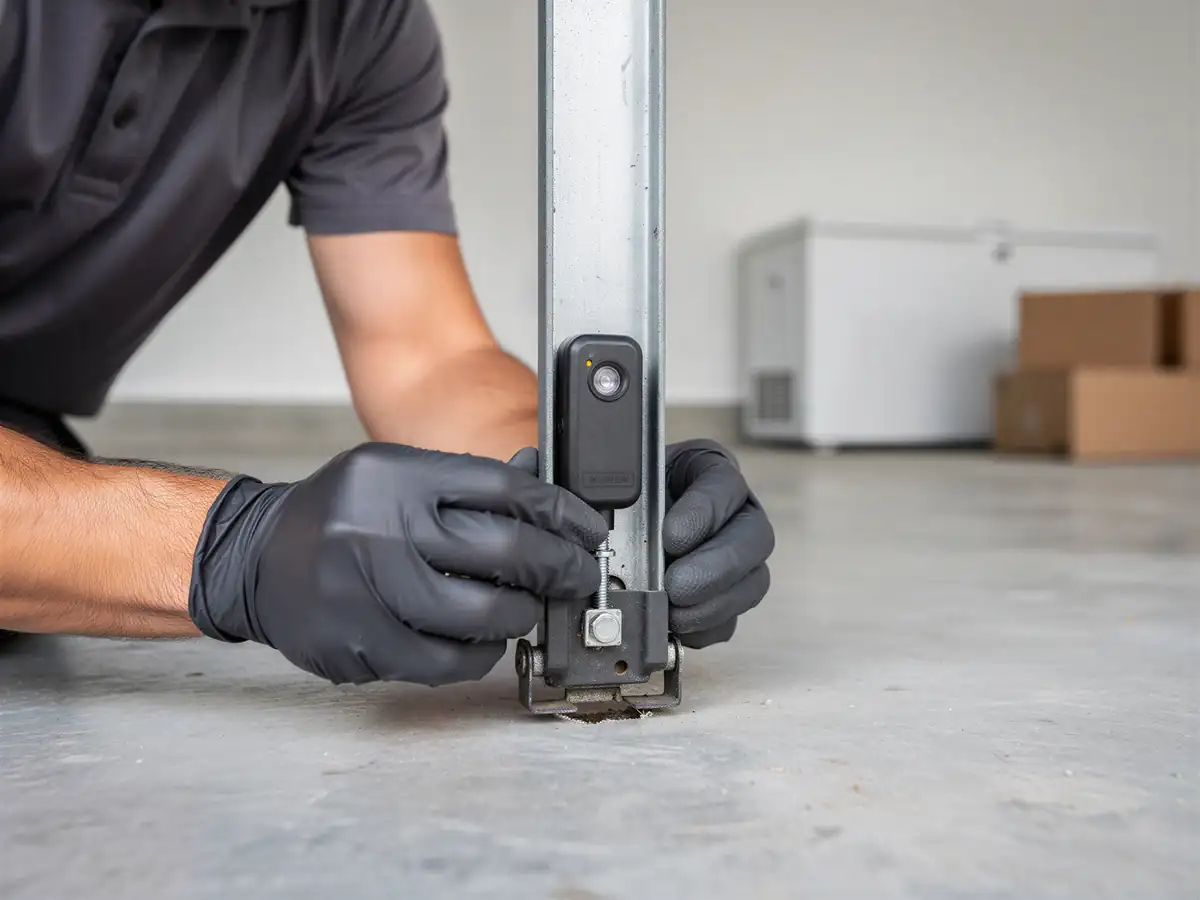
Not every noise or stiff spot needs a same-day call. If a door is slow to open on a cold morning but moves normally once the garage warms up a few degrees, that's the lubricant and the steel doing what cold-severe-climate steel does - it's worth a note, not a dispatch. A door that's a little loud on one roller but still tracks straight and reverses properly on the safety sensor test can usually wait for a scheduled visit rather than an emergency one. The exception is anything involving the spring - a spring under tension doesn't give much warning before it lets go, and in this climate band the cold makes that failure mode worse, not better. If you're not sure which category you're in, that's a fair reason to call rather than guess.
What Is Going On
The honest answer is that most of what gets called an emergency in houses from this era is wear meeting weather. A spring rated for a certain number of cycles was never going to last forever, and a cold-severe winter just moves up the date. We don't replace parts that don't need it - if a spring has life left and the real issue is a worn roller or a loose track bracket, that's what gets fixed, not the whole system. One limit worth naming: we can diagnose and often repair same-visit, but a full torsion spring replacement or a part that needs ordering for an older, non-standard setup can mean a short wait on parts, especially on hardware that predates current standard sizing. That's not a stall tactic - it's the reality of working on doors this old.
Straight answers about garage door repair in West Chester. Still unsure? Ask us directly.
Why does cold weather make my garage door spring fail now instead of last summer?
Torsion springs lose a small amount of tension capacity as metal contracts in cold-severe conditions. A spring that was near the end of its life handled summer fine but doesn't have the margin left once winter cold adds extra load - that's why failures cluster in cold months on older hardware.
My house was built in the 1960s - does that mean my garage door hardware is original?
Not usually the door or opener itself, but often the track mounting or header framing is original to the build. A technician checks whether the hardware was retrofitted to an older structure, since that mismatch is a common source of binding or misalignment.
Is a noisy garage door always a spring problem?
No. Noise is more often a roller or track issue, especially on houses from the 1960s-70s stock common in this area. The spring is checked first because it's the highest-risk part, not because it's the most common cause of noise.
Can a repair wait until a scheduled appointment instead of an emergency call?
Often yes, if the door still opens, closes, and reverses on the safety sensor correctly. Slow movement in cold weather alone usually isn't urgent. A spring that sounds like it's under strain, or a door that won't reverse, is the kind of thing that shouldn't wait.