Why Your Safety Sensors Keep Drifting in West Chester
Why garage door safety sensors drift out of alignment in West Chester's older housing stock, how the region's cold winters make it worse, and what to check before you call.
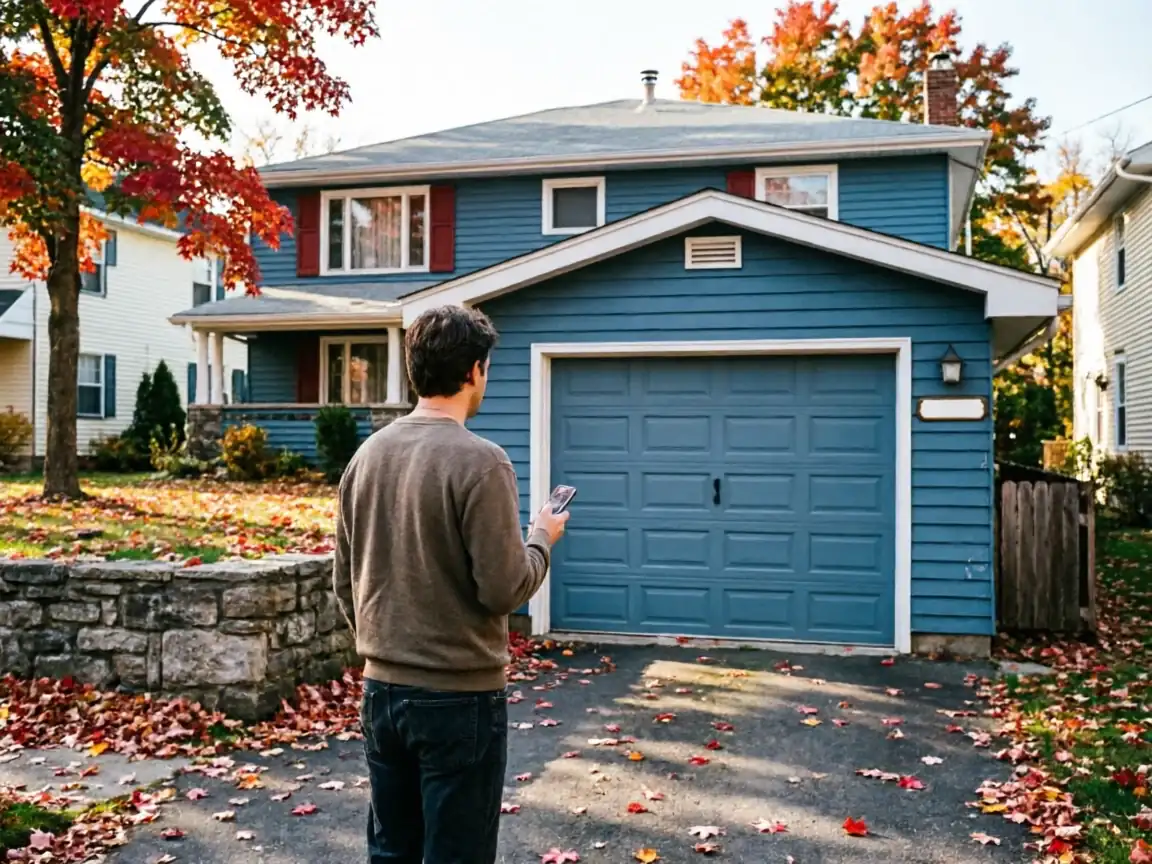
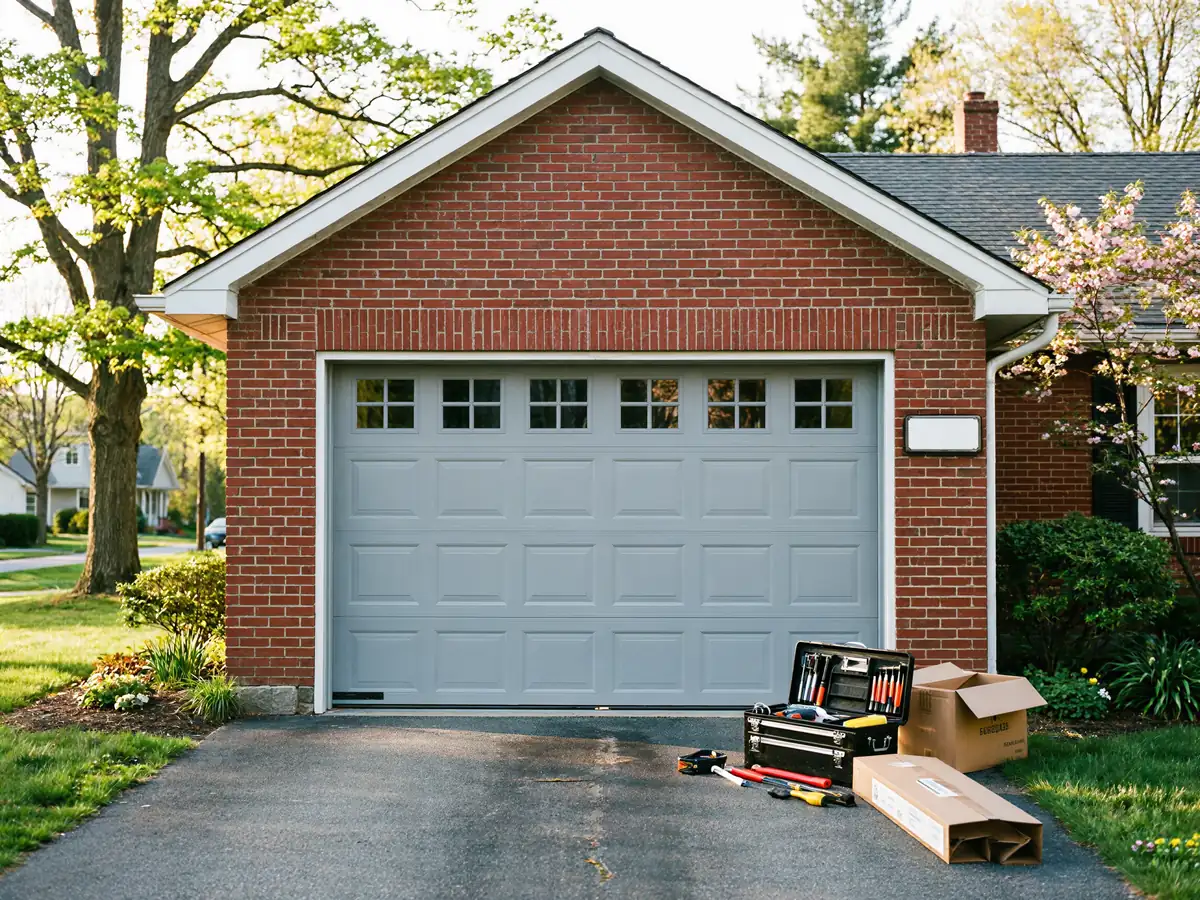
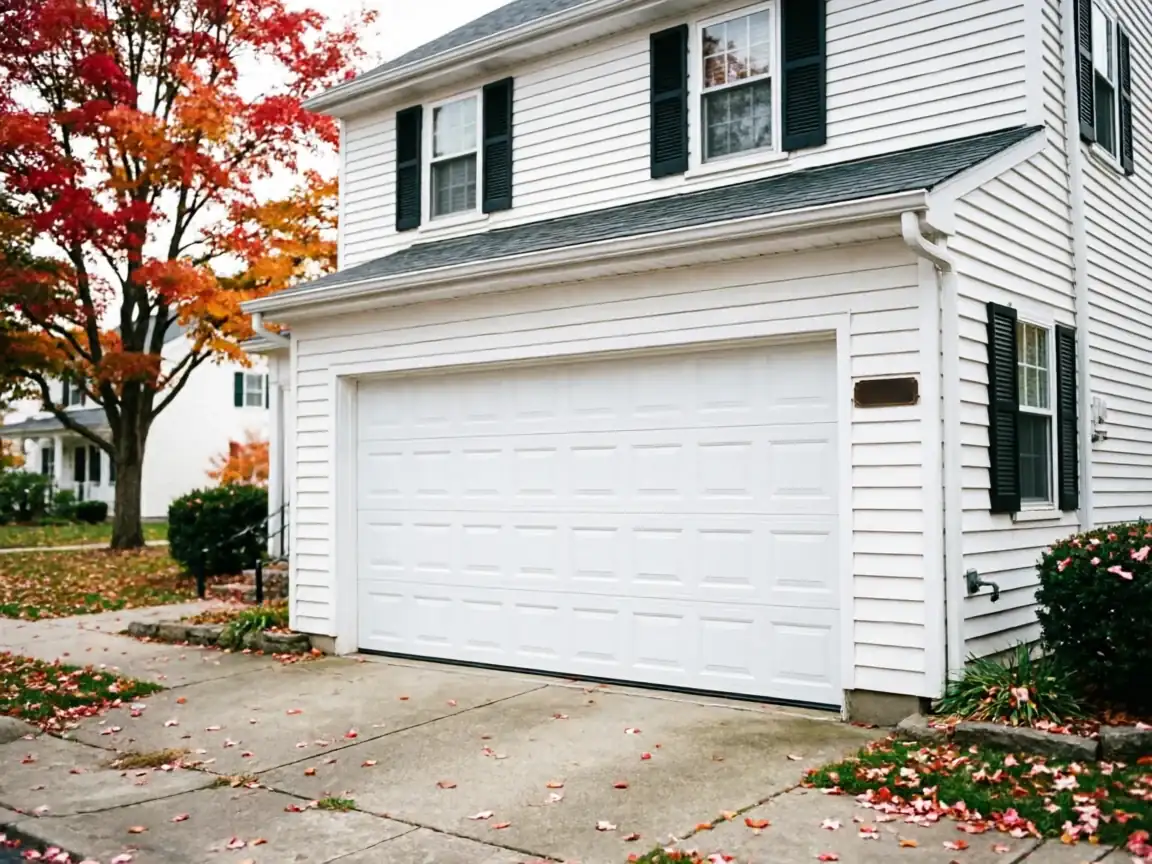
Most of the garages around West Chester sit on slabs poured anywhere from 1938 to 1996, with a lot of that stock dating to around 1960. Slabs that age have settled unevenly for decades, and the sensor brackets bolted to the track or the wall move with them, a hair at a time. You don't see it happen. You just notice one morning the door reverses for no reason, or won't close at all.
The cold is the other half of it. This area sits in a severe cold climate band, and a garage that isn't heated swings in temperature by 40 or 50 degrees between a January night and a sunny afternoon. Steel track expands and contracts with that swing. The sensor brackets are usually mounted to the track or to a bracket tied into it, so every freeze-thaw cycle nudges the alignment a fraction more. In a mild climate this wouldn't matter much. Here, it adds up over a single winter.
Older openers in this housing stock often have sensors that were installed as an aftermarket retrofit rather than built-in from day one, since federal law requiring them didn't apply when a lot of these houses were built. That retrofit mounting is usually less rigid than a factory bracket, which makes it drift faster.
What to Check
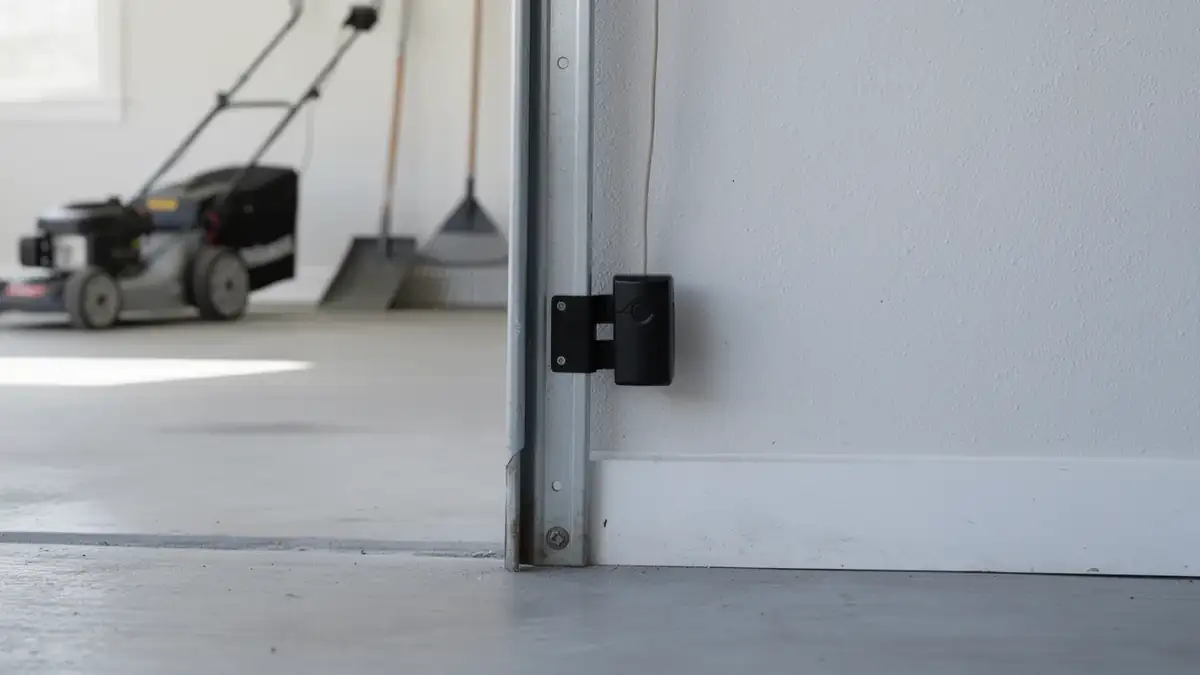
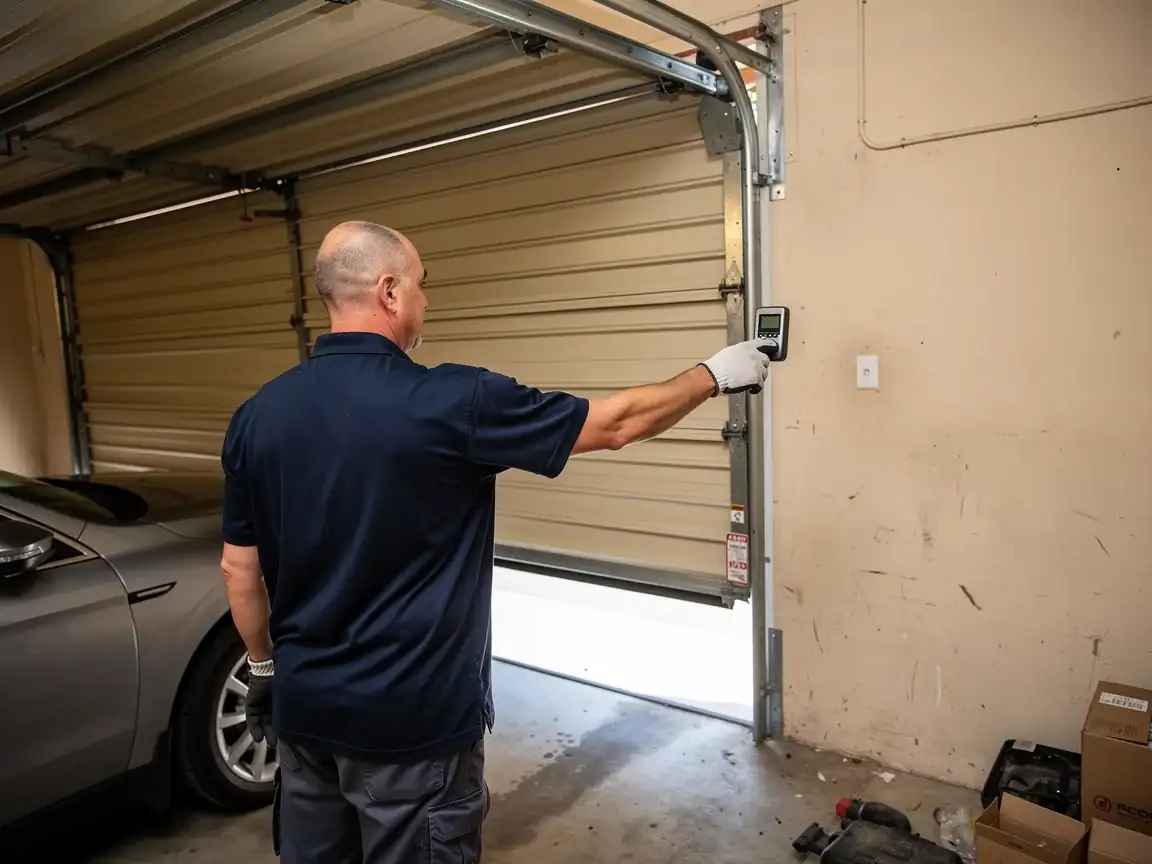
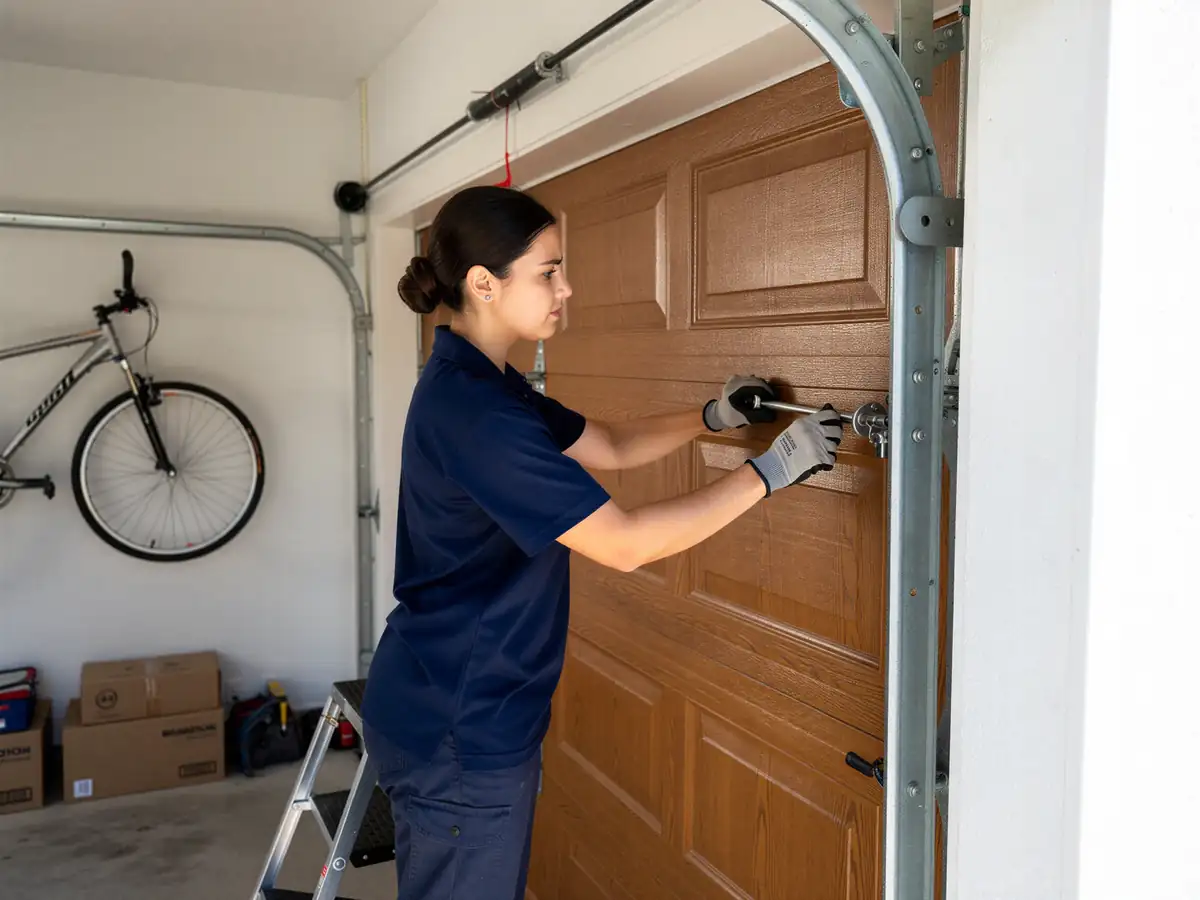
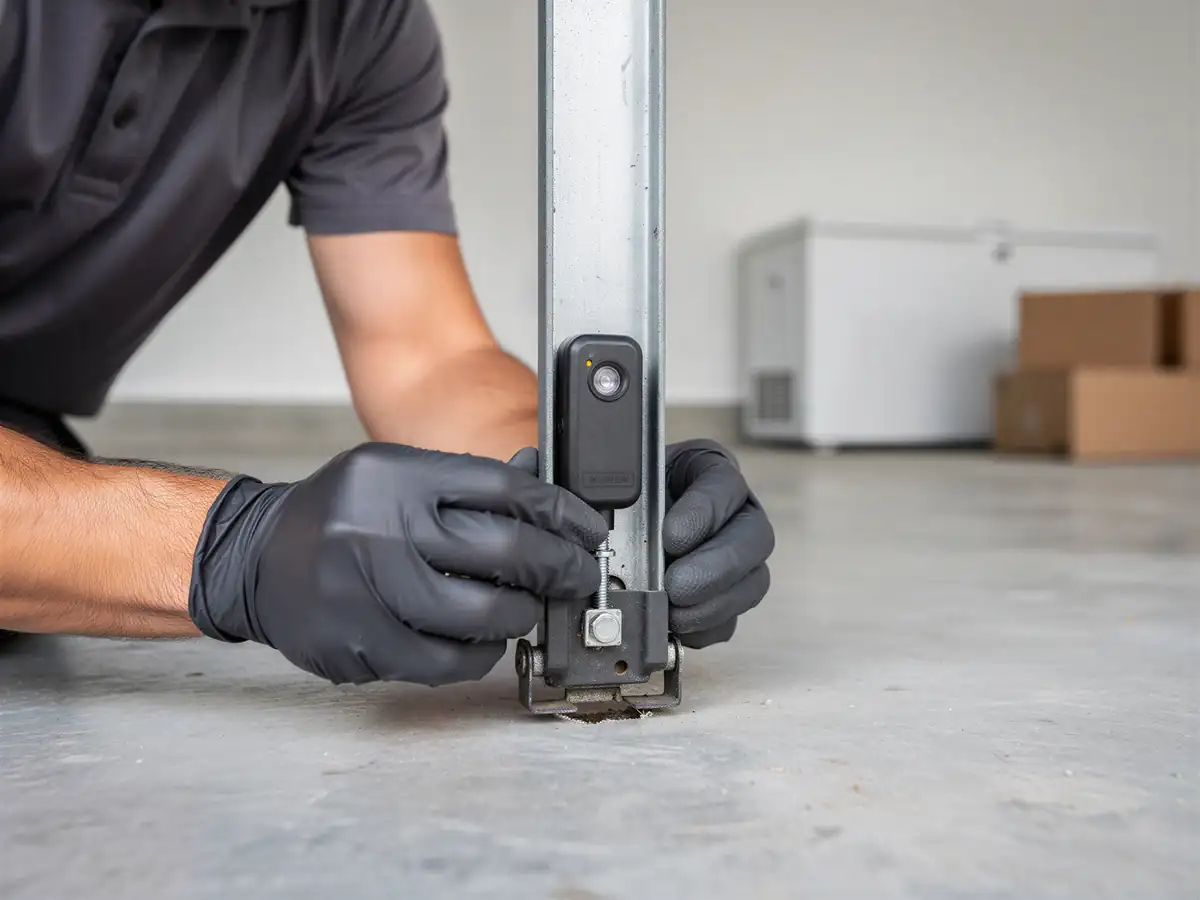
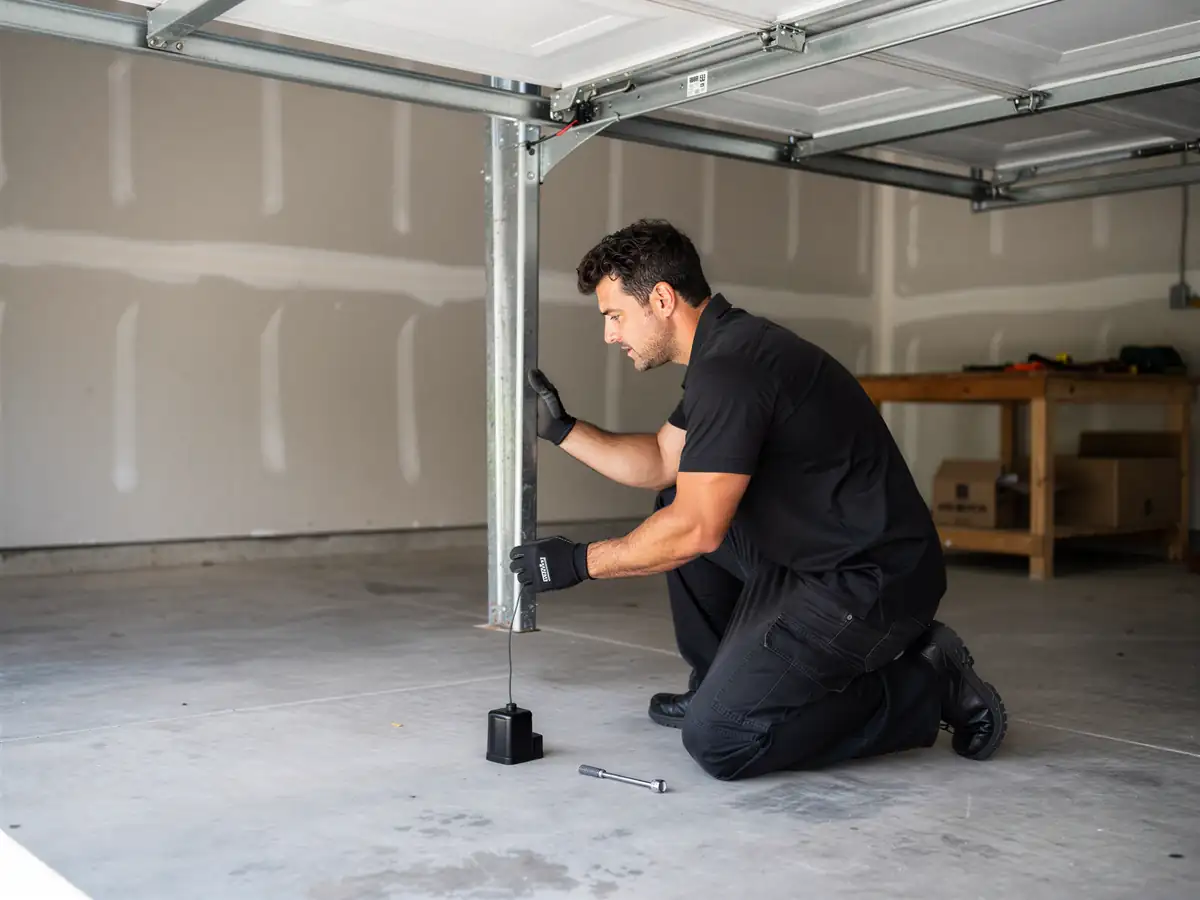
Start by looking at the two sensor eyes near the bottom of the tracks, one on each side, a few inches off the slab. They need to point at each other dead level. If one side has shifted even slightly out of true, the opener either won't close the door or reverses it midway.
Wipe the lenses first. Dust, cobwebs, and in winter, road salt carried in on tires, all cake onto that glass and read exactly like a misalignment to the opener's logic board. If the lenses are clean and the lights on both units aren't solid, start checking the bracket itself. On a slab that's moved over sixty-plus years, the bracket can be solid while the slab under it has a slight pitch that wasn't there when it was poured.
Check the wire too. In an unheated garage through a hard winter, insulation on older wiring gets brittle and can crack where it bends near the bracket, which causes intermittent drops that look like alignment trouble but aren't. A flashlight and five minutes is usually enough to tell you which problem you've got.
When Waiting Is Fine
01
If the door closes fine most of the time and only acts up once in a while
Especially right after a hard freeze or a big swing in temperature, you can usually wait. Nudge the brackets back into line, snug the wing nuts, and watch it for a week. A lot of these cases settle down once the slab and the track stop moving as much through the season.
02
If you're planning other garage work anyway
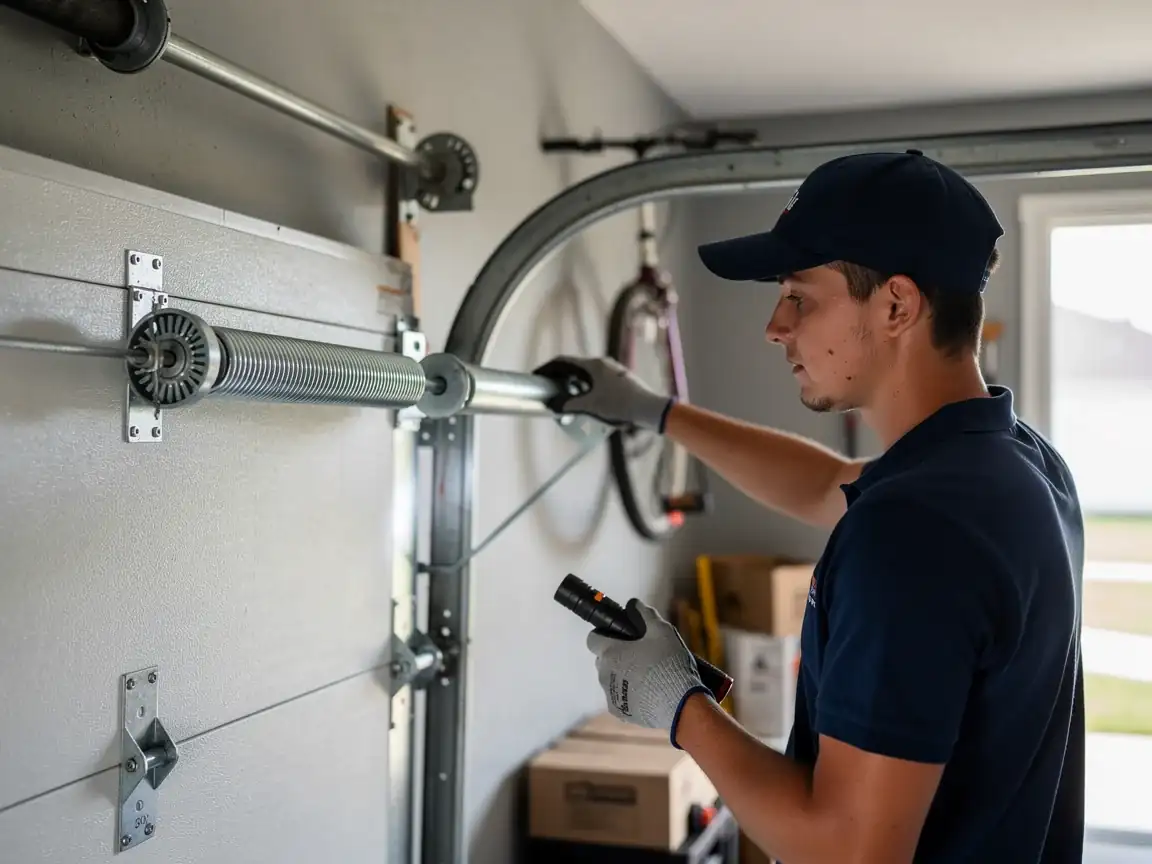
Like a spring replacement or an opener upgrade, it's worth holding the sensor fix until then so you're not paying for two trips.
What Is Going On
Here's the honest version: safety sensor drift by itself is a five-minute adjustment, not a part that needs replacing, and we won't tell you otherwise. What we can't do over the phone is tell you whether your issue is the sensors or something upstream, like a logic board that's failing intermittently, since those two problems look identical from the driveway.
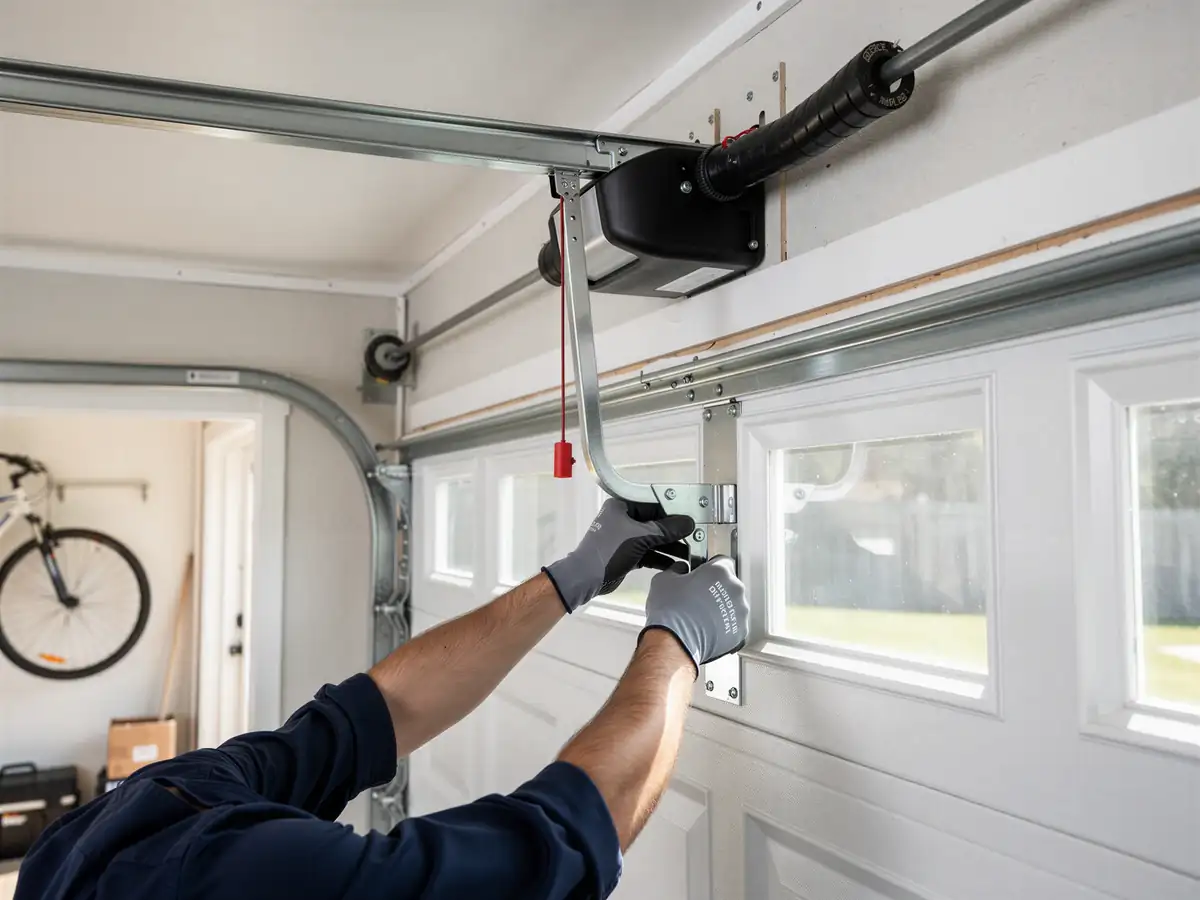
Given the age of a lot of the housing stock through this area, we also see openers original to the house that are simply at the end of their service life, where the sensors are the symptom and the opener is the real problem. That's not a call we'll make without looking at it.
Straight answers about garage door repair in West Chester. Still unsure? Ask us directly.
Why do my garage door sensors only act up in winter?
Steel track contracts in cold weather, and in a severe cold climate like this one, that seasonal swing is enough to nudge sensor brackets out of the alignment they held all summer. Clean the lenses first, since road salt and condensation mimic the same symptom, then check if the brackets still point level at each other.
Is sensor misalignment a sign my opener is failing?
Not usually, but it can be. Plenty of houses around here have openers original to a 1960s-era build, and in those cases the sensors can be fine while the logic board is what's actually dropping signal. Worth ruling out the simple fix first before assuming the opener is going.
Can I fix sensor alignment myself?
Yes, in most cases. Clean both lenses, loosen the wing nuts, and level the eyes until the indicator light goes solid. It's a common fix in slab houses that have settled over the decades, and it doesn't require tools beyond a screwdriver.