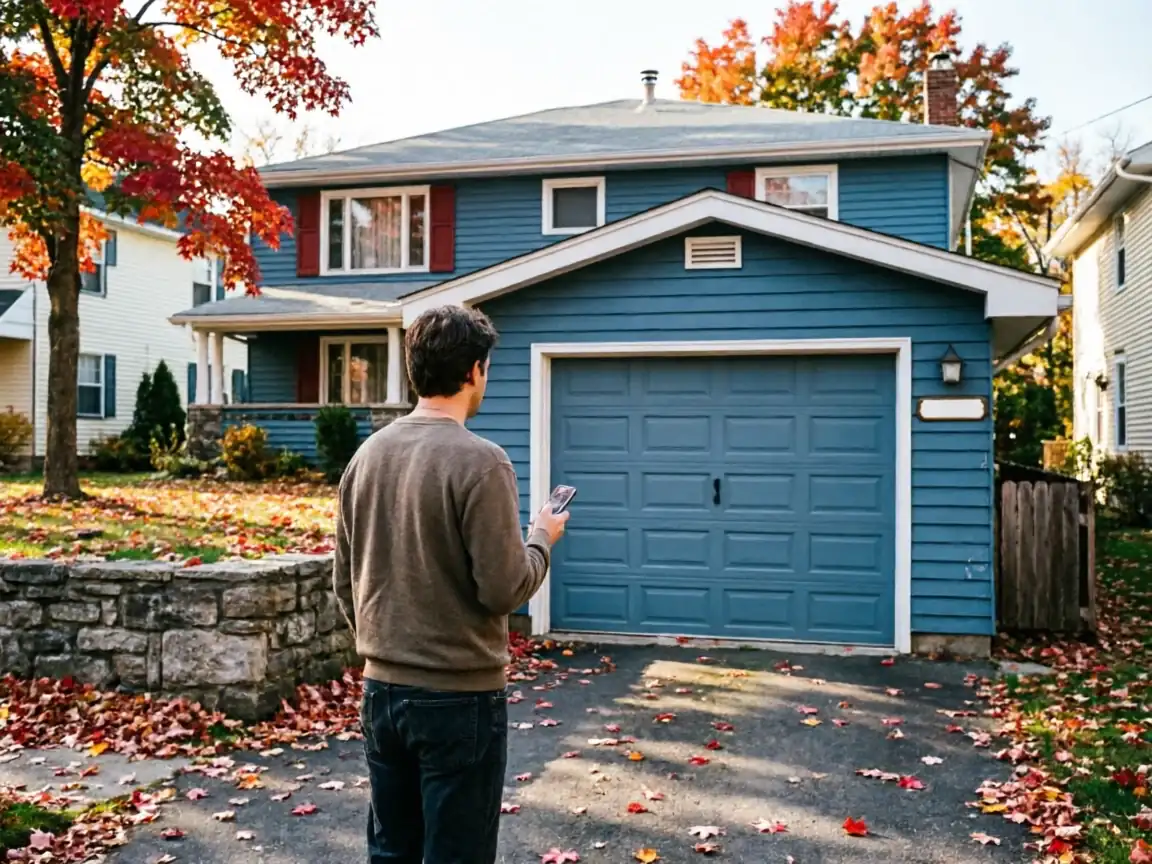
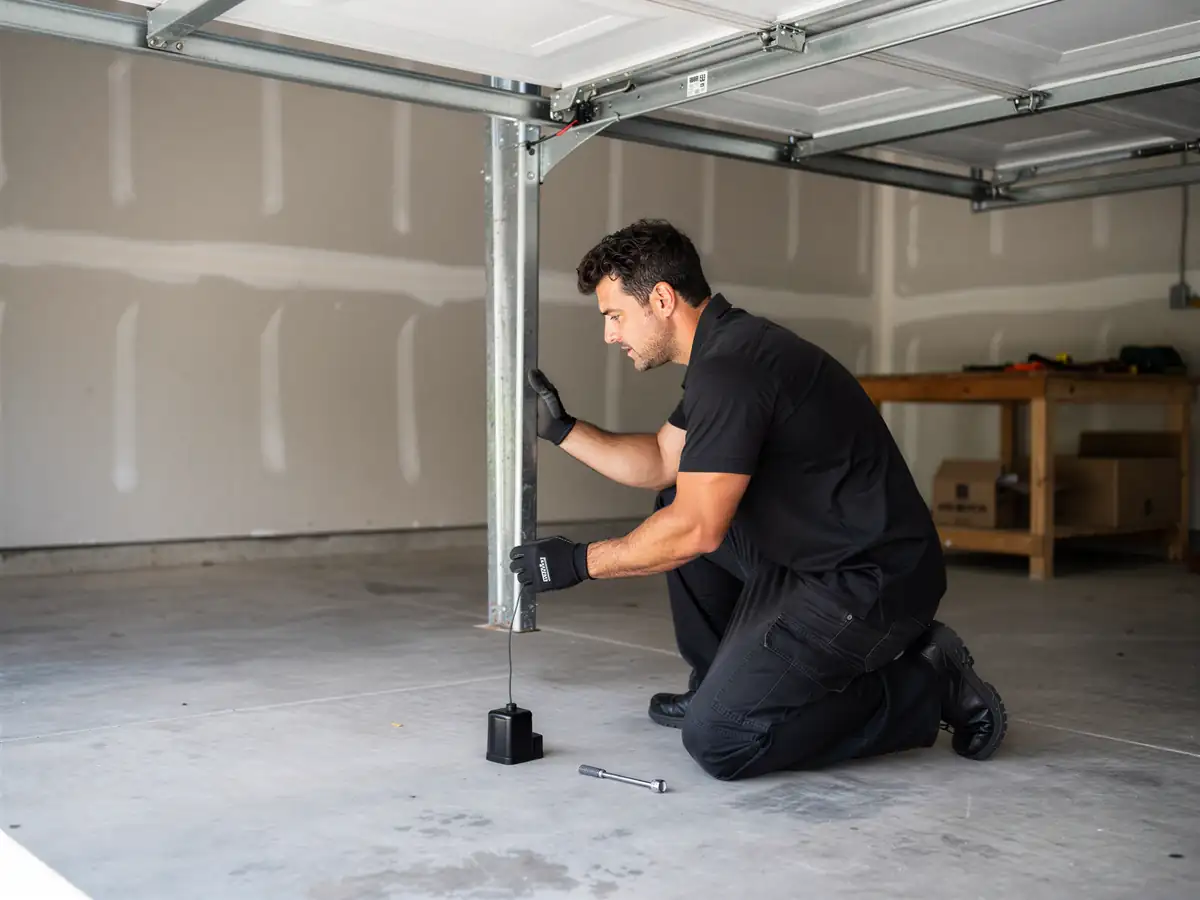
Most of the houses on a West Chester street went up between 1938 and 1996, with the median landing around 1960. That means a lot of garages still run the horizontal track and roller hardware that was standard for that era, bolted to jambs that have settled over sixty-plus years. Settling shifts the vertical track out of plumb by fractions of an inch a year, and the door doesn't notice until a roller finally catches an edge instead of riding smooth.
On top of that, this area sits in a severe cold climate band. Steel track contracts in deep cold, and the brackets holding it to the framing contract at a different rate than the wood does. That mismatch loosens lag screws over winters, one freeze-thaw cycle at a time. A track that was dead straight in October can have a quarter-inch bow by February, and that's often the point a homeowner hears the door scrape or grind right before it hops the rail.
None of this is dramatic on its own. It's cumulative - old hardware plus repeated cold cycles, working on the same four or five lag bolts for decades. By the time a door actually derails, the track has usually been drifting for a year or more.
What to Check
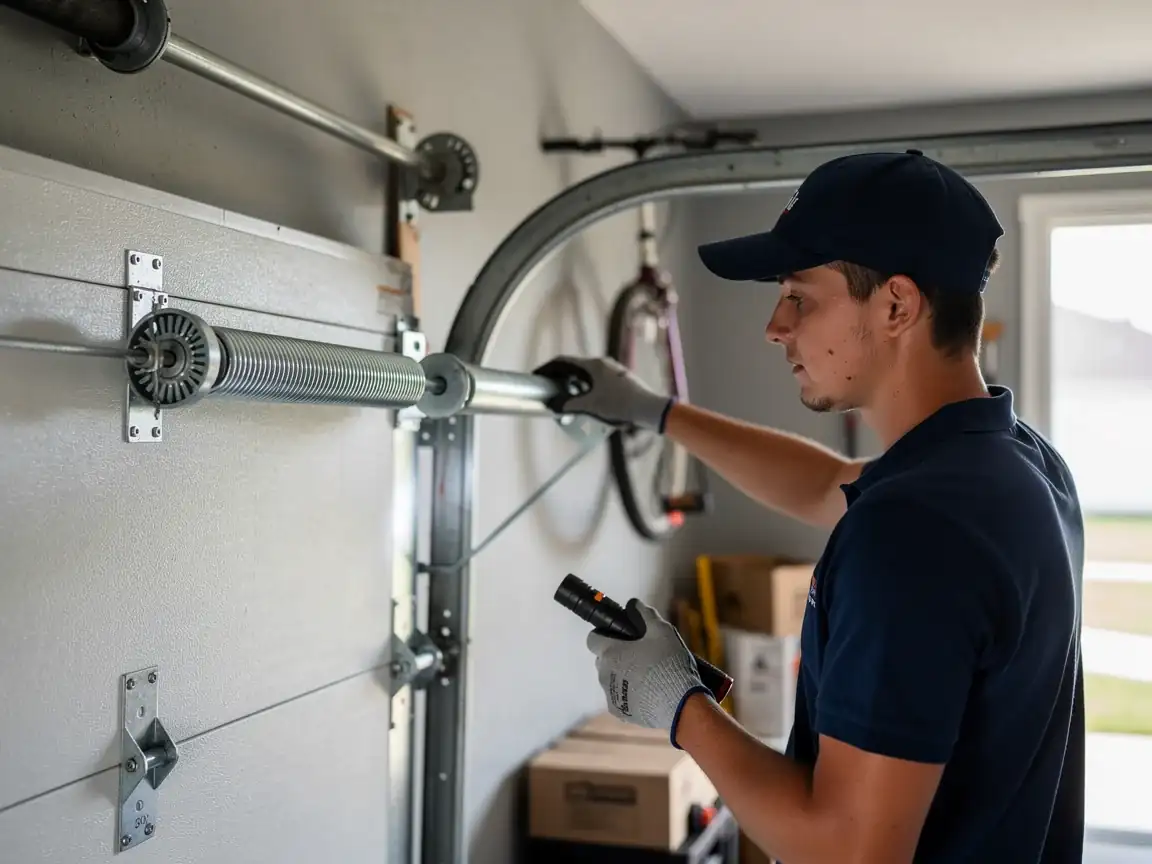
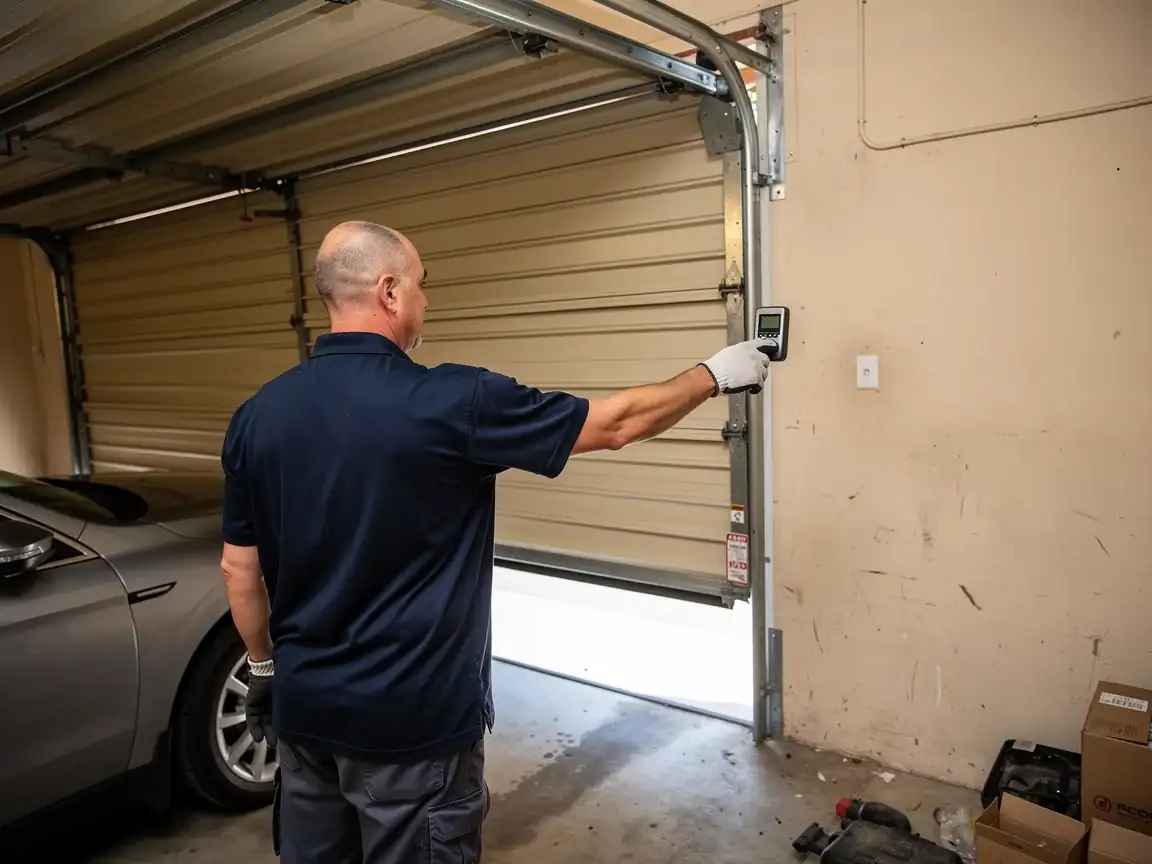
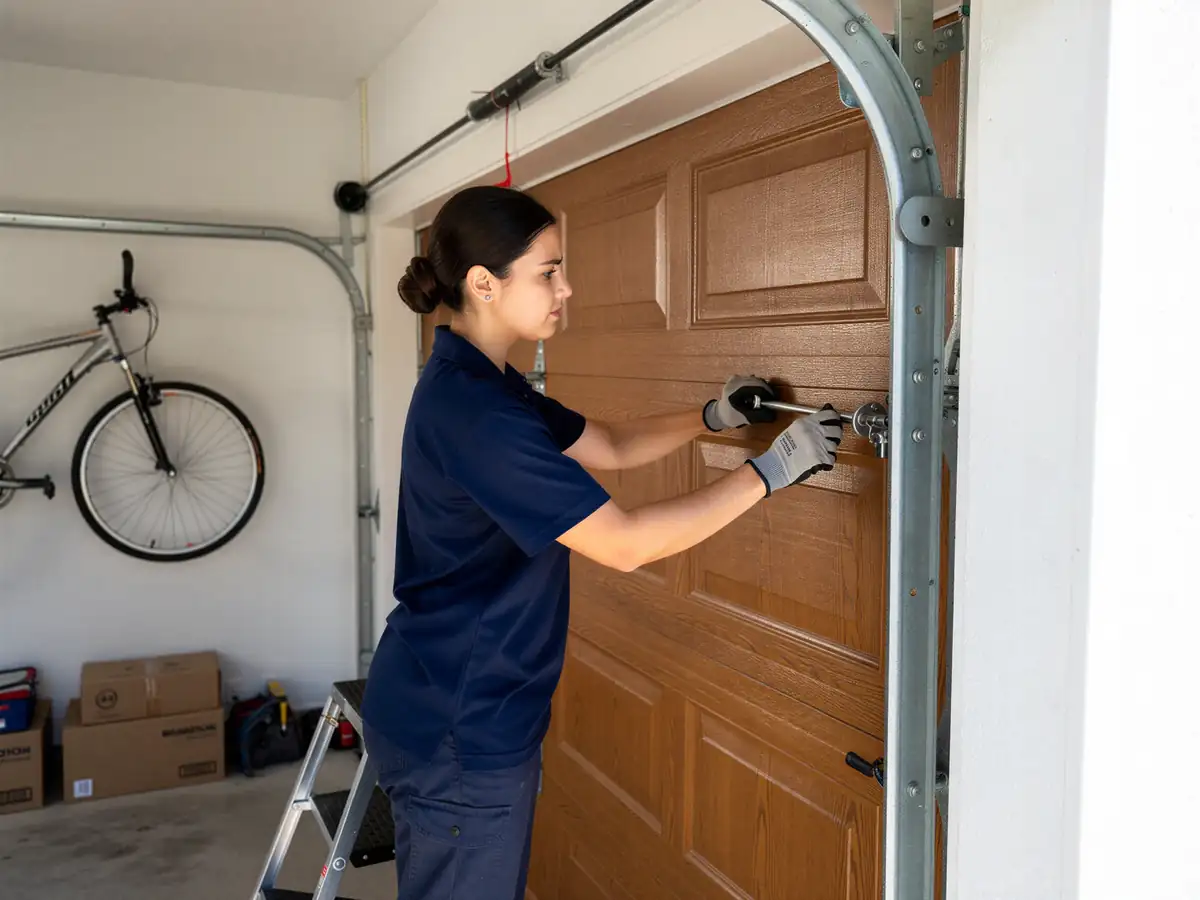
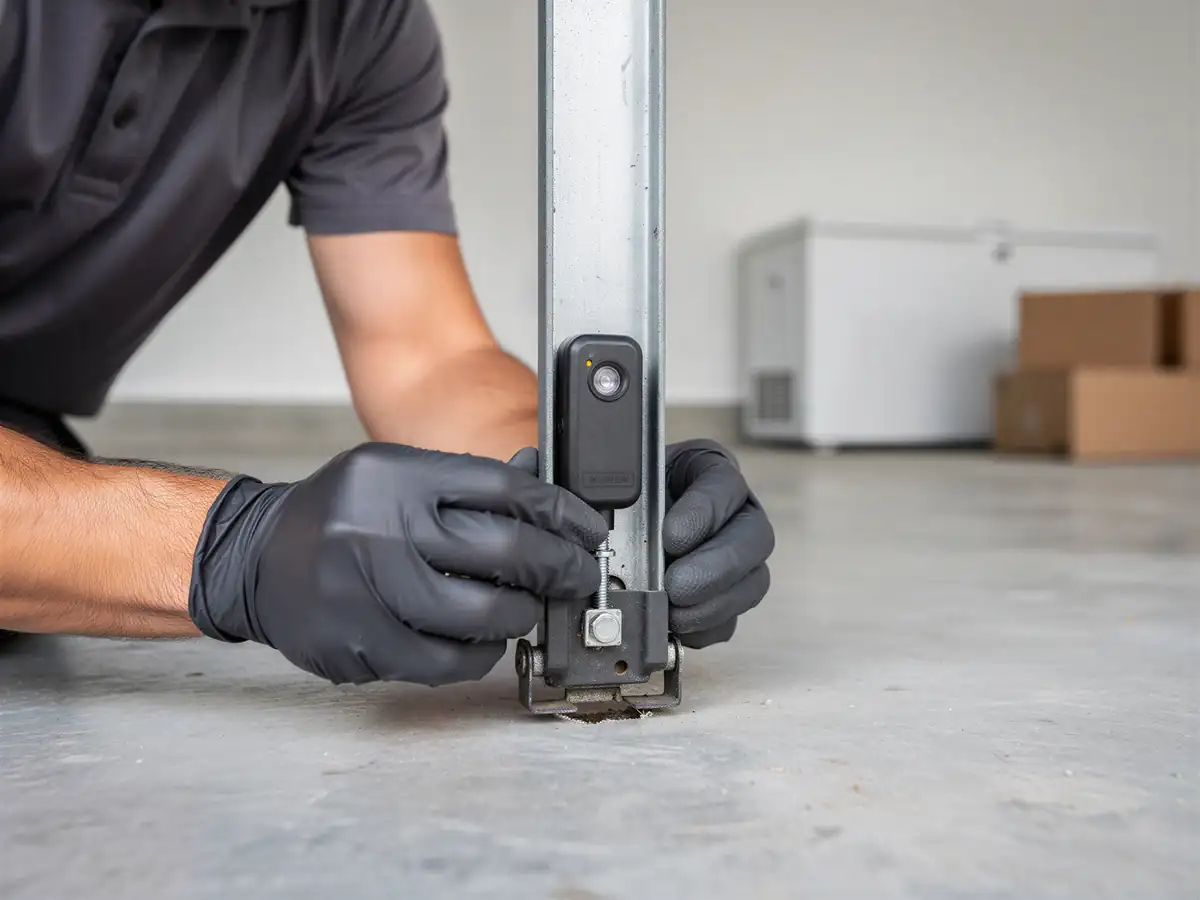
Start at the brackets, not the track itself. On houses from the 1960s-70s stock that makes up most of this area, the bracket screws are often the original lags, and they back out slowly with vibration and cold-season movement. If you can wiggle a bracket by hand, that's your answer before you touch anything else.
Next, look down the track from the bottom, both sides, and sight for a bow or a gap between the track and the wall. A gap wider than an eighth of an inch anywhere in the run means the track is pulling away, usually right where a bracket has loosened.
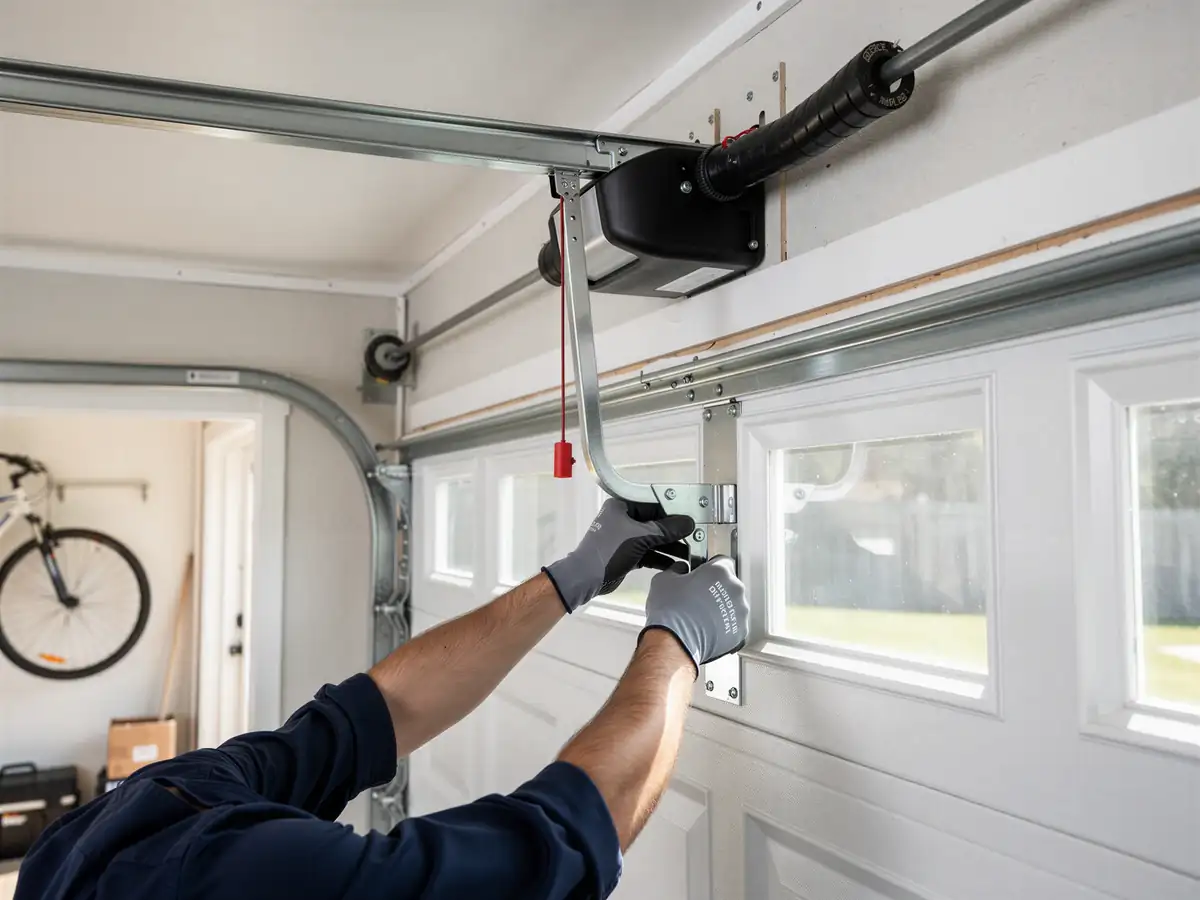
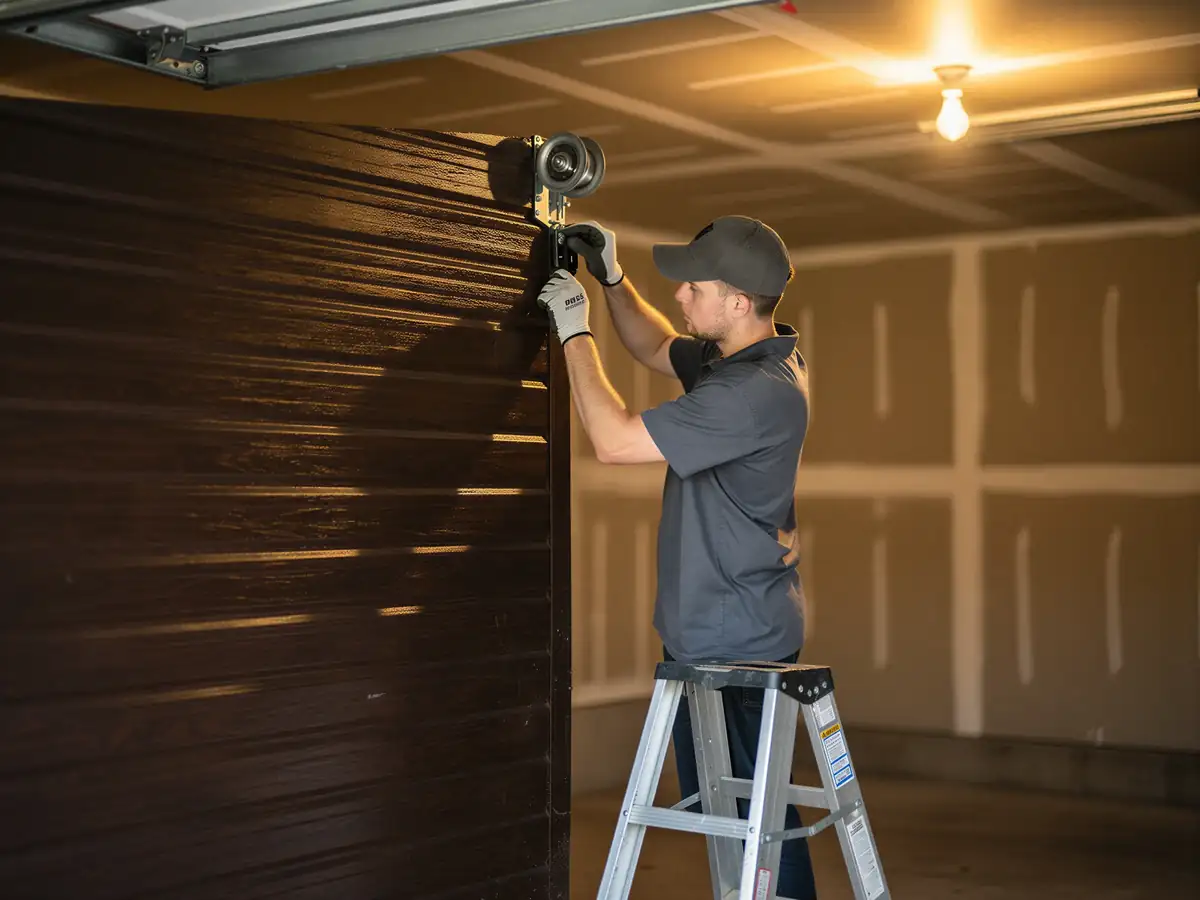
Check the rollers themselves for flat spots or cracked edges - original hardware on an older door has had a lot of cycles, and a worn roller rides rougher in cold weather when the steel is stiffer and less forgiving. Finally, run a hand along the horizontal track section near the ceiling. That's the part most exposed to temperature swings in an unheated garage, and it's the section that bows first.
When Waiting Is Fine
01
If the door still opens and closes evenly
And the only symptom is a little noise or a roller that clicks once in a while, you don't need to call anyone today. A door that's merely loud isn't off track - it's just telling you a lag bolt or two has backed out. Tightening what you can reach and watching it for a week is a reasonable plan.
02
We'll say plainly: not every noisy door needs a service call
And we'd rather tell you that than run a truck out for a five-minute fix you can do with a screwdriver. The honest limit is that we can't diagnose a bracket or a bow over the phone with any confidence - if the door is still running true, it's fine to wait and watch.
What Is Going On
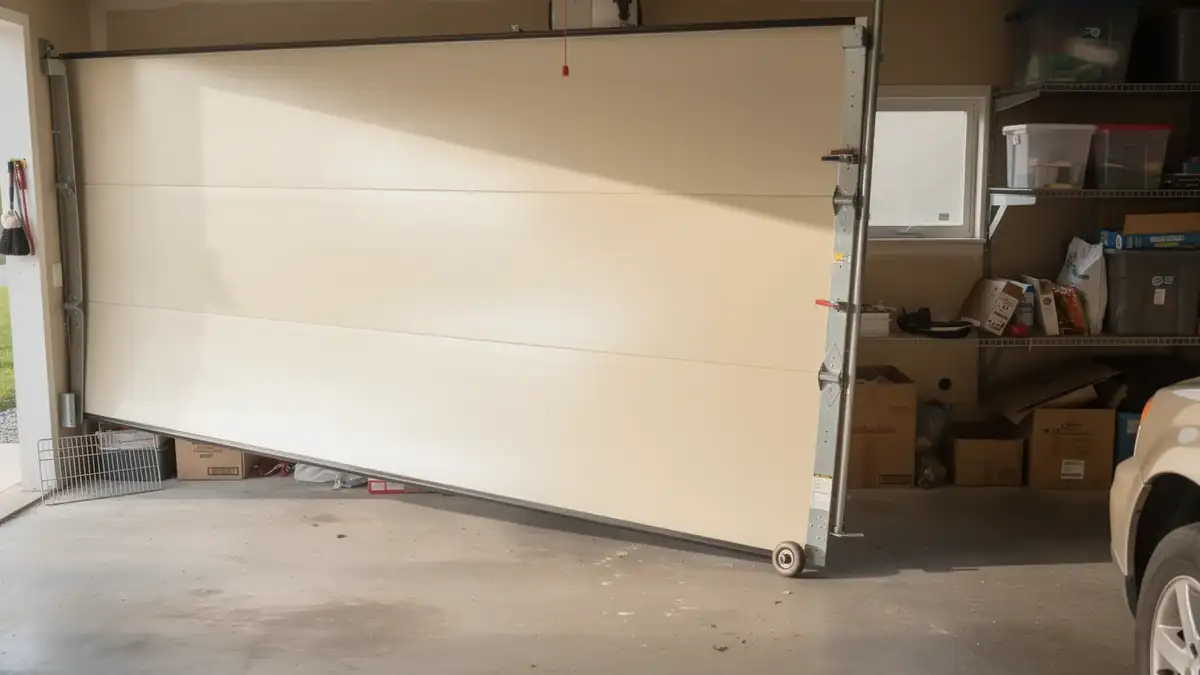
When a door actually jumps the track - the roller comes clean out of the channel, or the door hangs crooked in the opening - the usual cause on a house from this housing stock is a bracket that finally let go after years of cold-season loosening, combined with a track that had already bowed a little from the same cycles. The door doesn't fail all at once; the hardware fails first, slowly, and the derailment is just the visible moment.
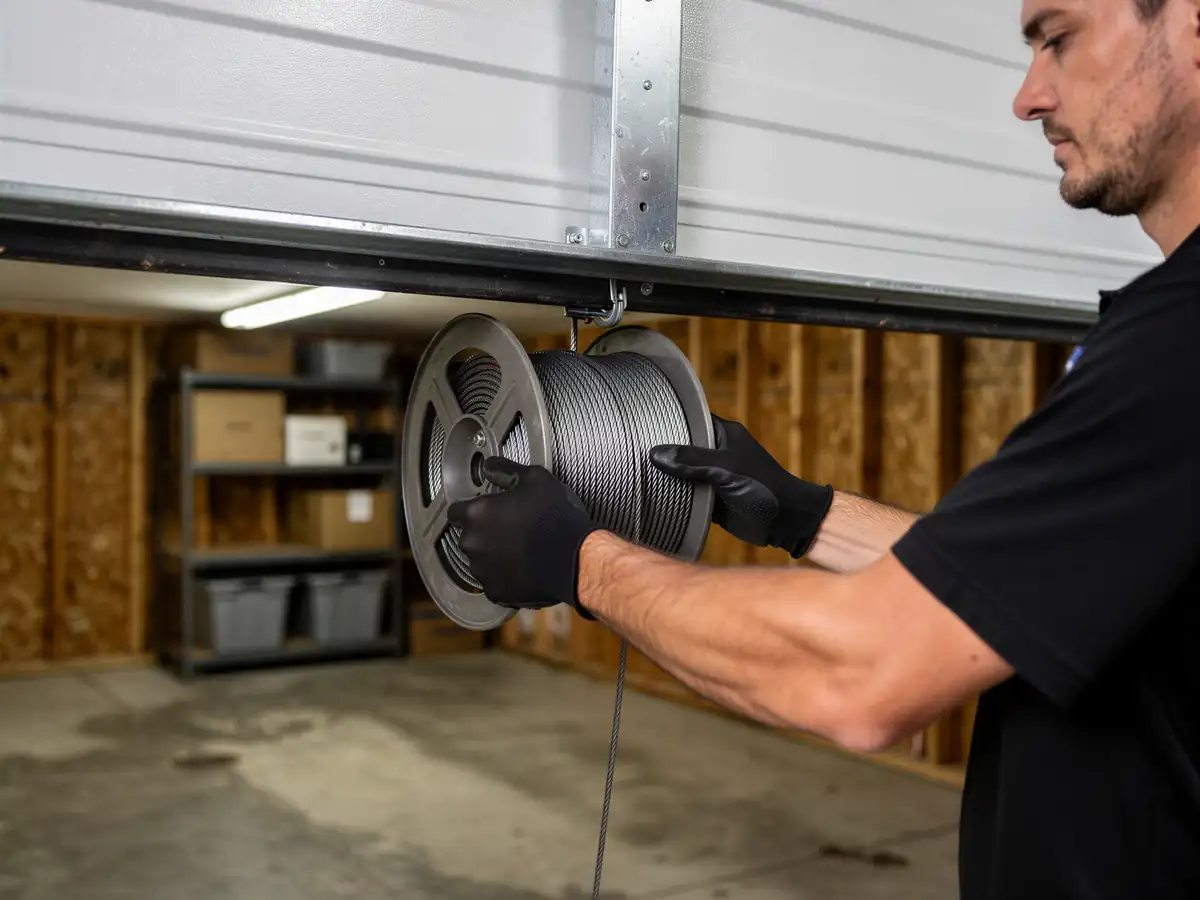
Once a door is off track, don't run the opener again. Forcing it can bend the track further or snap a cable under load, turning a bracket fix into a full track and roller replacement. That's the one call that's worth making the same day - not because the noise was scary, but because a door hanging off true can come down unevenly if someone keeps hitting the button.
Straight answers about garage door repair in West Chester. Still unsure? Ask us directly.
Is an off-track door always a bracket problem?
In West Chester, with housing mostly dating to the 1960s and 70s, loose original lag screws and cold-season track movement are the most common cause. It's not universal, but it's the pattern we see most on houses from that era.
Can cold weather really bend a garage door track?
Steel track and wood framing contract at different rates. In a severe cold climate like this one, repeated freeze-thaw cycles over many winters loosen the brackets holding the track, letting it drift or bow slightly. One winter won't do it; a couple of decades will.
Should I try to push the door back onto the track myself?
No. Once a roller is out of the channel, the cables and springs are under load in a way that isn't predictable. Leave the opener alone and don't force the door until someone can see where the track actually failed.