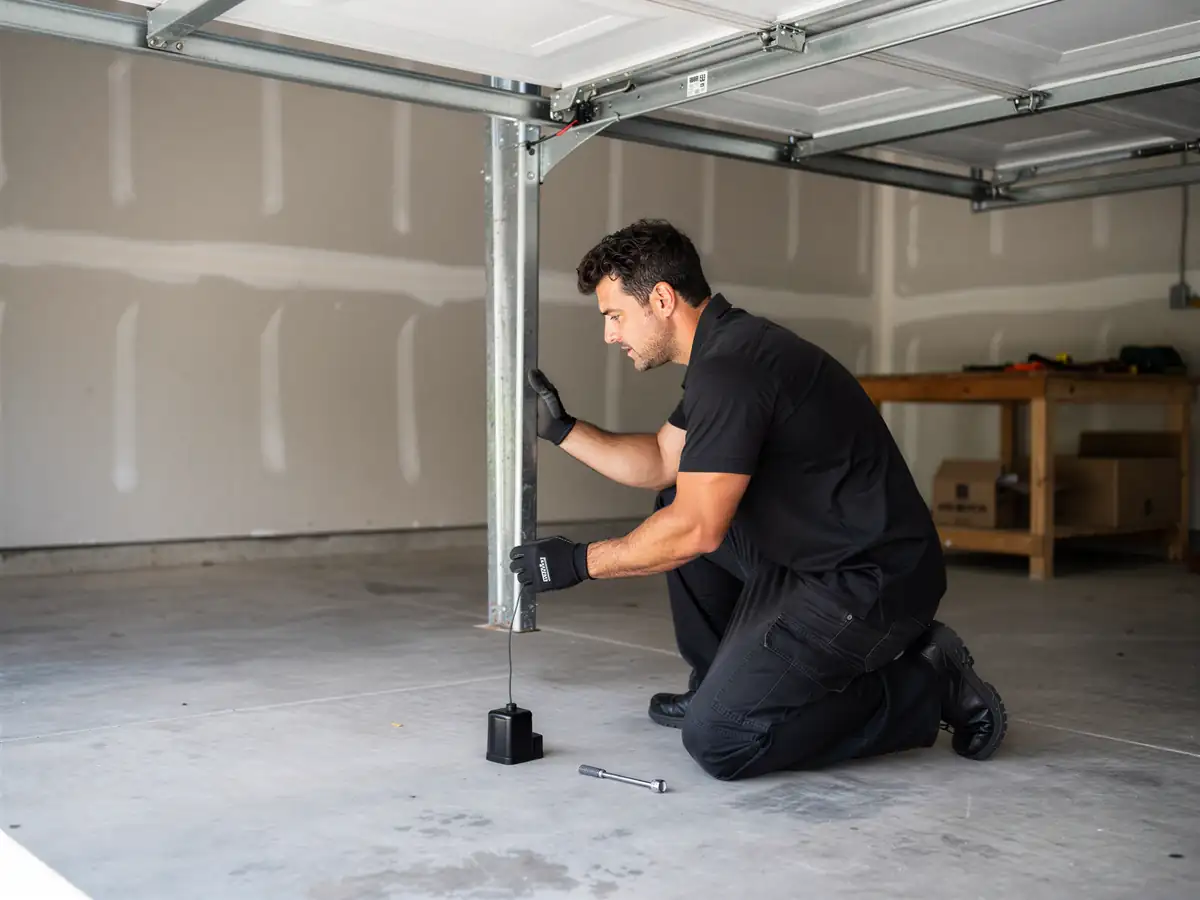
The Noises That Mean Something on a West Chester Garage Door
West Chester homes mostly date to the 1960s and 70s, and cold winters work the original hardware hard. Here's how to tell a noise that matters from one that doesn't.
Most houses around West Chester went up between 1938 and 1996, with the bulk of that stock built in the 1960s and 70s across the 74 named areas in this service area. That matters for noise because a door built or replaced during that window is likely running original or first-generation-replacement hardware: steel tracks that have seen sixty winters, rollers that were never nylon, springs sized for a lighter door than what's hanging now if someone ever swapped panels.
West Chester sits in a cold-severe climate band, and that's the other half of the story. Steel contracts in the cold. Track bolts that were snug in August work loose by February. Spring steel gets brittle with age and temperature swings, and a spring that's been flexing for decades through hot summers and cold winters is closer to the end of its cycle count than a spring in a mild climate would be at the same age. The noise you hear in January is often the same wear that was silent in July - the cold just takes up the slack that age already put there.
This isn't a scare story. It's just why an older door here talks more than a newer one, and why the talking is worth listening to.
What to Check
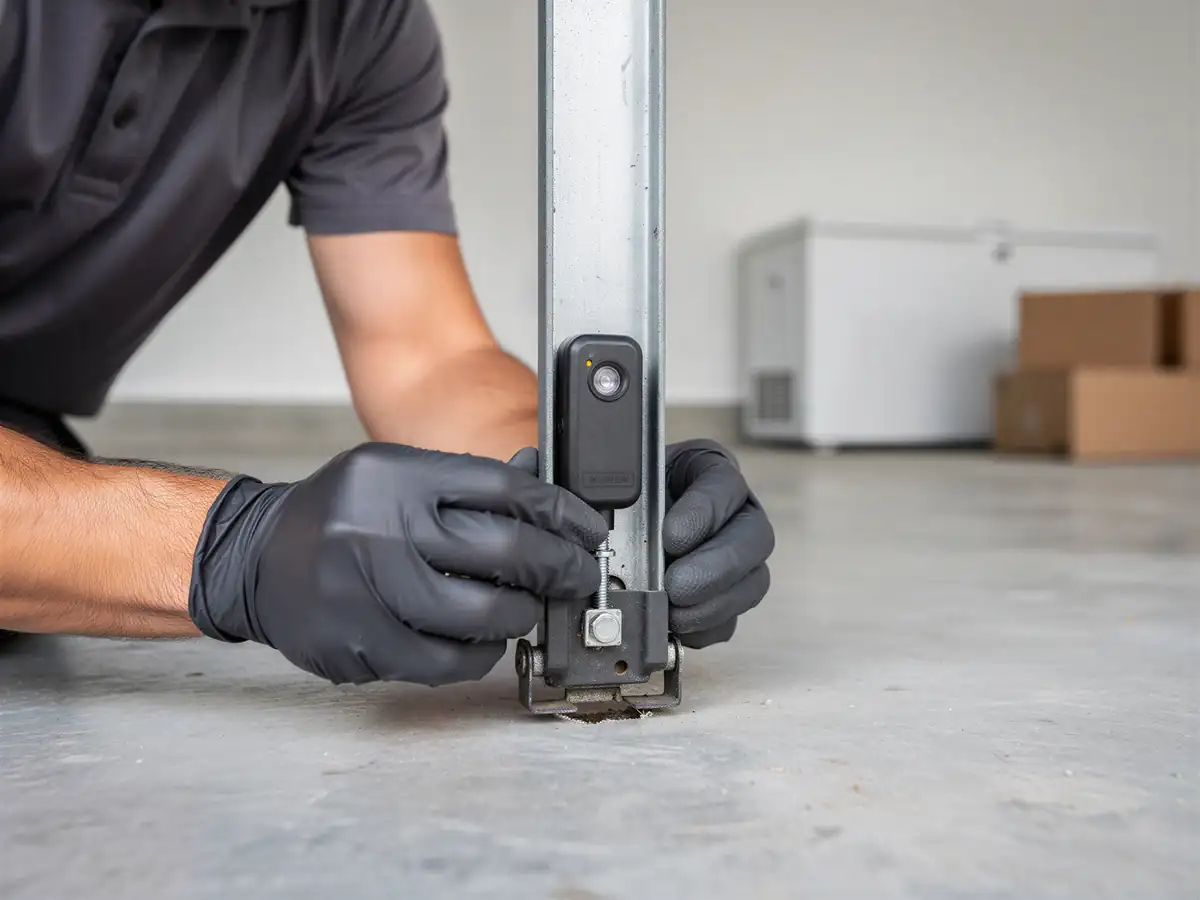
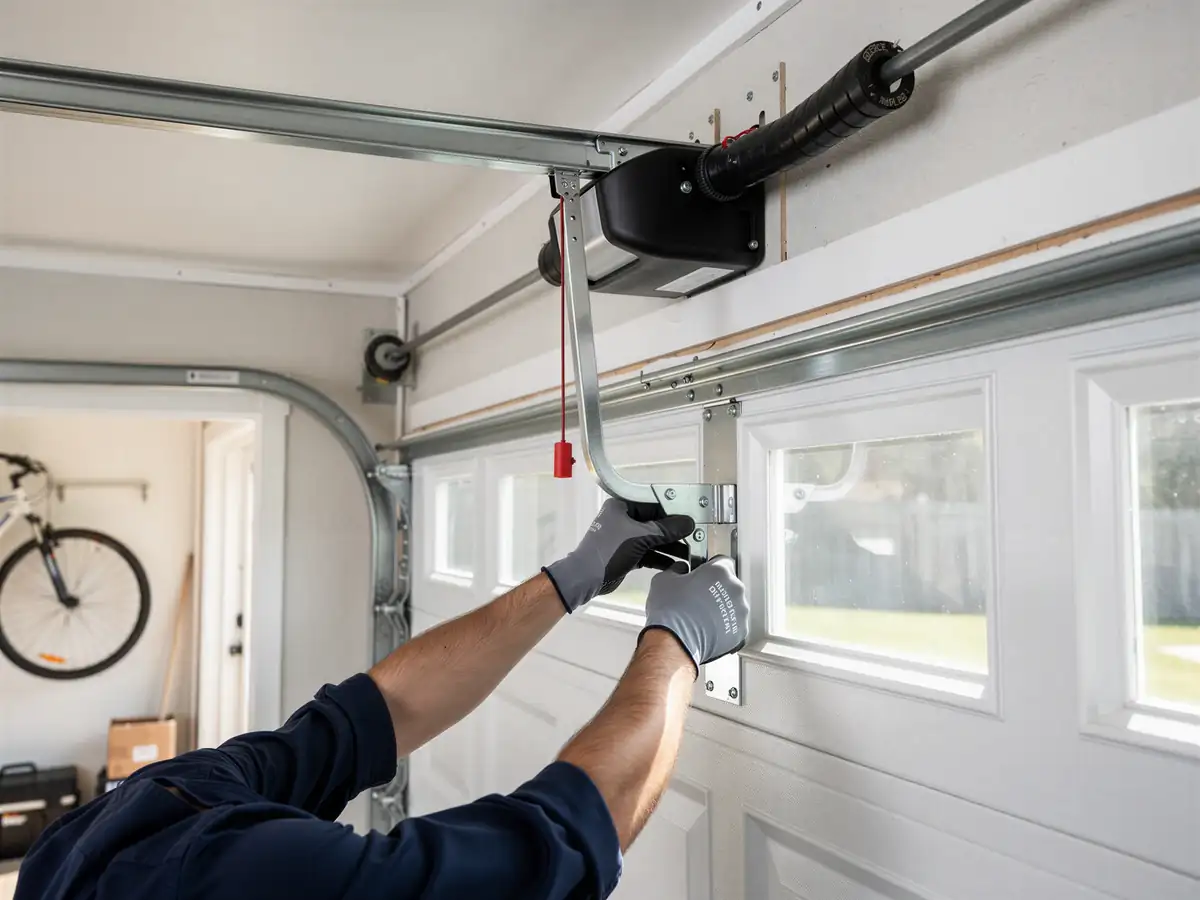
Start with where the sound happens. A grinding or rattling along the track usually traces back to a bent track section or a loose bracket - common on houses from the 1960s and 70s where tracks are original. Run the door by hand (power disconnected) and feel for a rough spot or a place where the roller binds. A loud bang at the top of the opener's travel often means the opener's limit isn't set right, not a structural problem.
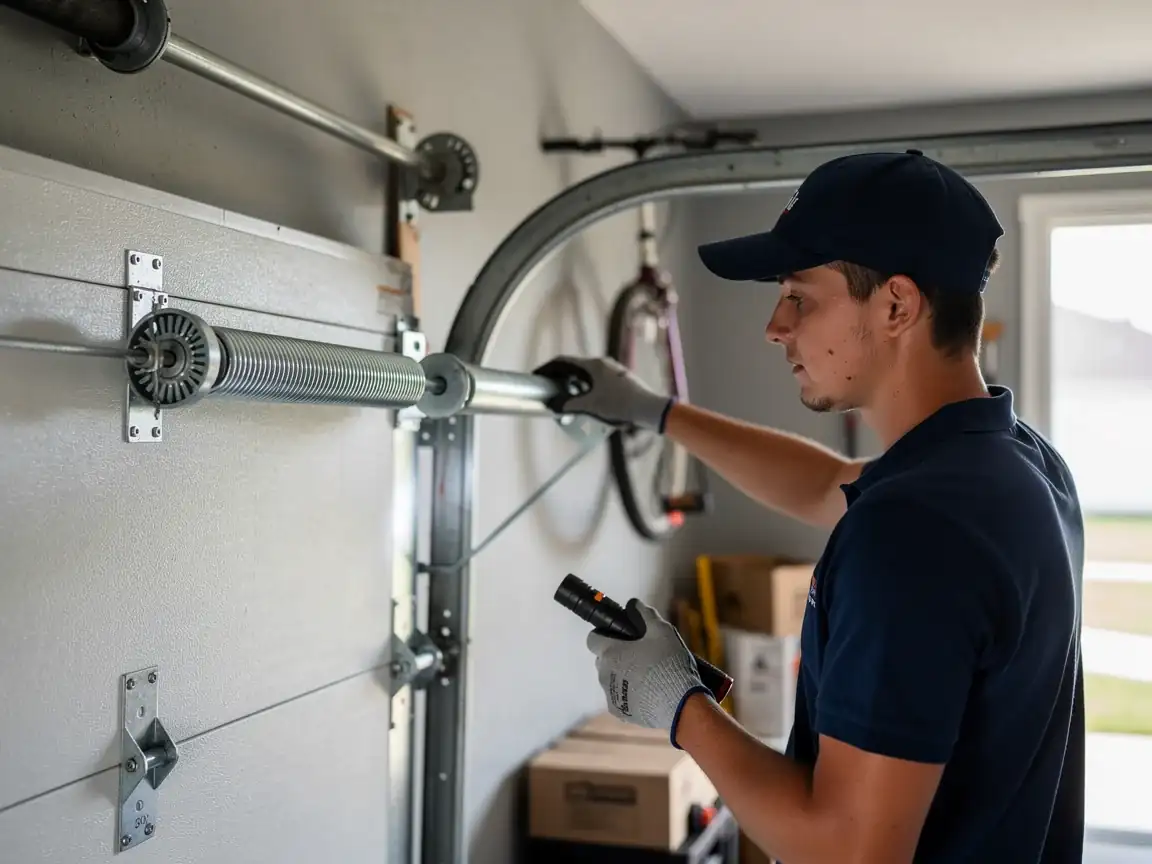
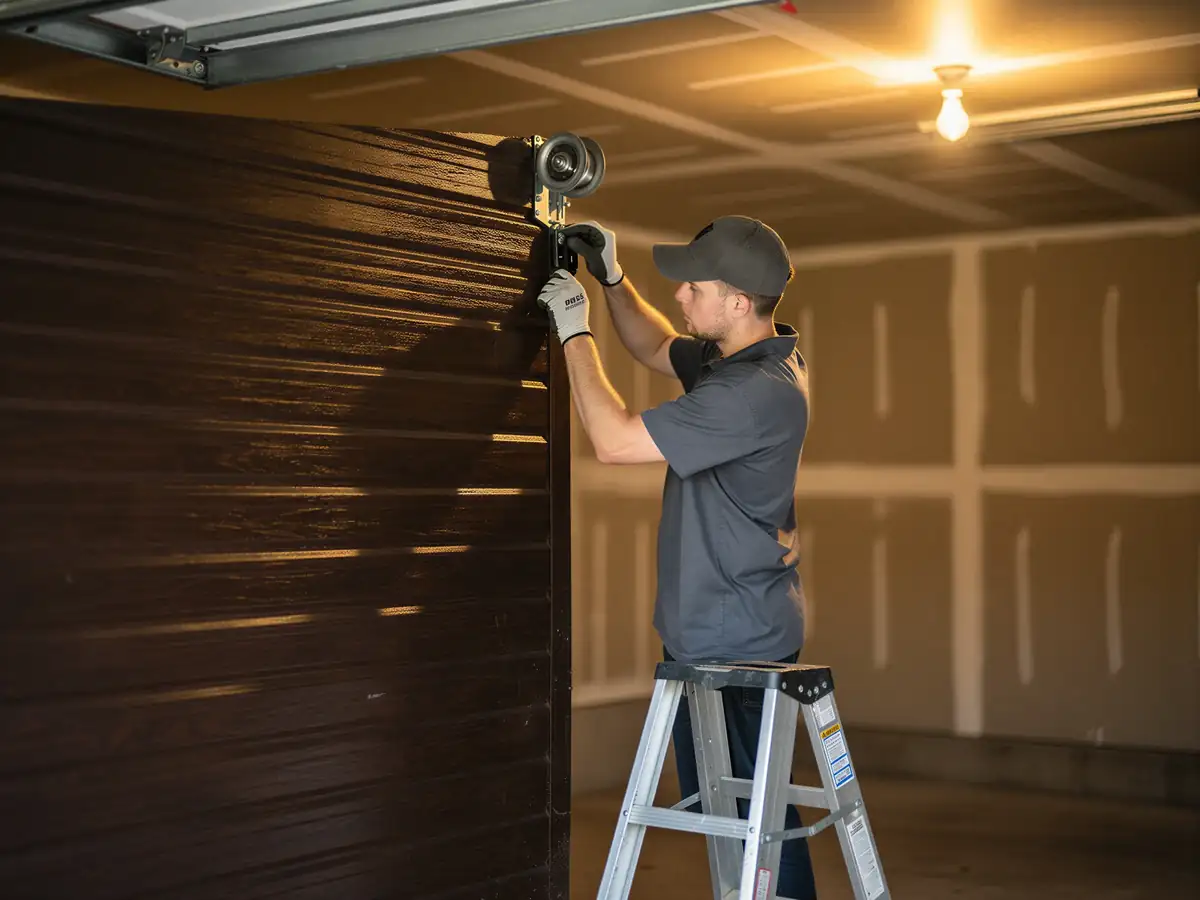
A sharp metallic pop, especially right as the door starts moving, deserves more attention. On a door this age, that pop can be a torsion spring starting to go, and torsion springs under tension aren't a DIY job regardless of the noise. If the sound is a steady squeal from the rollers as the door travels, that's usually just dry hardware - lubricate the rollers and hinges and listen again.
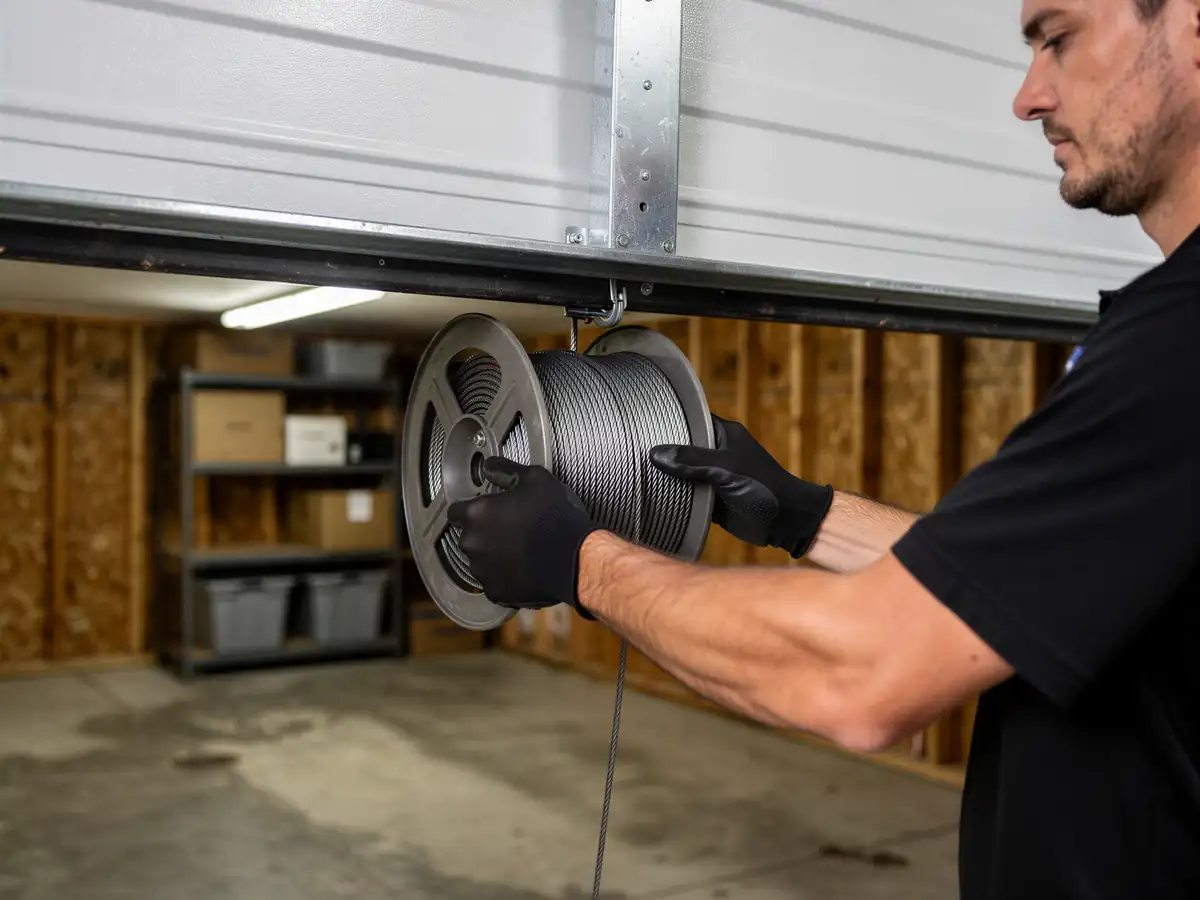
Check the cables too, especially in cold weather. Fraying or a cable that looks loose at the bottom bracket is a sign the system is under uneven tension, which on older torsion setups often shows up as noise before it shows up as a failure.
When Waiting Is Fine
01
Not every sound is a call-now sound
A squeak that goes away after you oil the rollers and hinges isn't telling you anything else is wrong - that's just routine upkeep, and on a 1960s-era door you'll do it more than once a year. A single thump when the door reaches the floor, if it's been doing that for years and the door still opens and closes evenly, is often just the way that door has always sounded.
02
We'll say plainly: we don't recommend replacing hardware just because it's noisy if the door is still tracking straight, closing flush, and not binding anywhere
A lot of what gets called a 'problem' on an older West Chester door is just an older door being an older door. Lubrication, a tightened bracket, and a few minutes of attention usually quiet it down.
03
Where we draw the line is repeated metallic popping, grinding that doesn't go away with lubrication
Or any sound that coincides with the door moving unevenly. Those aren't wait-and-see noises.
What Is Going On
Put together, the noise pattern on a lot of these doors comes down to two things stacking on each other: hardware that's been in place since the original build era of 1938 to 1996, most commonly the 1960s and 70s, and a cold-severe climate that works that hardware harder than a milder one would. Steel contracts and expands with the seasons, torsion springs lose a little capacity every cycle, and track alignment that was fine when the house was built has had decades to shift.
None of that means every noisy door needs a service call. It means the noise is data, and on a door this age, it's worth paying attention to rather than just living with it until something breaks on a cold morning when you're already late.
How it works
From “it’s stuck” to “it’s fixed”
01
Tell us what’s wrong
Describe the symptom - won’t open, loud bang, opener runs but the door won’t move.
02
On-site diagnosis
A technician tests the door under power and by hand and finds what actually failed.
03
Clear, up-front plan
You get the fix that’s needed and what drives the cost - before any work starts.
04
Repaired & tested
The repair is done, the door is set true and tested, and the work area left clean.
Not sure which repair your door needs in West Chester, PA? Describe what it’s doing - every job starts with a diagnosis.
Straight answers about garage door repair in West Chester. Still unsure? Ask us directly.
Why does my garage door get noisier in winter?
Steel hardware contracts in the cold, which takes up clearance that was fine in warmer months. On a door built in the 1960s or 70s, which is common around West Chester, that extra contraction often turns a quiet, slightly worn part into an audible one - especially springs and track bolts.
Is a loud bang when the door closes always a spring problem?
Not always. A bang at the bottom is often the door hitting the floor too hard because of an opener setting, not the spring. A sharp pop as the door starts moving is more often spring-related. Location and timing of the sound both matter when sorting it out.
Do I need to replace an older door just because it's noisy?
No. If the door still opens evenly, closes flush, and isn't binding anywhere, noise alone usually just means it needs lubrication or a tightened bracket. We don't recommend replacement on noise alone when the door is otherwise working correctly.